 Whalesbook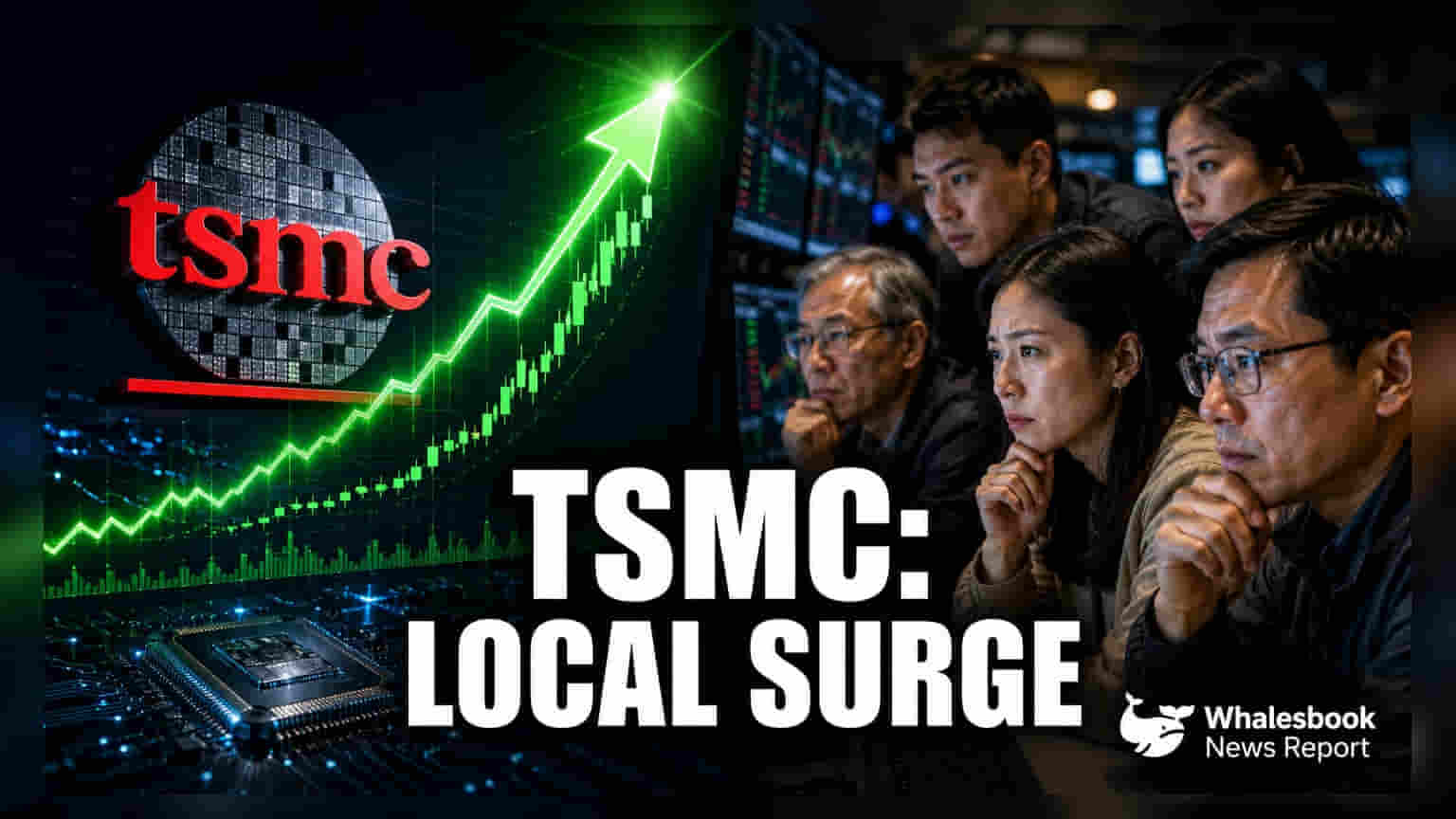


The Regulatory Catalyst
The structural shift in TSMC's valuation is primarily the result of the Financial Supervisory Commission (FSC) implementing a landmark policy change in late April 2026. By raising the single-stock investment limit for domestic equity funds and active exchange-traded funds from 10% to 25%, the regulator effectively unlocked nearly NT$200 billion in potential fresh capital. As TSMC commands a staggering ~44% weight in the benchmark TAIEX index, this policy was explicitly designed to allow local fund managers to normalize their holdings, which were previously forced into artificial underweight positions. This liquidity injection has acted as a primary engine for the stock's year-to-date appreciation, outstripping the momentum observed in US-listed ADRs.
The Valuation Convergence
Historically, TSMC’s American Depositary Receipts commanded a significant premium due to higher foreign institutional participation and ease of access. However, the premium has faced persistent pressure throughout 2026. Data shows the ADR premium, which traded in the 26% range in December 2025, has compressed significantly to under 14% by May 2026. This contraction is a direct byproduct of the rapid repricing on the Taiwan Stock Exchange, where local retail and institutional investors, buoyed by the domestic policy tailwind, have demonstrated a higher conviction in the AI hardware super-cycle than their overseas counterparts. While foreign analysts remain broadly bullish with average targets hovering around $460, the recent price action indicates that local market dynamics are now the primary driver of the chipmaker's valuation.
The Bear Case: Overheat and Concentration Risks
Despite the bullish sentiment, the market exhibits signs of exhaustion. Recent surveys from the National Central University indicate that consumer confidence in stock investment timing has hit a three-year low as investors view current valuations as increasingly stretched. The extreme concentration of the TAIEX in a single name—TSMC—creates a structural vulnerability; if the global AI spending cycle hits a plateau, the index lacks sufficient diversification to cushion the blow. Furthermore, the 25% holding limit for domestic funds may leave them over-leveraged to a single company's idiosyncratic risks, ranging from geopolitical tensions to potential margin compression as the semiconductor industry matures and process technology commoditizes.
Forward Trajectory
With TSMC serving as the cornerstone of the AI hardware supply chain, market participants are shifting their focus to the firm's progress in 2-nanometer mass production as the next catalyst for sustained growth. While the immediate boost from the FSC's regulatory easing has provided a strong support level, the sustainability of this rally depends on whether the company can maintain its lead in advanced packaging and foundry margins against intensified competition in the coming quarters. Analysts maintain an average 'Buy' consensus, but the rapid appreciation suggests that much of the immediate regulatory-driven alpha may already be priced in.