

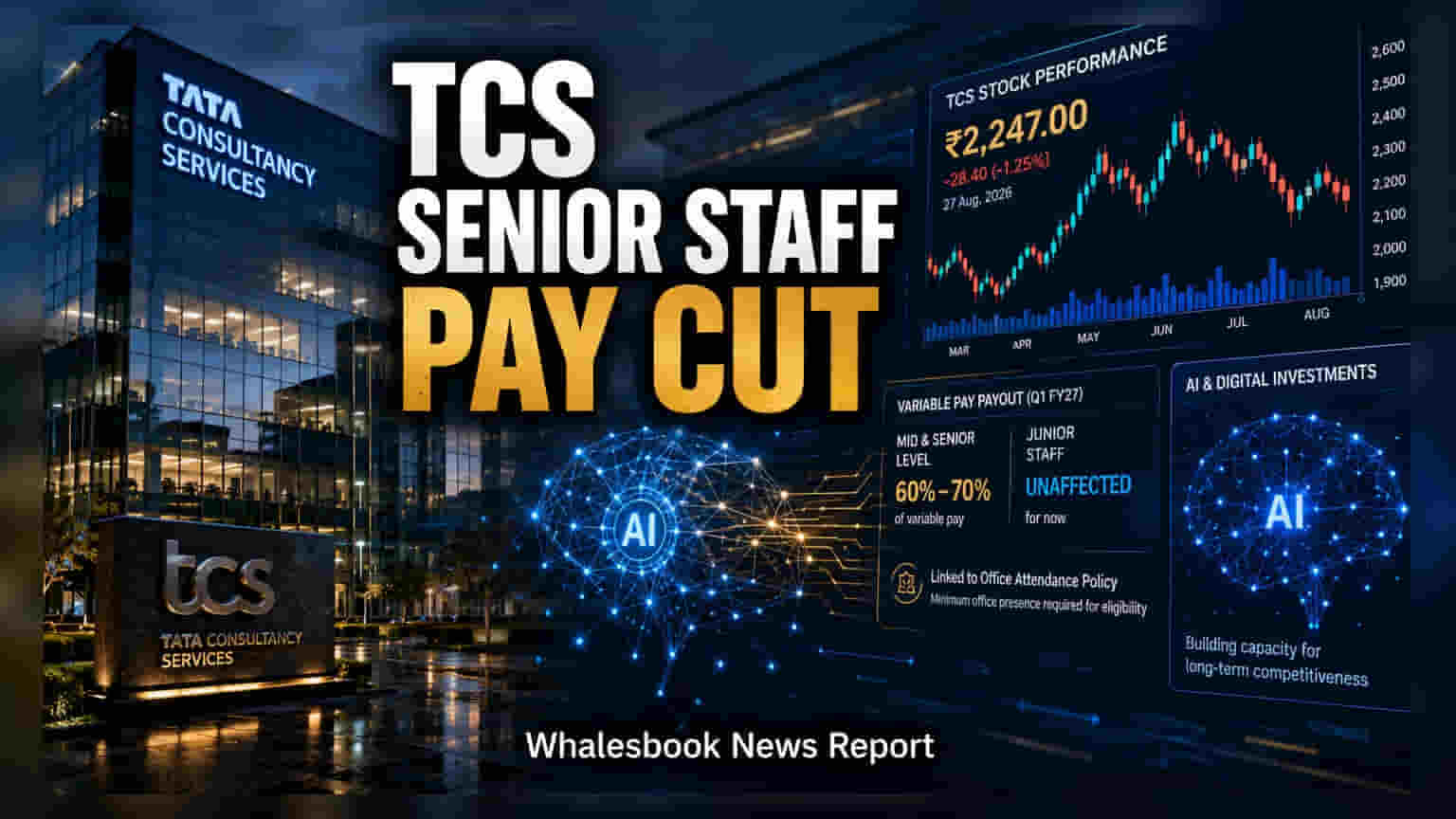
Tata Consultancy Services has reduced variable payouts to 60-70% for mid-to-senior employees for the June 2026 quarter. This adjustment reflects margin pressure from annual salary hikes and heavy investments in AI infrastructure, while junior staff payouts remain unaffected.
Tata Consultancy Services (TCS) has adjusted its compensation structure for the first quarter of the 2027 fiscal year. Mid and senior-level employees will receive between 60% and 70% of their quarterly variable pay, as the company manages operating costs in a competitive environment.
This decision follows the company's financial performance for the quarter ended June 30, 2026, where operating margins contracted to 24%, down from 25.3% in the previous quarter. The management has attributed this pressure to the combined impact of annual wage increases and the ongoing push to build capacity in artificial intelligence and other high-growth digital technologies. While the investment in AI is intended to support long-term competitiveness, it has increased the short-term cost base, leading to a tighter margin profile.
The company continues to maintain a rigid link between variable pay eligibility and its office attendance policy. Employees must meet specific thresholds for physical office presence to qualify for variable pay. This firm stance on work-from-office differentiates the company from several other industry peers that have adopted more flexible or hybrid work arrangements. While senior and mid-level tiers have seen this reduction in payouts, junior staff have been spared from these variable pay adjustments for the current period.
For shareholders, the stock's performance has been influenced by broader IT sector trends, with shares trading near ₹2,247 on August 27, 2026. The IT sector has faced recent challenges, including concerns over discretionary spending in major markets like North America and Europe, alongside profit-taking by investors.
The primary focus for investors in the coming quarters will be the return on investment from the company's AI-focused spending. The key monitorable will be whether these investments translate into revenue growth or if margin compression continues to limit profitability. Additionally, the impact of these compensation shifts on retention and productivity at the senior level will be a factor to follow as the company navigates the current demand environment.