 Whalesbook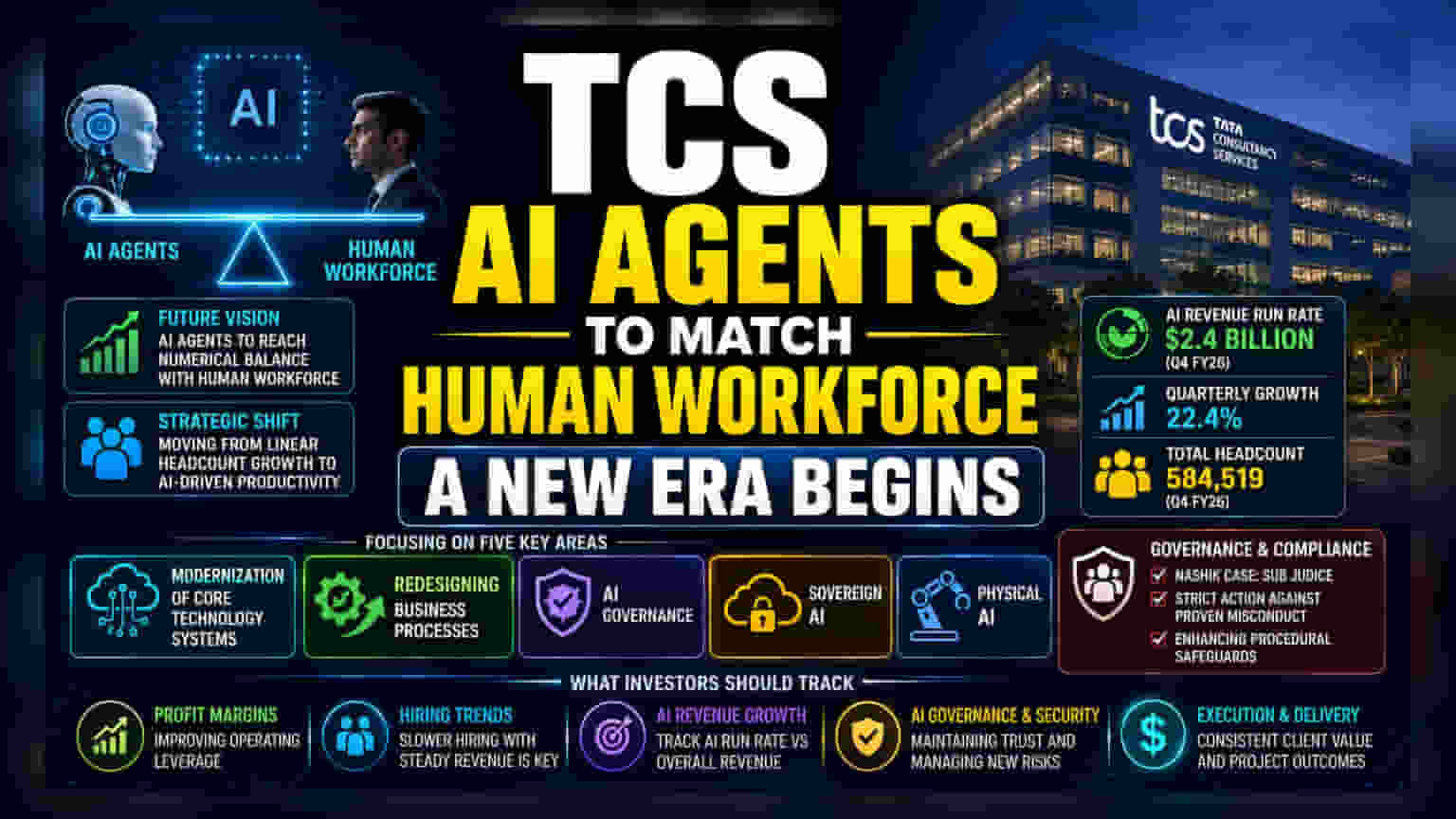


TCS Chairman N. Chandrasekaran has announced a strategic change in the company's hiring model, signaling that AI agents will eventually reach parity with the human workforce. As the IT giant moves away from traditional headcount-led growth toward AI-powered productivity, investors are monitoring the potential impact on operating margins and the long-term revenue model.
What Happened
Tata Consultancy Services (TCS) has announced a significant shift in its operational and hiring strategy. Chairman N. Chandrasekaran stated during the company's annual general meeting that the firm is actively integrating AI agents across its internal operations and client solutions. He projected that, in the future, the number of AI agents utilized by the company will reach a numerical balance with its human workforce. This change comes as TCS, which had a total headcount of 584,519 employees as of the fourth quarter of FY26, looks to decouple revenue growth from the traditional model of adding more staff.
The Shift in IT Business Model
For decades, the Indian IT services industry has followed a linear growth model. Under this model, revenue typically increased in direct proportion to the number of employees added to the payroll. Investors often watched headcount growth as a proxy for business expansion. However, the move toward AI agents suggests a transition to a non-linear model. In this new framework, technology and AI-driven productivity, rather than just human labor, are expected to drive revenue. If successful, this shift could improve operating margins, as the company could potentially deliver more value to clients without a corresponding linear increase in salary costs. Investors are watching to see if this pivot effectively leads to greater operating leverage and higher profitability per employee over time.
AI Revenue and Business Growth
To support this transition, the company is focusing on five key areas: modernization of core technology systems, redesigning business processes, AI governance, Sovereign AI, and Physical AI. The company reported an annualized revenue run rate of $2.4 billion from its AI-related services in the fourth quarter of FY26. This figure highlights that AI is already a measurable contributor to the company’s financial performance, with a reported quarterly growth rate of 22.4 percent. The management's focus on these specific verticals suggests a move toward higher-value consulting and implementation projects rather than just routine maintenance tasks.
Governance and Compliance
During the meeting, the management addressed concerns regarding an alleged sexual harassment case at the company’s Nashik unit. The leadership confirmed that the matter is currently sub judice, or under judicial consideration. The company committed to taking strict action against any proven misconduct by associates and noted that it is working on enhancing procedural safeguards to address identified failures in the internal systems.
What Investors Should Track Next
The long-term success of this strategy will depend on execution. Key monitorables for investors include the trend in profit margins, as AI-led services should ideally command better pricing or efficiency. Shareholders will also track the pace of hiring—a significant slowdown in recruitment without a corresponding decline in revenue would be the primary indicator that the AI-led productivity model is gaining traction. Additionally, investors may observe how the company maintains its AI governance and security standards, as the integration of autonomous agents into client systems brings new operational risks. Monitoring the growth rate of the AI revenue run rate compared to overall revenue growth will also provide clarity on how quickly the business model is transforming.