

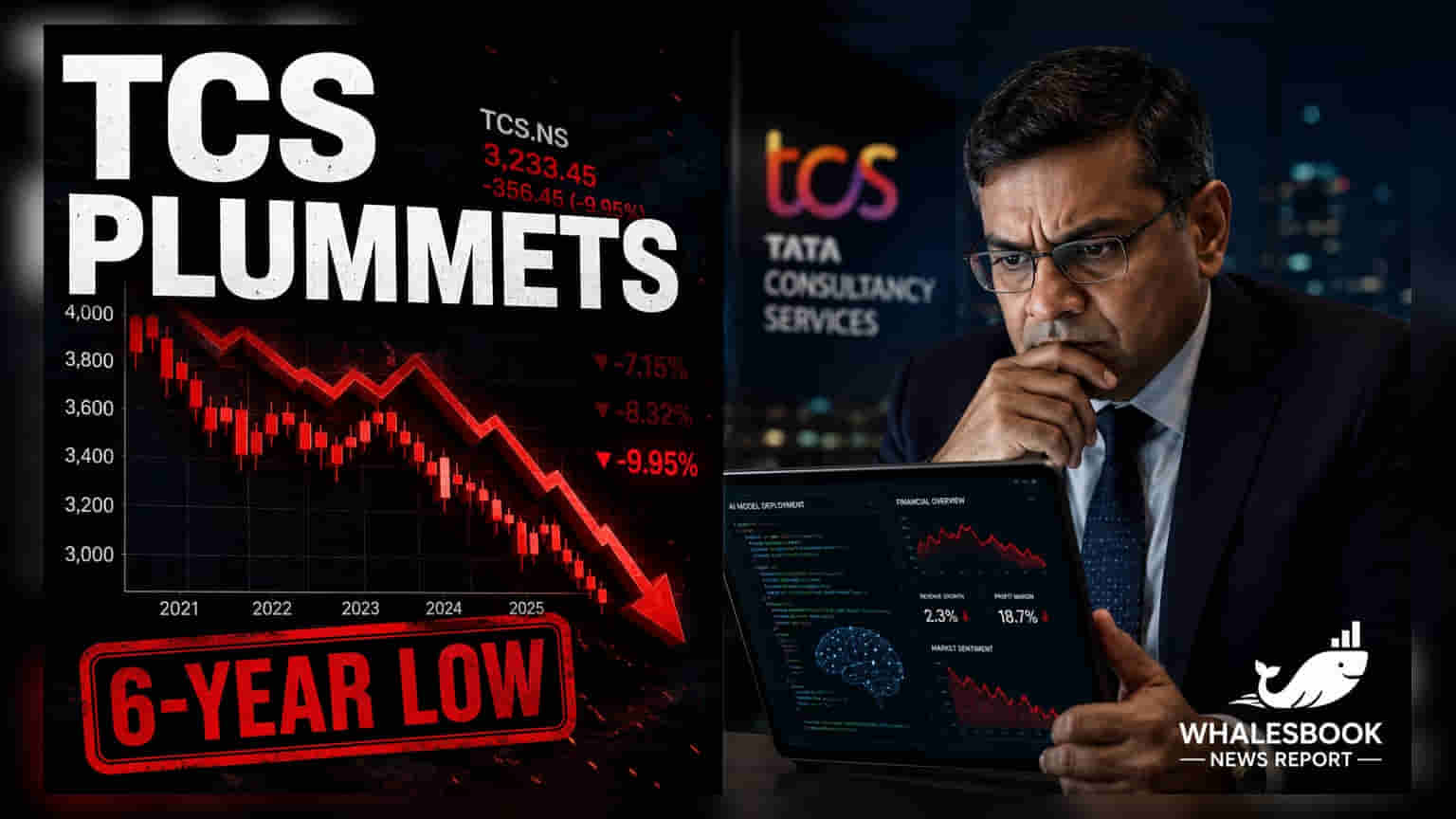
Tata Consultancy Services shares have dropped 35% this year as investors worry about weak demand and rising costs from AI investments. The company faces a challenging first quarter for fiscal year 2027, with analysts questioning how long it will take for new technology initiatives to boost profit margins.
What Happened
Tata Consultancy Services (TCS) is experiencing significant selling pressure in 2026, with its stock price hitting a six-year low. The share price has fallen by 35% since the start of the year, significantly underperforming broader market indices like the Nifty and the Sensex. This decline reflects growing investor caution ahead of the company's first-quarter results for the 2027 fiscal year. The market is concerned that global macroeconomic problems and a shift in how companies spend on technology are creating a difficult environment for India's largest IT services firm.
Why Earnings Expectations Are Low
Investors are closely watching the upcoming Q1FY27 results due to fears of muted demand. Many large global clients, particularly in the banking and financial services sectors, are slowing down discretionary spending—money spent on non-essential projects. This has led to longer decision-making cycles, meaning projects are taking more time to get approved and begin. Geopolitical tensions and general economic uncertainty are contributing to this hesitation, making it difficult for IT companies to maintain the high revenue growth rates seen in previous years.
Margin Pressure and AI Costs
TCS is currently balancing its need to invest heavily in Artificial Intelligence (AI) with the pressure to protect its profit margins. Annual salary increases are set to increase operational costs, which could reduce profitability if revenue growth does not pick up. While the company is spending money to build an 'AI Operating System' and high-density AI data centers, the immediate impact of these costs is weighing on the bottom line. Analysts are monitoring whether these investments will improve business efficiency soon enough to offset the rising expenses.
Diverging Views on Valuation
There is no consensus among market analysts regarding the stock's current value. Some brokerage houses have expressed caution; for instance, Morgan Stanley recently adjusted its outlook, pointing to the risk that AI investment costs could threaten margin stability. They also noted that the company’s valuation is no longer at a significant discount compared to competitors like Infosys. On the other hand, some analysts believe the current depressed price-to-earnings (P/E) levels represent an opportunity, noting that large IT stocks are now trading well below their historical valuation averages.
What Investors Should Track
Moving forward, the primary focus for shareholders will be the management commentary during the Q1FY27 earnings call. Specifically, investors should look for signs of improvement in client spending patterns, the impact of wage hikes on margins, and clear evidence that AI initiatives are beginning to contribute to revenue. The timeline for when AI investments will start to improve overall profitability will be a key monitorable for the coming quarters.