 Whalesbook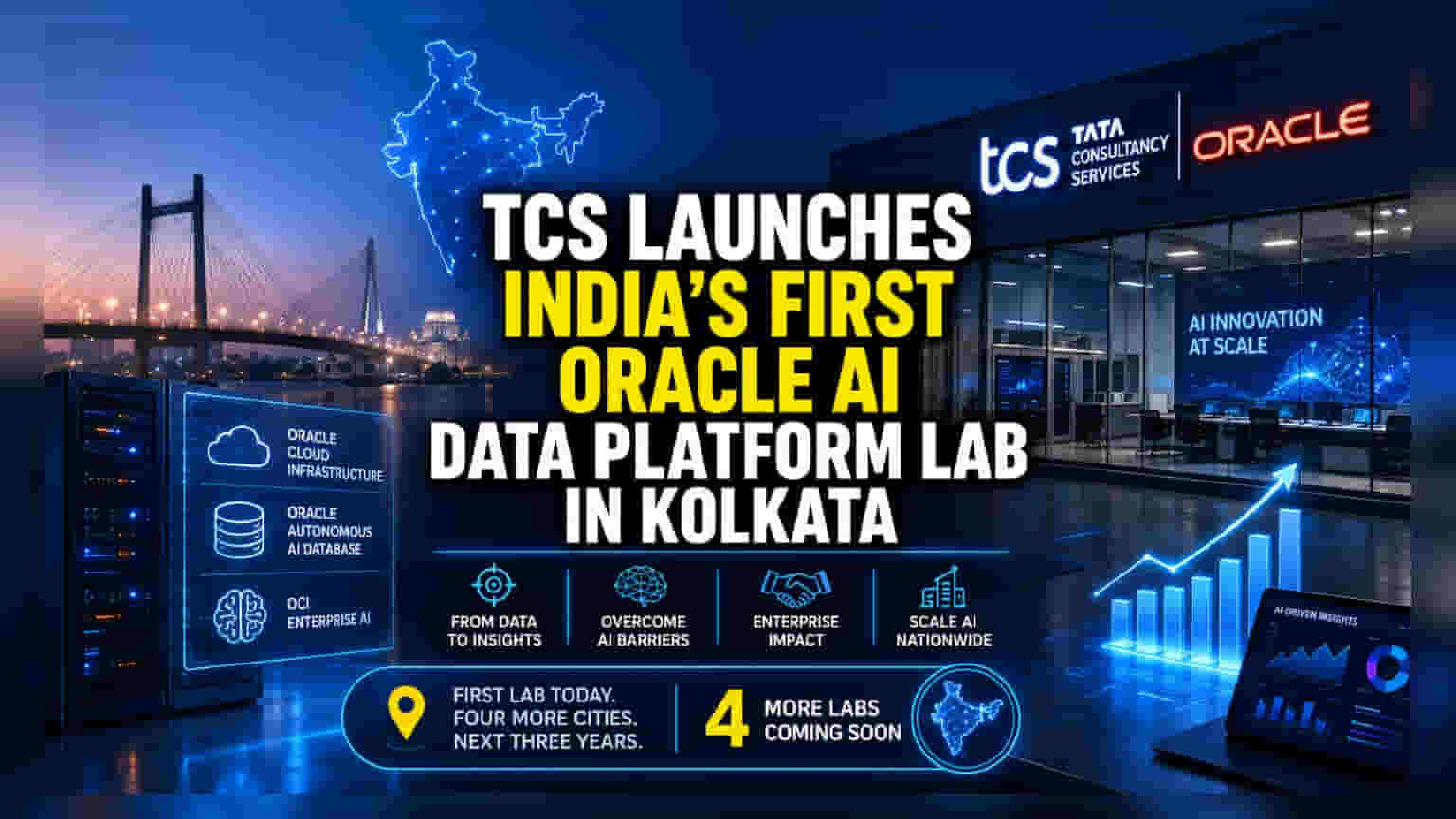


Tata Consultancy Services (TCS) has partnered with Oracle to launch an AI Data Platform Lab in Kolkata to accelerate enterprise AI adoption. The move underscores TCS's strategy to capture high-value AI projects amid a broader push to integrate AI agents into its operations. While this facility aims to streamline AI implementation, investors should note that the broader IT sector faces challenges in converting AI pilot projects into large-scale revenue.
What Happened
Tata Consultancy Services (TCS) has officially launched India's first Oracle AI Data Platform Lab and Centre of Excellence (CoE) in Kolkata. Located at the Delta Park Lords facility, the lab is a strategic collaboration with Oracle designed to help enterprises address common barriers in adopting artificial intelligence. By leveraging Oracle's AI Data Platform—which includes Oracle Cloud Infrastructure (OCI), the Oracle Autonomous AI Database, and OCI Enterprise AI—the facility aims to help businesses transform fragmented data into actionable insights and deploy AI-driven automation at scale. TCS also announced plans to replicate this model by setting up similar labs in four more Indian cities over the next three years.
The Strategic Pivot to AI
This move is part of TCS's wider strategy to position itself as an AI-native technology services firm. As traditional IT services face cyclical demand fluctuations, the company is aggressively pivoting toward higher-value AI engagements. For TCS, AI is not just a service offering but an internal transformation tool; management recently outlined a plan to deploy AI agents at a scale comparable to its human workforce over the next three years. With annualized AI revenue reportedly reaching $2.5 billion in fiscal year 2026, the company is keen to ensure it remains the preferred partner for clients looking to transition from experimental AI pilots to production-grade enterprise solutions.
Why This Matters For Investors
The facility addresses a critical pain point in the IT industry: the "pilot-to-scale" gap. Many enterprises start AI initiatives that stall due to data quality issues, integration complexities, or high costs. By providing a dedicated space for experimentation using pre-built frameworks and Oracle's infrastructure, TCS aims to reduce the time and cost for its clients to go live. For shareholders, this is significant because successful large-scale AI deployment typically attracts longer-term, higher-margin contracts. It also helps TCS build "stickiness" with enterprise clients who rely on its ability to modernize their core technology stacks.
The Execution And Demand Risk
While the technology push is positive, investors should be mindful of the broader sector context. The IT services sector is currently navigating global macroeconomic uncertainty, which has led to elongated decision-making cycles and project deferrals, particularly in sectors like banking and finance. While TCS has a strong order book, converting these AI-focused deals into immediate revenue growth remains a hurdle. Additionally, the AI space is crowded with competition; TCS must consistently demonstrate that its implementation expertise and proprietary frameworks provide a tangible return on investment compared to niche AI firms or cloud-native competitors.
What Investors Should Track
Moving forward, the key monitorable is not just the number of labs opened, but the rate at which these facilities convert client engagement into scalable, multi-year revenue contracts. Investors may also want to watch management commentary on AI-led margin impact, as investing in talent re-skilling and infrastructure can initially create cost pressure. Finally, keeping an eye on whether the company can maintain its margin leadership in the face of these heavy AI investments will be crucial for assessing the long-term profitability of this strategy.