

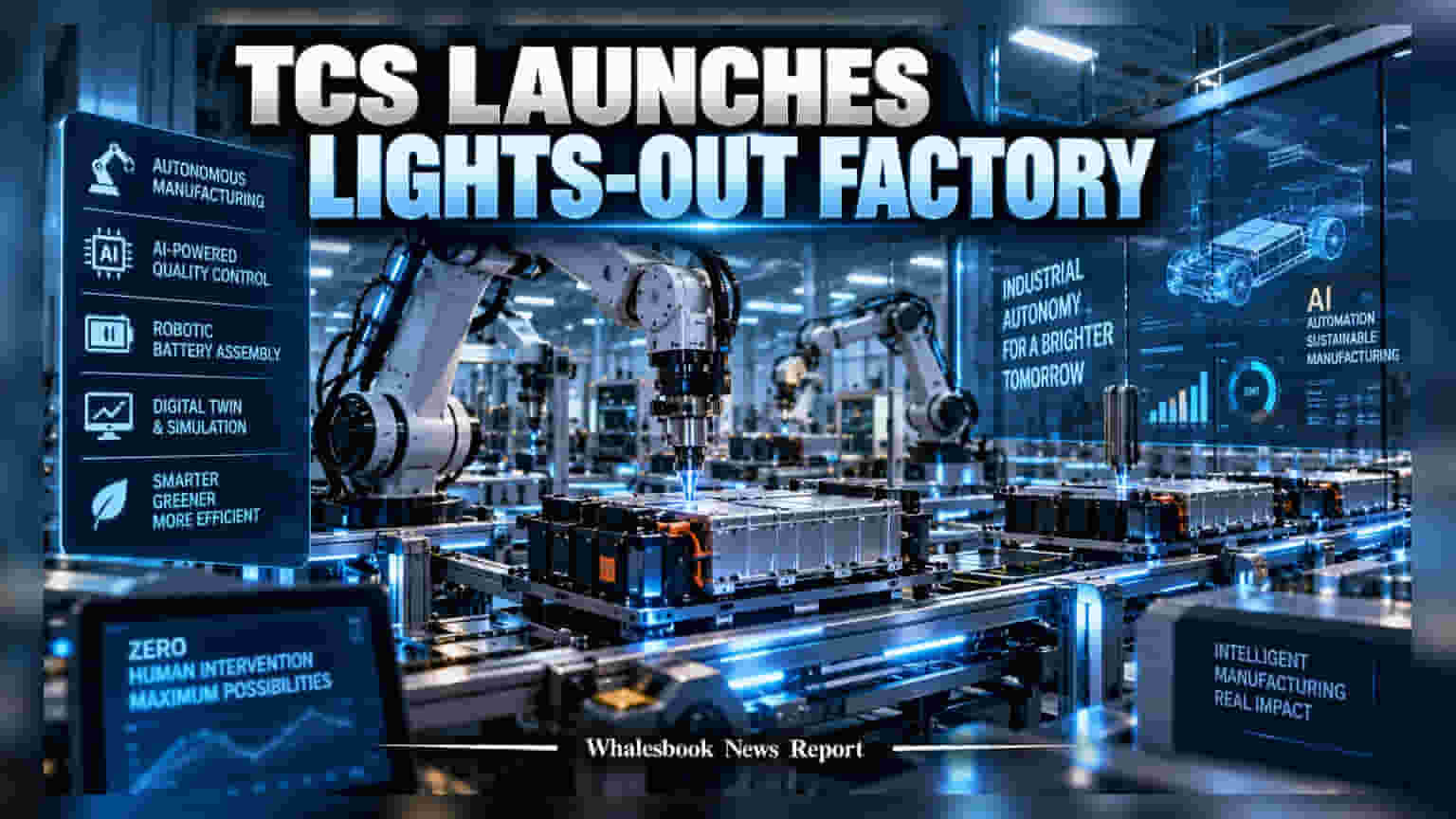
TCS has inaugurated a new industrial lab in Pune featuring India’s first fully robotic, AI-driven assembly line. While this move marks a strategic shift toward advanced industrial services, the stock is trading lower today amid broader IT sector volatility. Investors are weighing this long-term innovation against potential margin pressure from increased investment costs.
Tata Consultancy Services (TCS) has officially launched its Industrial Autonomy and Engineering Lab at the Sahyadri Park campus in Pune. The new facility is designed as a "lights-out" factory, a production model that uses autonomous robotics and AI to run operations with little to no human presence. This is the first facility of its kind in India to feature a fully robotic battery pack assembly line, serving as a prototype for future manufacturing environments.
By setting up this lab, TCS is looking to move beyond traditional software services and capture opportunities in advanced industrial engineering. The facility uses digital simulation and vision-based AI, allowing the company to demonstrate to manufacturing clients how they can transition to fully autonomous, self-optimizing production systems. This is part of the company's long-term strategy to pivot toward "AI-first" industrial services, which could potentially offer a competitive advantage in the high-value engineering sector.
Despite the technological milestone, the company's shares were trading down by approximately 2.4% on the National Stock Exchange on September 9, 2026. The negative stock movement highlights the current cautious sentiment in the IT sector, where investors are focused more on immediate revenue growth and margin stability rather than long-term innovation projects.
For shareholders, the primary question is whether these high-tech labs will translate into measurable business growth. Developing and maintaining such advanced facilities involves significant spending on expansion and equipment, which may put pressure on profit margins in the short term. Furthermore, the success of this model depends entirely on whether manufacturing clients are willing to adopt these autonomous solutions at scale in their own factories.
With global client spending remaining cautious due to wider economic uncertainty, the key monitorable for investors will be how effectively TCS can turn these innovation investments into new, high-value industrial contracts. Future updates on client adoption rates and the impact of these initiatives on overall profit margins will be critical for assessing the long-term success of this industrial automation strategy.