 Whalesbook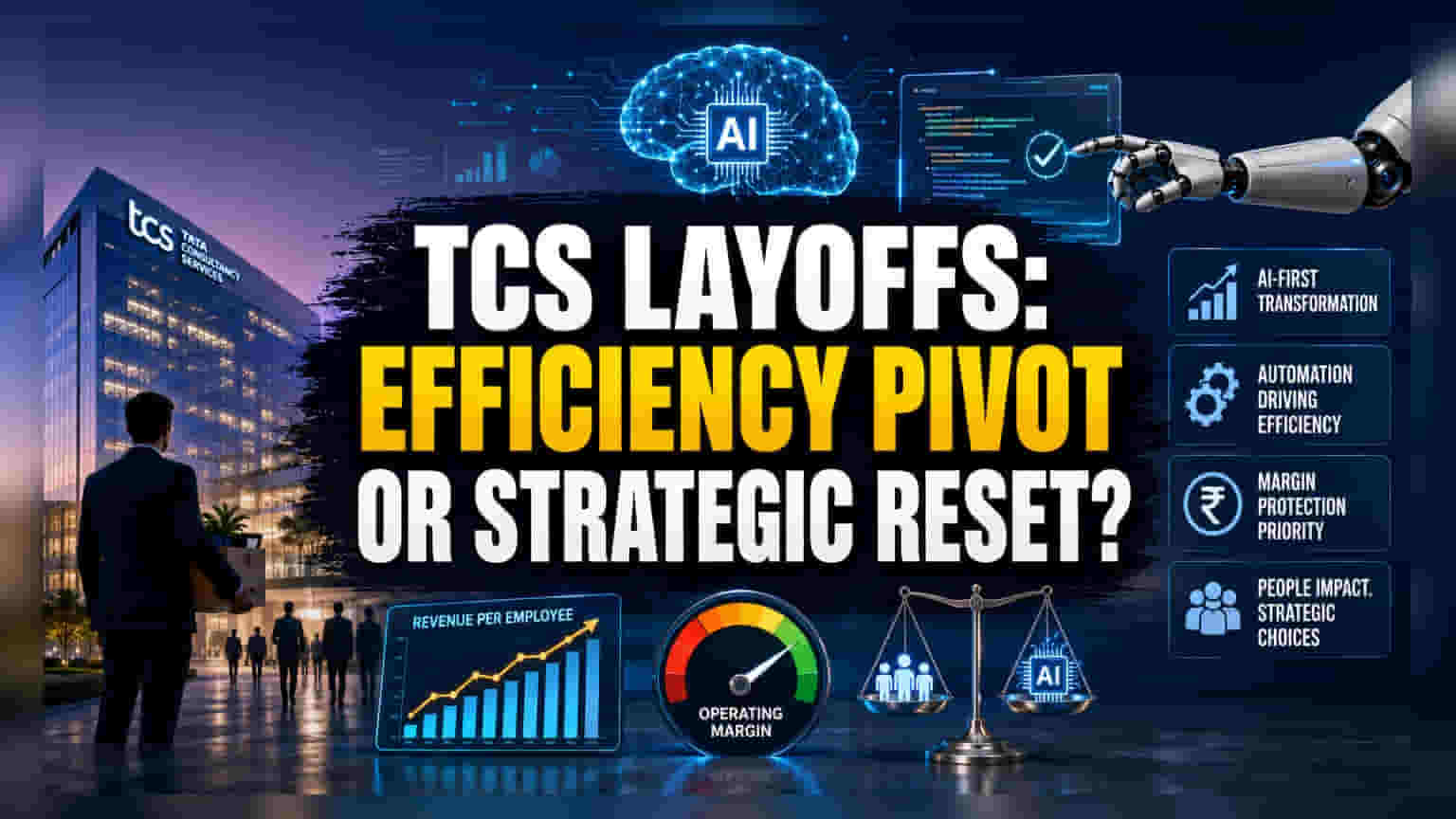


The Efficiency Pivot
The narrative surrounding potential workforce reductions at Tata Consultancy Services is less about broad-based economic hardship and more about a strategic transition toward an AI-first operational architecture. While the headline figures regarding headcount adjustments dominate the conversation, the underlying catalyst is a fundamental restructuring of how service delivery is priced and executed. By migrating away from human-capital-intensive models, the company aims to insulate its operating margins against the persistent wage inflation that has historically plagued the Indian IT services sector. This shift suggests that the firm is trading short-term social friction for long-term scalability as automated code generation and AI-driven testing begin to cannibalize traditional entry-level project roles.
Sectoral Benchmarking and Market Reality
Unlike its domestic peers who have historically relied on massive hiring cycles to drive revenue growth, the current environment necessitates a decoupling of headcount from top-line expansion. When compared to global giants like Intel and Microsoft, which have aggressively streamlined operations to refocus capital toward high-growth infrastructure, TCS appears to be undergoing a delayed but necessary optimization. The market has increasingly signaled that valuation multiples for IT services will remain compressed unless companies demonstrate the ability to achieve non-linear revenue growth. Historically, the firm’s stock has shown high sensitivity to margin volatility; thus, any move that significantly lowers the cost-to-serve is often viewed by institutional investors as a net positive for shareholder equity, despite the obvious risks to brand perception.
The Forensic Risk Factor
While cost-cutting measures support the bottom line, the strategy introduces significant execution risks. The firm faces a dual threat: potential attrition of high-skill talent who may fear for job security and the challenge of successfully integrating AI tools without compromising service quality. Competitors that manage to maintain higher staff morale may capture the market share of clients who value high-touch human expertise over cost-optimized, automated solutions. Furthermore, the reliance on automation for critical client deliverables could lead to unforeseen technical liabilities or contractual disputes if AI governance protocols fail to meet the rigorous standards of global financial and healthcare clients. Management’s ability to navigate these cultural and operational hurdles remains the primary variable in the firm’s performance trajectory.
Outlook and Institutional Positioning
The trajectory for the firm remains tethered to its success in deploying AI at scale without eroding its core consultancy moat. Brokerage consensus suggests that the current headcount adjustments are likely to be reflected in stabilized or improved operating margins throughout the coming fiscal year. Investors should monitor quarterly filings for improvements in revenue-per-employee metrics, as this will serve as the true barometer for whether the automation pivot is delivering tangible capital efficiency or merely masking structural stagnation.