 Whalesbook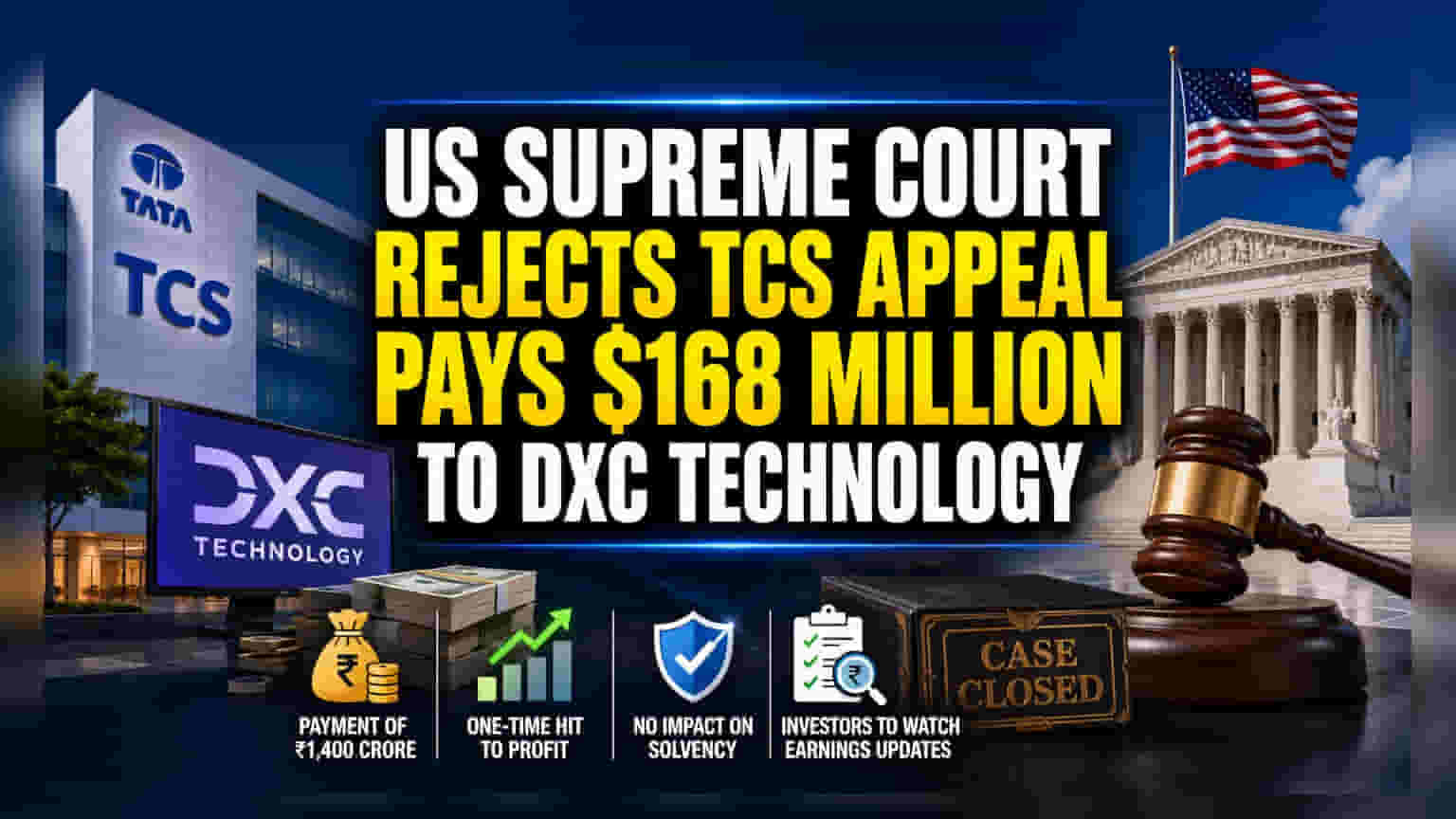


The US Supreme Court has declined to hear Tata Consultancy Services' appeal in a long-standing legal battle with DXC Technology. This decision solidifies a $168 million damages award against TCS. Investors should note the one-time financial impact on quarterly earnings, though the company’s strong cash position helps buffer this liability.
What Happened
The US Supreme Court has refused to hear an appeal from Tata Consultancy Services (TCS), effectively bringing an end to a long-running legal dispute with DXC Technology. With the highest court in the United States declining to take up the case, the previous ruling stands, requiring TCS to pay $168 million in damages.
This legal battle began years ago when DXC Technology (formerly known as Computer Sciences Corp) sued TCS. The central accusation involved claims that TCS had improperly utilized proprietary life-insurance software information after hiring a large number of employees who had previously worked for DXC.
Financial Impact For Investors
For investors, the immediate impact is the financial liability. A payment of $168 million translates to roughly ₹1,400 crore, depending on currency exchange rates. While this is a significant sum, it is important to view it in the context of TCS’s scale. The company consistently generates multi-billion dollar revenues and maintains a very strong cash position on its balance sheet. Therefore, while this will likely result in a one-time hit to the company’s net profit in the quarter it is recorded, it does not pose a threat to the company’s solvency or long-term operational health.
The Operational Context
The case highlights the legal and operational risks that large IT services companies face when operating in international markets like the United States. A core part of the business model for IT firms involves hiring talent and deploying that expertise to build solutions for clients. However, this case serves as a reminder that aggressive hiring practices—specifically when they involve the movement of large teams from one competitor to another—can attract legal scrutiny regarding intellectual property and trade secrets.
Companies often face claims related to the unauthorized use of proprietary knowledge. While IT firms have robust legal teams to manage these disputes, losses like this can create a precedent. It forces management teams to be more careful with internal policies concerning the intake of new employees and the development of software solutions, to ensure they do not infringe upon the proprietary information of other firms.
What Investors Should Track
Moving forward, the key monitorable for investors will be how the company accounts for this payment in its financial statements. Investors should keep an eye on upcoming quarterly earnings reports, where the management will likely clarify the timing and accounting treatment of this payout.
Additionally, shareholders may look for management commentary on whether this ruling leads to any changes in internal hiring or project development processes. While one court ruling is unlikely to change the overall business model of the IT sector, it is a development that highlights the importance of legal and compliance frameworks for global technology firms.