 Whalesbook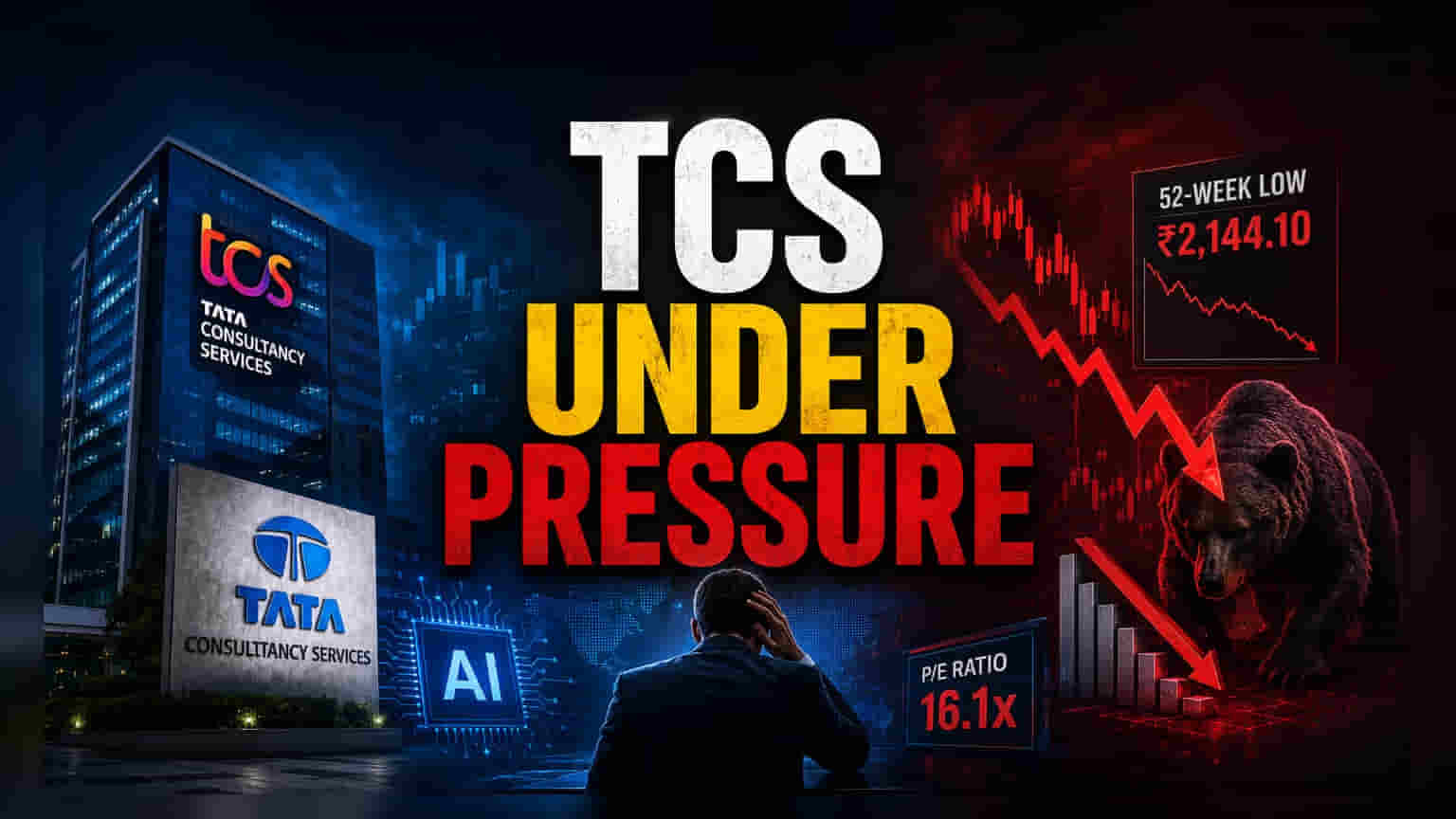


The Valuation Gap
Despite securing a landmark 10-year transformation agreement with Canada Life to modernize its European IT footprint, Tata Consultancy Services (TCS) shares continue to face intense selling pressure. The market’s muted reaction reflects a divergence between long-term contract wins and short-term macro-economic headwinds. While the partnership—focused on integrating artificial intelligence across data centers, core infrastructure, and software lifecycles—bolsters TCS’s standing in the Banking, Financial Services, and Insurance (BFSI) sector, investors are currently prioritizing broader systemic risks over individual deal success.
Sectoral Headwinds and Technical Breakdown
Trading at a P/E ratio of approximately 16.1x, TCS is currently grappling with a confluence of negative triggers. The stock recently hit a fresh 52-week low of ₹2,144.10, extending a double-digit decline over recent sessions. This downward trajectory is heavily influenced by a global "AI trade" reversal, exacerbated by rising U.S. bond yields that are compressing valuations for growth-oriented technology firms. Technical analysts point to a significant breakdown below key support levels, with momentum indicators such as the RSI showing fading strength. Unlike the relief rallies witnessed in early June, the current sell-off appears to be characterized by sustained institutional distribution rather than temporary profit-taking.
The Forensic Bear Case
The enthusiasm surrounding the Canada Life partnership masks deeper structural concerns that currently weigh on the stock. Beyond external volatility, TCS is navigating a challenging internal environment. Reports of forced performance-based restructuring, including mandates to classify 5% of its workforce into the lowest performance bands, have sparked concerns about potential morale issues and talent retention. Furthermore, while the company maintains strong cash reserves, investors are scrutinizing whether AI-driven efficiency gains are being prioritized at the expense of sustainable workforce stability. Competitors like HCL Technologies have demonstrated competitive topline growth in recent quarters, leading some institutional analysts to question TCS’s premium valuation relative to its current flat-to-negative annual growth outlook for FY26.
Future Outlook
Looking forward, the Canada Life deal provides meaningful, long-term revenue visibility, potentially exceeding ₹5,000 crore over the contract's lifespan. However, until the broader IT sector stabilizes and macroeconomic fears—such as geopolitical tension and interest rate uncertainty—subside, the stock is likely to remain in a consolidation or re-testing phase. Analyst consensus remains split; while many recognize the fundamental strength of the business model and the company’s ability to secure mega-deals, technical indicators suggest that any further breakdown below the ₹2,150 zone could trigger additional downward volatility.