

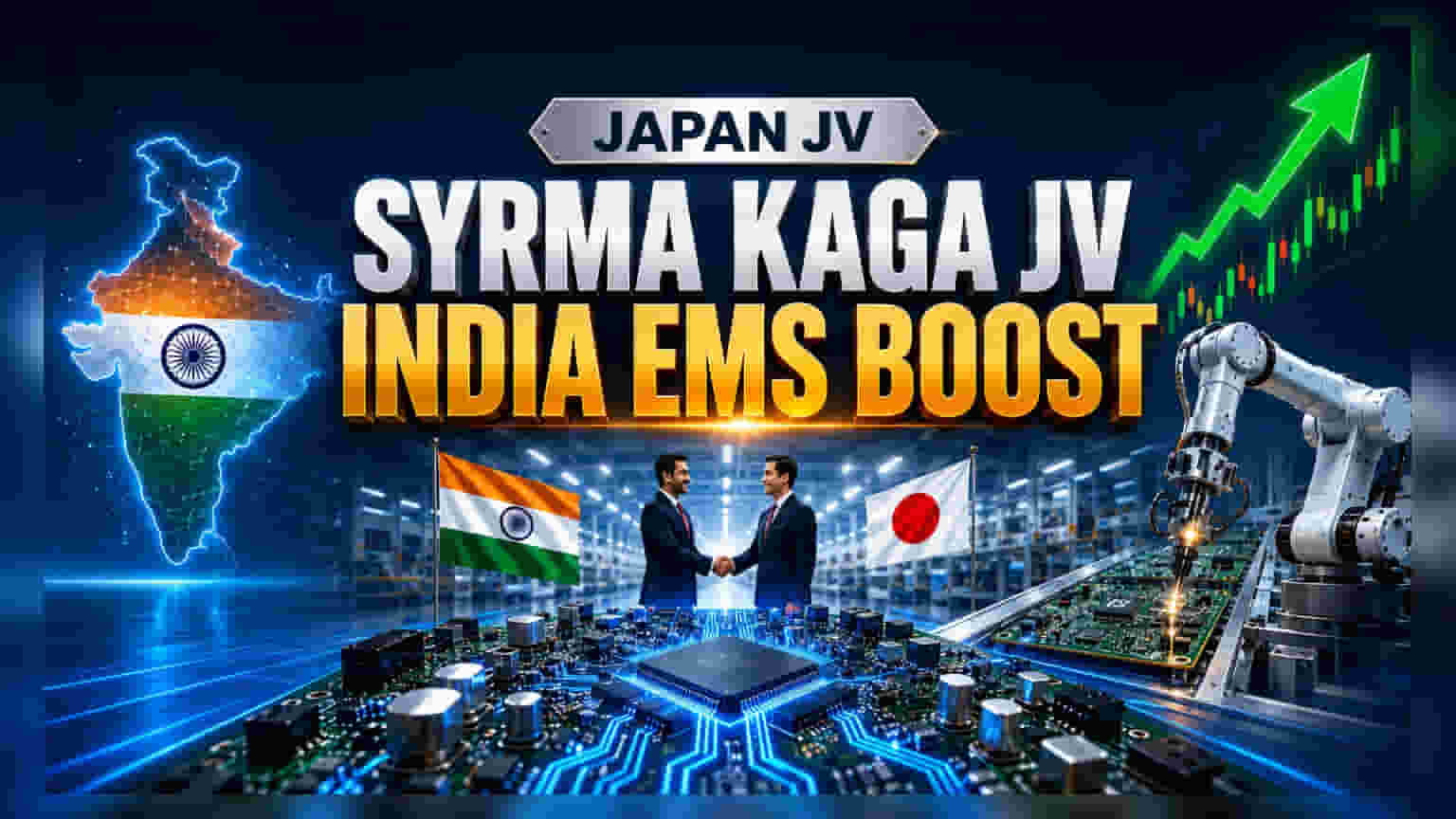
Syrma SGS Technology has partnered with Japan-based Kaga Electronics to set up a new electronics manufacturing plant in India. Syrma will hold a 60% stake in the venture, focusing on serving Japanese clients. The company’s stock rose nearly 3% following the announcement, as investors welcomed the expansion move.
What Happened
Syrma SGS Technology announced a joint venture with Japan’s Kaga Electronics to launch a new electronics manufacturing services (EMS) facility in India. Under the agreement, Syrma SGS Technology will be the majority owner, holding up to 60% of the joint venture, while Kaga Electronics will hold the remaining 40%. The collaboration is aimed at strengthening the company’s ability to cater to Japanese clients who require local manufacturing solutions within India. The company’s shares reacted positively to this news, trading up by 2.93% to reach Rs 1,375.30 on the National Stock Exchange.
Strategic Importance For Investors
For investors, this partnership is a significant move in the EMS sector. By teaming up with a Japanese firm, Syrma aims to capture more business from international clients looking to shift or expand their manufacturing base in India. Such collaborations often help EMS companies improve their production standards and gain access to established client relationships. However, the success of this venture will depend on how quickly the new facility can be set up and how efficiently it can start operations.
The EMS Sector Context
The Electronics Manufacturing Services sector in India has been growing as more global companies look to diversify their supply chains away from China. Companies like Syrma SGS Technology, along with peers such as Dixon Technologies and Kaynes Technology, operate in a high-volume but often thin-margin environment. In this business model, companies must spend heavily on building capacity and buying advanced machinery. While expansion helps in gaining market share and economies of scale, it also requires constant monitoring of how well the new capacity is used.
Risks And Business Realities
Investors should be aware of the inherent risks in such expansion projects. These include the risk of delays in building the facility or potential cost increases, which can put pressure on the company’s cash flow. Additionally, the EMS industry is sensitive to global demand trends and the availability of electronic components. Since profit margins in this sector can be tight, any sudden rise in raw material costs or issues in filling the new production capacity could impact the company’s financial performance.
What Investors Should Track Next
The most important factor for investors will be the operational timeline of the new facility. Key monitorables include the announcement of the construction timeline, the capital expenditure involved, and when the plant expects to begin commercial production. Furthermore, investors should look for updates from management on the order pipeline from these new Japanese clients, as this will determine whether the joint venture can generate meaningful revenue and profit growth in the coming quarters.