

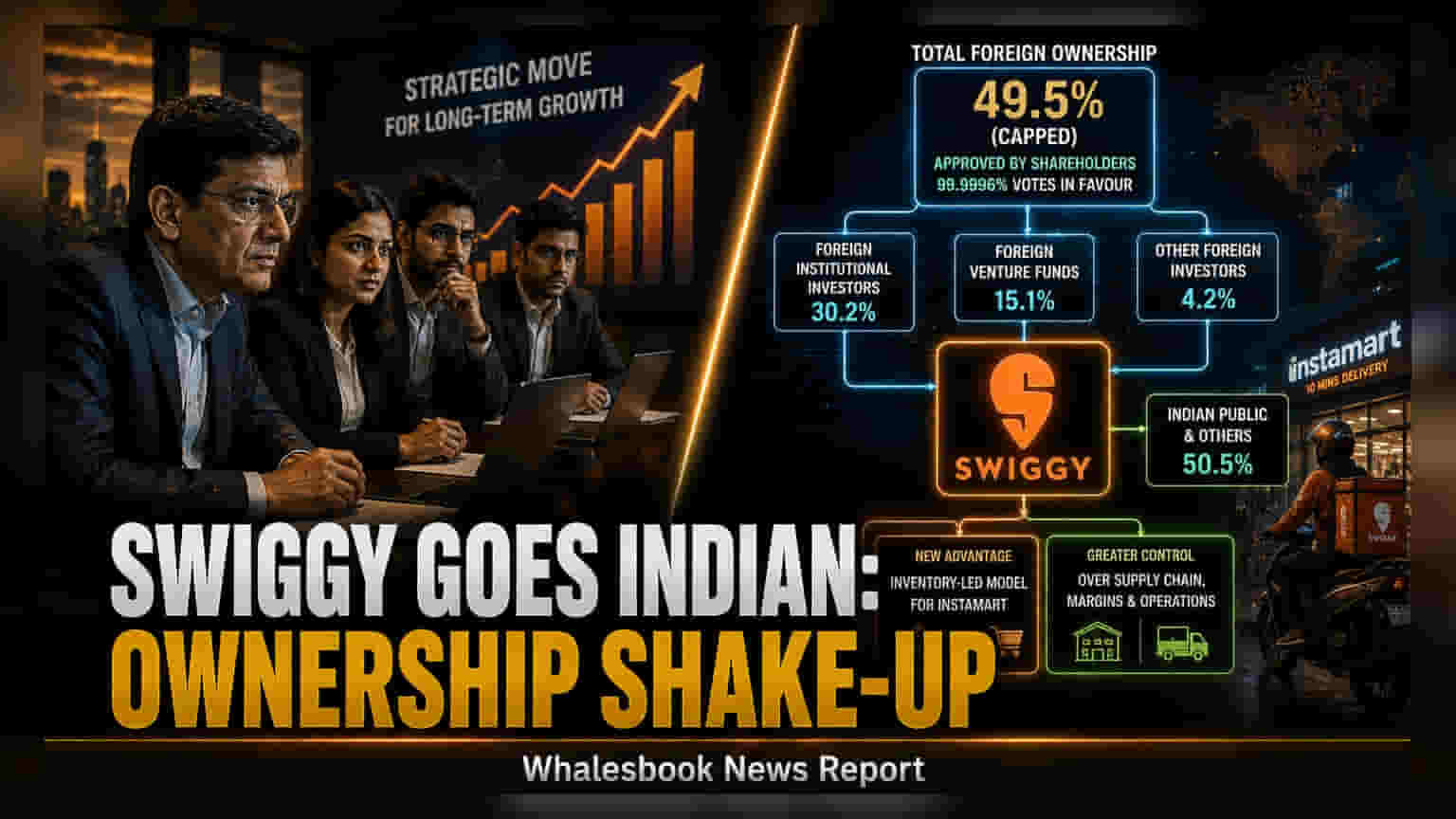
Swiggy shareholders have voted to limit foreign ownership to 49.5%, qualifying the company as Indian-owned under local regulations. This move allows its quick commerce unit, Instamart, to move toward an inventory-led business model to improve efficiency. Despite the news, the company's shares fell over 1% to ₹270.95 on Wednesday.
Swiggy has reached a significant milestone in its corporate structure after shareholders overwhelmingly approved a proposal to cap total foreign ownership at 49.5% at the company’s 13th Annual General Meeting. This decision, which received 99.9996% support, is a major shift for the food delivery and quick commerce major. By restricting foreign investment to this level, Swiggy now qualifies as an Indian-owned and controlled company under the Foreign Exchange Management Act regulations. This status is vital for the company’s future operations and business model strategy.
Strategic Shift for Instamart
The primary reason for this change is to give Swiggy more freedom in how it runs its quick commerce arm, Instamart. Previously, as a company with higher foreign investment, Swiggy operated largely as a marketplace, connecting customers with sellers. By attaining Indian-owned status, the company can potentially shift to an inventory-led model. In this setup, the company can hold and manage its own inventory, which typically allows for better control over the supply chain and may help improve profit margins over time. This approach is similar to that of competitors like Blinkit, which operates under the Zomato umbrella.
Market Reaction and Financial Context
While the company views this as a strategic win, the stock market reaction on Wednesday, August 19, 2026, was cautious. Swiggy’s share price dropped over 1% during the trading session, settling at approximately ₹270.95. This decline suggests that while investors understand the long-term potential of the structural change, they are also considering the immediate hurdles the company faces. The company has historically faced pressure from intense competition in the quick commerce space, where rivals like Zomato and Zepto are aggressively expanding. Additionally, while Swiggy has worked to narrow its net losses, it still requires significant capital to fund growth and marketing, and the transition to an inventory-led model carries its own set of operational risks.
Moving Toward Compliance
To achieve this new status, Swiggy had to amend its Articles of Association, ensuring its board nomination rights and decision-making processes align with domestic control requirements. The company had been working toward this for some time, with a previous attempt to adjust its ownership structure failing in May. As of early July 2026, foreign investment stood at 49.76%, meaning the company now needs to ensure this figure dips slightly below the new 49.5% limit to remain fully compliant.
Investors should track the actual implementation of this inventory-led strategy in the coming quarters. The key monitorables will include how effectively the company manages the logistics and working capital requirements of its new inventory model, and whether this shift helps it regain market share or improve its financial margins in the face of stiff competition.