

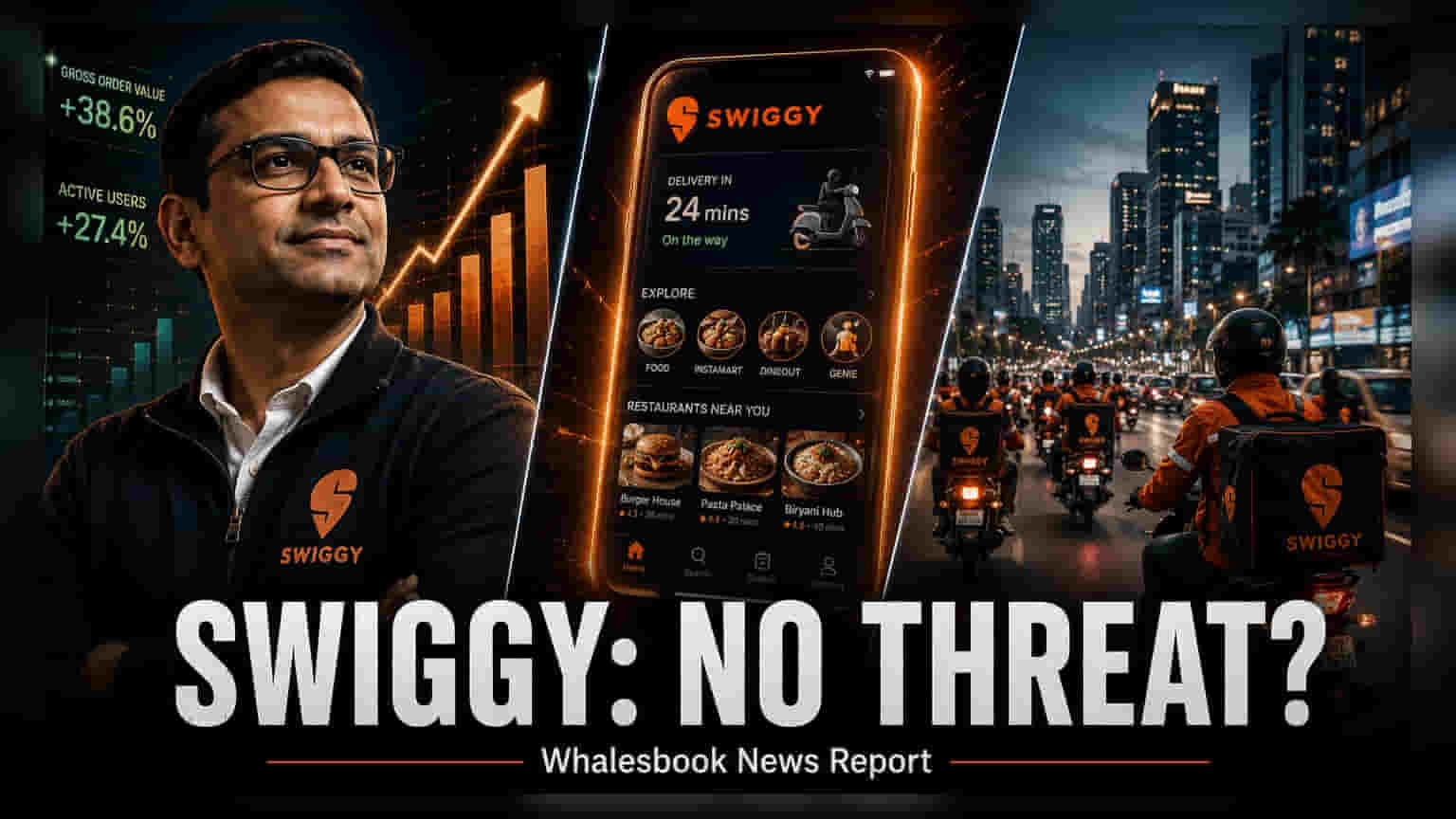
Swiggy posted a 37% year-on-year revenue jump to Rs 6,812 crore for the June quarter, narrowing its net loss by 34% to Rs 791 crore. Despite new market entrants like Flipkart and Rapido's Ownly, the company remains focused on expanding its customer base through platforms like Bolt. Investors are tracking how these low-price service formats impact long-term margins and market share.
Swiggy has reported its financial results for the June quarter of fiscal year 2027, highlighting a strong growth in top-line figures alongside a reduction in overall losses. The food delivery firm generated Rs 6,812 crore in revenue from operations, a significant 37% increase compared to the Rs 4,961 crore reported in the same quarter last year. Simultaneously, the company successfully reduced its net loss by 34% year-on-year to Rs 791 crore, reflecting efforts toward better operational efficiency.
Strategic Response to New Entrants
The food delivery sector is seeing increased activity as new participants enter the market through platforms like ONDC and specialized services such as Rapido’s Ownly. During its recent earnings call, Swiggy stated that its existing infrastructure, including an extensive network of restaurant partners and fully developed delivery operations, provides a competitive advantage. The company argues that these assets allow it to serve customers efficiently, potentially making it difficult for new, smaller players to replicate the scale and cost structure without significant investment.
To address the segment of consumers who are highly price-sensitive, Swiggy launched a service format called Bolt last September. While this platform has seen a rise in downloads, analysts at JP Morgan have noted that this service primarily attracts customers through lower pricing and the absence of platform fees, rather than by significantly expanding the total supply of restaurants. This focus on affordability highlights the ongoing challenge for delivery platforms: balancing the need to capture price-sensitive users with the pressure to maintain healthy unit economics.
Peer Strategies and Operational Innovation
Competition is not limited to pricing models. Zomato, a key peer in the sector, has taken a different approach to the low-price segment with its platform called Bistro. Unlike traditional delivery models that rely on third-party restaurants, Bistro operates its own kitchens to deliver snacks and quick meals within a 10-minute window for nearby orders. Zomato’s management has indicated that this model requires deep supply chain innovation, such as automated kitchen workflows and custom equipment, to remain viable for orders priced between Rs 50 and Rs 150.
As these companies refine their strategies, the focus for investors remains on whether these diverse formats can deliver sustainable profitability. While Swiggy continues to leverage its core platform to defend its market share, the sustainability of margins for these new low-price services will be a critical monitorable. The ability of both Swiggy and Zomato to scale these innovations while managing costs will determine the future direction of their bottom lines in an increasingly crowded market.