 Whalesbook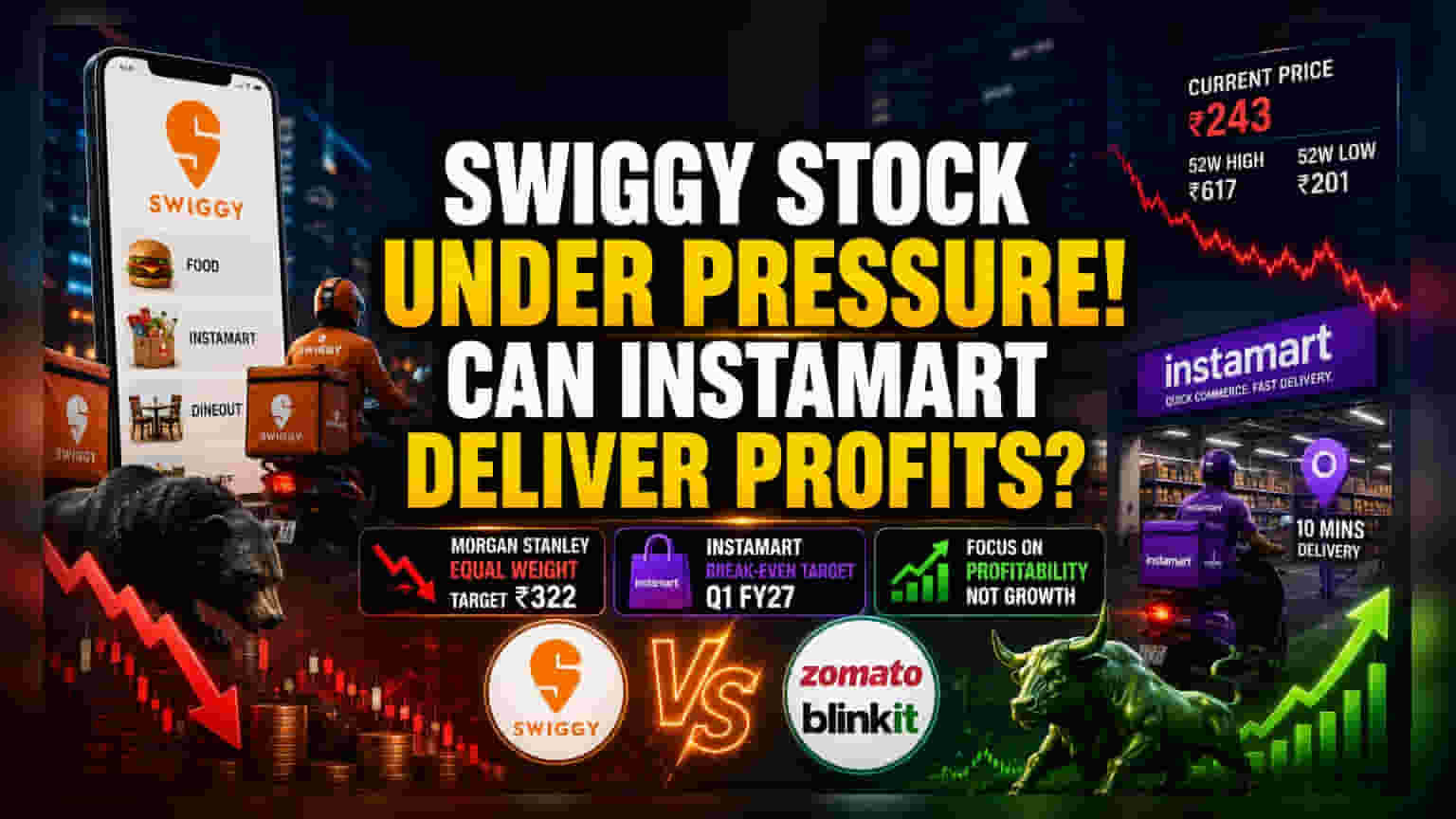


The Valuation Gap and Market Sentiment
Morgan Stanley’s recent 'Equal Weight' rating and Rs 322 price target for Swiggy arrive at a testing time for the food-tech giant. The valuation reflects a more cautious institutional outlook compared to previous bullish stances, as the market increasingly scrutinizes the company's ability to maintain its market share without matching the aggressive spending cycles of competitors. Trading significantly below its peak, the stock’s performance is no longer tethered purely to revenue growth but is increasingly governed by its ability to demonstrate a tangible bridge to EBITDA break-even.
The Instamart Profitability Dilemma
At the core of the institutional skepticism lies the performance of Instamart. While the segment has shown rapid order value expansion, the competitive intensity—largely driven by deep-pocketed conglomerates and dedicated quick-commerce specialists—has forced a recalibration of internal targets. Management has signaled a strategic pivot away from the 'growth at all costs' model, opting instead to prioritize high-frequency, high-value customers. While this disciplined approach aims to improve unit economics, it risks eroding market share in a segment where speed and availability remain the primary customer acquisition tools. The commitment to achieving contribution-level break-even by the first quarter of fiscal 2027 remains the focal point for analysts, though historical delays in these milestones have heightened investor anxiety.
Competitive Benchmarking and Risks
Unlike Zomato, which has successfully leveraged its Blinkit acquisition to dominate the quick-commerce narrative with more robust operational efficiency, Swiggy continues to grapple with a higher cash burn profile. Competitive data suggests that Blinkit has benefited from a more dense dark-store network and higher average order values, putting pressure on Swiggy to optimize its own logistics without further degrading margins. Furthermore, the entry of newer, lean-operating rivals—who are disrupting traditional delivery fee structures—threatens to cap the platform’s ability to pass costs onto the consumer. Regulatory scrutiny and the persistent pressure to maintain an integrated ecosystem across food delivery, dine-out, and grocery create a complex overhead that complicates the company's path to positive cash flow.
Future Outlook and Strategic Focus
Swiggy’s future trajectory is heavily dependent on the success of its 'Toing' initiative and its ability to scale its dining-out and non-grocery verticals. The firm’s decision to avoid an all-out capital war is viewed as a necessary, albeit risky, maneuver to preserve liquidity. As the company participates in upcoming investor forums throughout June 2026, the market will look for concrete evidence that this restraint is translating into improved bottom-line stability rather than a surrender of its core consumer base to more aggressive market participants.