

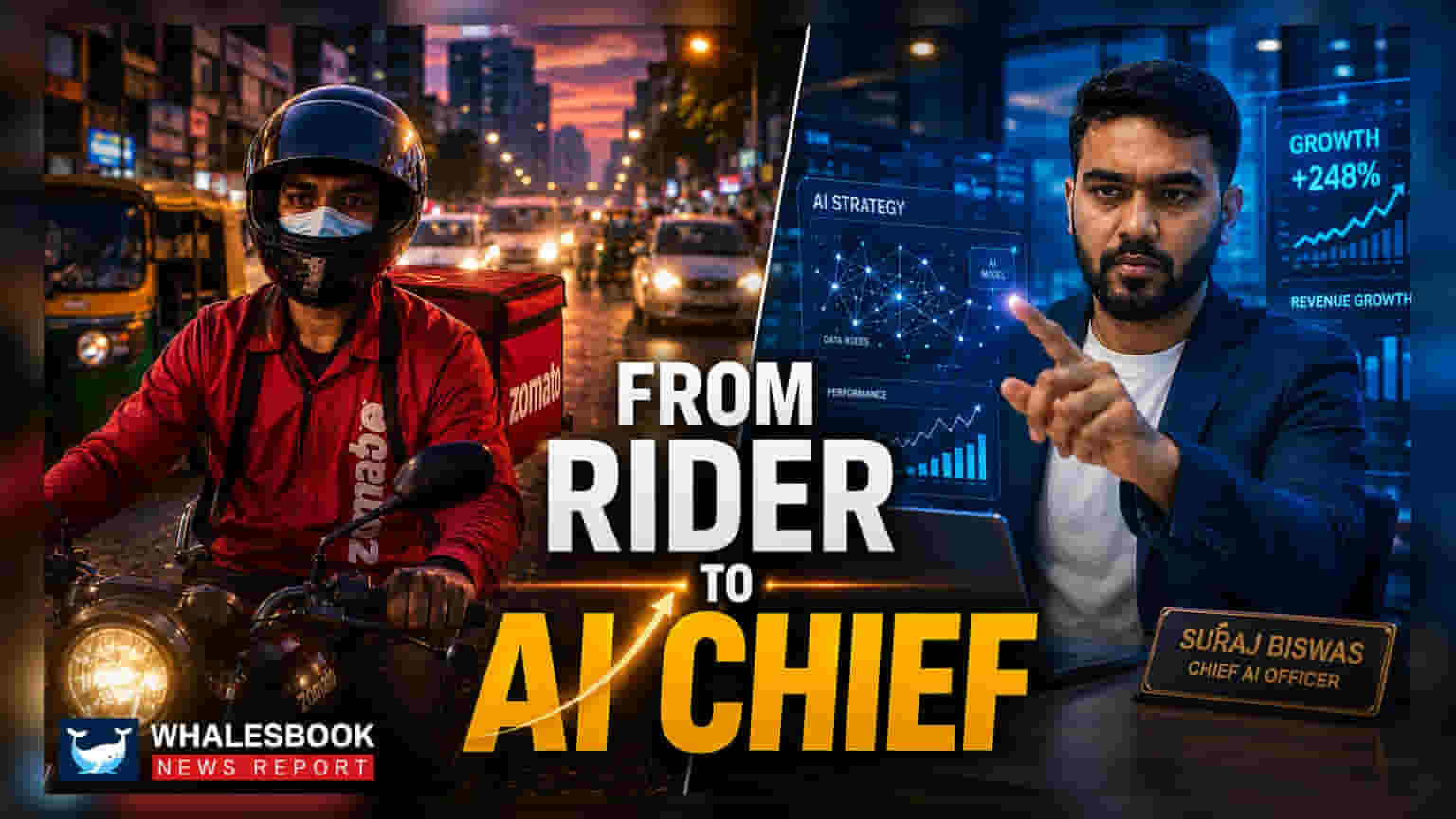
Suraj Biswas, a former Zomato delivery partner, has built two AI startups, Assessli and Dots-in, after transitioning from a food delivery career. His journey highlights the challenges of bootstrapped entrepreneurship in the Indian AI sector, including overcoming funding hurdles and the need for credibility in the competitive technology space.
From Food Delivery to AI Innovation
Suraj Biswas, a 28-year-old entrepreneur from West Bengal, has gained attention for his transition from working as a Zomato delivery partner to building his own technology ventures. While working as a delivery rider, earning between Rs 1,000 and Rs 1,500 daily, Biswas used his earnings to support his interest in technology. He holds a B.Sc. in Genetics from the Gurunanak Institute of Pharmaceutical Science and Technology in Kolkata, a background that differs from the typical computer science path often seen in the startup ecosystem.
The Focus of Assessli and Dots-in
Biswas launched two AI-focused companies, Assessli and Dots-in, in 2021. Assessli aims to provide personalized educational tools to address the limitations of standardized learning systems. His second venture, Dots-in, focuses on creating AI systems that model individual behaviors rather than just analyzing large population datasets. These projects represent a niche approach within the broader artificial intelligence sector, where many firms prioritize large-scale data processing over individual-centric modeling.
Challenges in the Startup Journey
Building an AI startup from the ground up without external funding or co-founders presents significant operational and financial risks. In the current Indian startup landscape, AI ventures often require substantial capital for research, infrastructure, and talent acquisition. Biswas has faced hurdles regarding market credibility and the difficulty of securing venture capital as an unconventional founder from a smaller town. Unlike established tech firms with institutional backing, independent founders often face a longer road to achieving scale and commercial viability due to limited access to resources.
The Personal and Professional Context
Beyond his commercial ventures, Biswas has established a non-profit initiative called Indots, dedicated to supporting children whose parents have passed away. This initiative was influenced by the loss of his father in early 2024. For aspiring entrepreneurs, his trajectory underscores the importance of resilience in sectors that require long-term research and development, such as artificial intelligence. His move from West Bengal to Bengaluru aligns with a broader trend of entrepreneurs relocating to major tech hubs to seek better networking, talent, and potential partnership opportunities.
What Investors and Observers May Track
For those watching the growth of the Indian AI ecosystem, the key monitorables for independent startups like Assessli and Dots-in include their ability to secure sustainable funding, the commercial adoption of their AI models, and their ability to differentiate their technology from larger, well-funded competitors. The long-term success of such startups depends on overcoming the gap between theoretical AI models and practical, revenue-generating applications.