

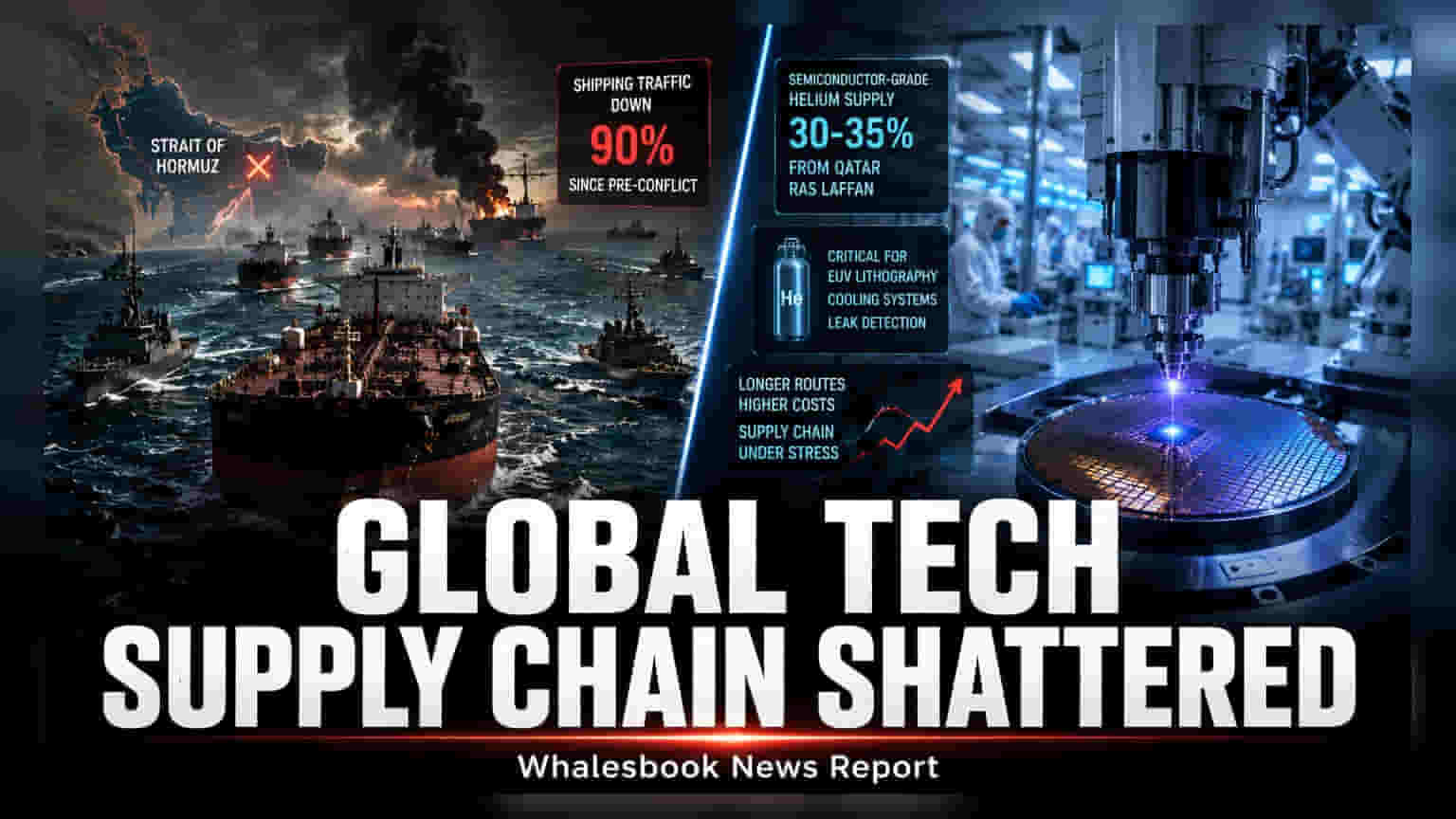
The ongoing blockade of the Strait of Hormuz has severely disrupted the supply of semiconductor-grade helium, essential for advanced chip manufacturing. With 30-35% of global supplies originating from Qatar, chipmakers face production yield risks and rising costs. This geopolitical crisis has forced long-term rerouting of materials, creating critical bottlenecks for the tech industry.
The blockade of the Strait of Hormuz, resulting from the conflict initiated in late February 2026, has created a significant crisis for the global semiconductor industry. While geopolitical turmoil is often viewed through the lens of energy prices, the disruption is exposing deep, critical dependencies in technology supply chains. Semiconductor manufacturing is not just about chips; it relies on a steady flow of specialized industrial gases and predictable energy, both of which are currently under stress.
A primary area of concern is the supply of semiconductor-grade helium. Approximately 30% to 35% of the world's supply of this gas comes from Qatar’s Ras Laffan Industrial City. Since the crisis began, this facility has faced severe operational restrictions. Helium is not optional in advanced chip fabrication; it is vital for EUV lithography—the process used to print the most advanced microchips—as well as for cooling systems and leak detection. Without a reliable supply, manufacturers in key hubs like South Korea and Taiwan face the risk of production delays or lower manufacturing yields.
Logistics and energy costs are also adding pressure to the sector. With shipping traffic through the Strait of Hormuz having dropped by approximately 90% compared to pre-conflict levels, vessels are being rerouted around the Cape of Good Hope. This change adds 10 to 20 days to transit times, increasing costs for shipping components and materials. Additionally, semiconductor fabrication plants are power-intensive operations. Their reliance on liquefied natural gas (LNG), which previously had a more direct path through the Strait, has become more expensive and volatile, putting upward pressure on operating costs.
For the industry, the current situation highlights the vulnerability of concentrated supply chains. Many tech companies are now facing the reality that having multiple chip suppliers does not protect them if the upstream raw materials—like specialized gases—cannot reach the factory floor. The primary risk for investors and businesses is that higher costs, combined with the lack of viable, at-scale substitutes for ultra-pure helium, could lead to sustained production bottlenecks for GPUs, servers, and high-end networking hardware.
The key monitorable for the coming months will be the availability of alternative helium sources and how effectively manufacturers can adjust their processes to handle supply constraints. Stakeholders will also be watching for any changes in production yields or further operational updates from major fabrication hubs, as these will directly influence the supply of advanced technology hardware in the global market.