 Whalesbook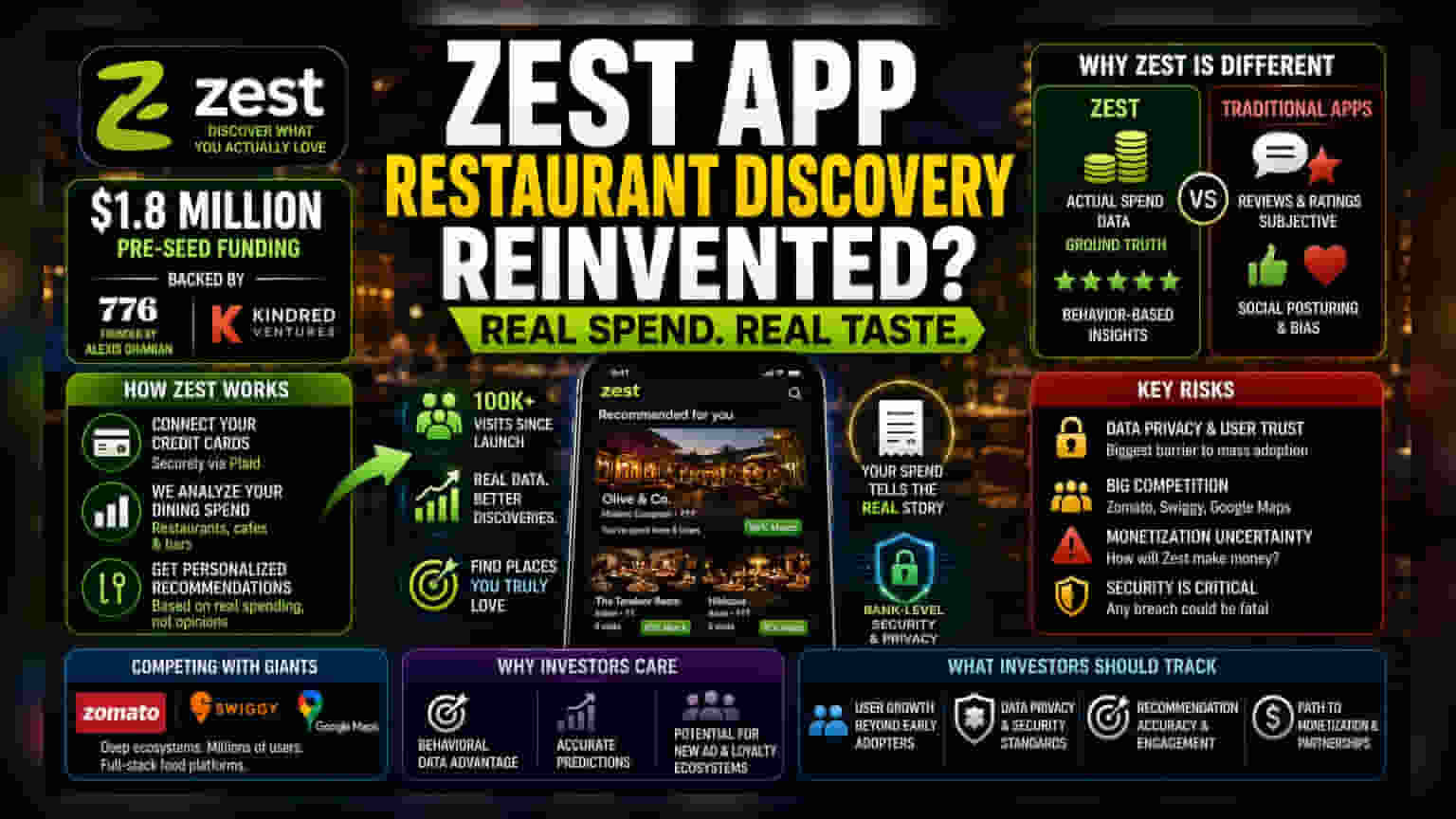


Newcomer Zest has launched a restaurant discovery app that uses verified credit card transaction data to generate recommendations. By moving away from traditional user reviews, the app aims for accuracy but faces significant hurdles, including user data privacy concerns and stiff competition from established food-tech giants.
What Happened
Zest, a new startup in the restaurant discovery space, has officially launched its app. The company is using a unique approach to help users find places to eat by leveraging actual spending data rather than relying on subjective user reviews or curated wishlists. Founded in November 2024, the company recently secured $1.8 million in pre-seed funding from investors including 776, founded by Alexis Ohanian, and Kindred Ventures.
The app functions by connecting to a user's credit card accounts through Plaid, a financial services platform. By importing specific dining and drinking transaction records, Zest creates personalized recommendations based on where the user actually spends their money, rather than what they say they like. The company reports over 100,000 visits since its launch.
Why This Matters For Investors
The restaurant discovery market has long been dominated by platforms that depend on user-generated content, such as reviews, photos, and star ratings. This model is often prone to bias, manipulation, or 'social posturing,' where users might recommend trendy places they have visited once just for the optics. Zest is attempting to change this by using 'ground truth' data—actual transaction history. For investors, this represents a shift toward data-driven consumer behavior analysis. If successful, this could offer a more accurate way to predict what people actually enjoy, potentially creating a new type of advertising or loyalty ecosystem.
The Data Privacy Barrier
While the technology is innovative, it faces a major hurdle: user trust. Asking consumers to link their credit card statements to a discovery app is a significant request. In a global environment increasingly focused on data privacy, many users are cautious about sharing their financial habits with third-party applications. If Zest cannot prove that the data is handled with the highest level of security and privacy, scaling the user base will be difficult. This trust factor is the single biggest risk to the company's growth. Without a large, active user base, the data-driven recommendation engine cannot function effectively.
Competitive Context
Zest is entering a highly competitive sector that includes established giants like Zomato, Swiggy, and Google Maps. These incumbents possess massive datasets involving user delivery habits, dine-out bookings, and geolocation history. While Zest’s focus on transaction data is a differentiator, the incumbents have deep integrations that cover the entire food ecosystem—from discovery to delivery to payments. Competing for user attention in this space requires not just better recommendations, but also the network effects that come with millions of restaurants and users already on established platforms.
What Investors Should Track
Investors will likely watch how Zest manages to scale its user base beyond early adopters. Key monitorables include the company’s ability to maintain high data privacy standards, as any security incident could be terminal for the business. Furthermore, the company’s path to monetization remains an important question. Will they pivot toward targeted advertising based on spending patterns, or will they attempt to partner with restaurants for loyalty programs? Tracking the company's ability to keep users engaged and the actual accuracy of these recommendations over time will be essential to understanding if this model has long-term viability against established food-tech incumbents.