

Orbital data center startup Starcloud has raised $250 million, pushing its valuation to $2.3 billion. The company is building AI infrastructure for space, but investors should weigh the high capital needs and technical risks of operating in orbit against the company's early-stage growth.
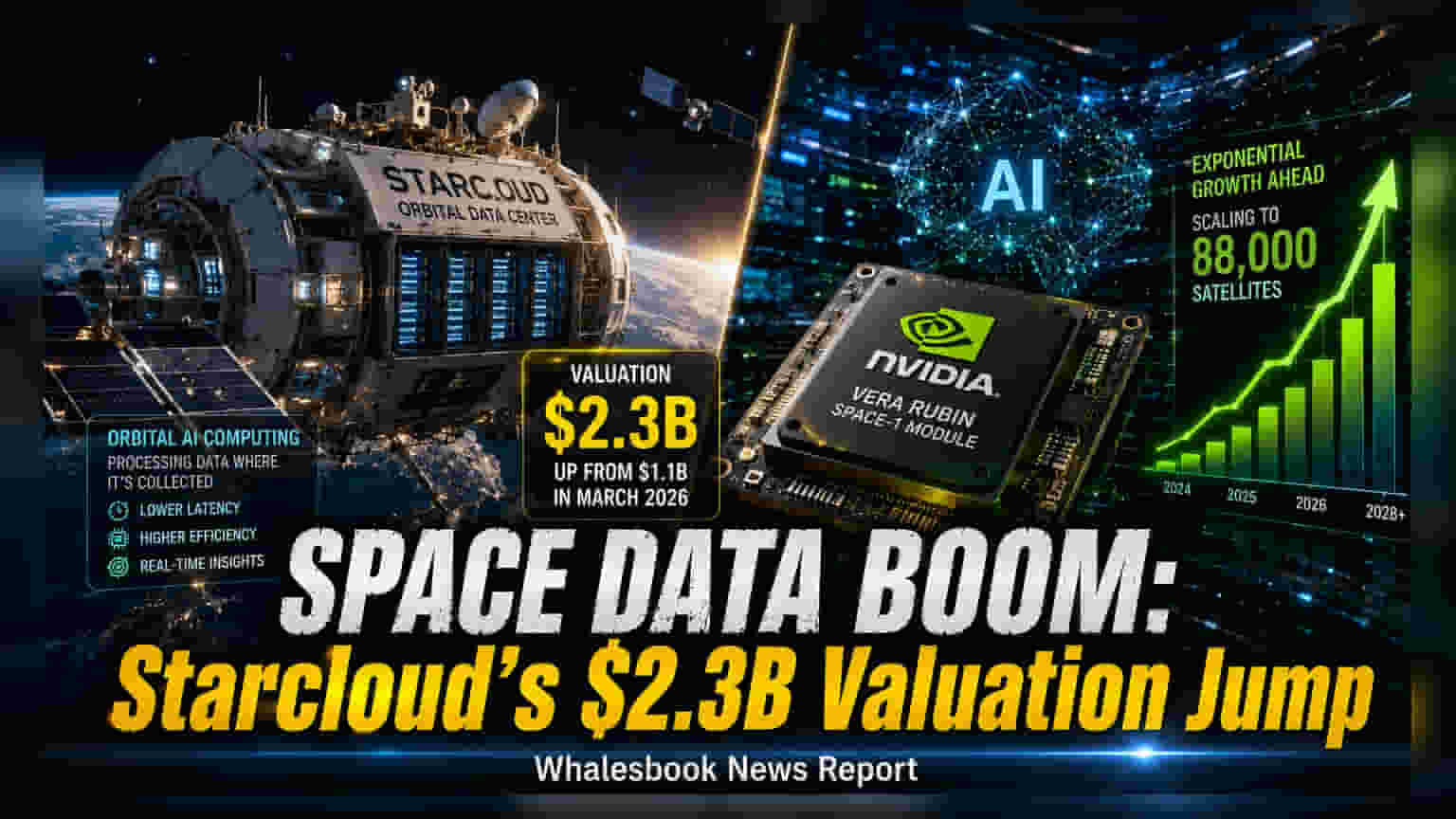
Starcloud, an orbital data center startup, has secured $250 million in a new funding round. This latest capital injection has pushed the company’s total valuation to $2.3 billion. Since starting in 2024, the company has raised $450 million in total. This development marks a rapid increase in valuation, moving up from $1.1 billion just a few months ago in March 2026.
Building Data Centers in Orbit
Starcloud is attempting to solve a difficult technical problem: bringing high-performance computing, typically found in massive terrestrial data centers, into space. The company’s core focus is to enable Artificial Intelligence (AI) processing in orbit. By moving AI workloads to satellites, Starcloud aims to process data closer to where it is collected, rather than sending raw data back to Earth first. This could potentially reduce latency and improve efficiency for space-based applications.
The company is using the fresh funds to ramp up its manufacturing capacity. It is building a 100,000-square-foot facility in Woodinville, Washington, to produce its next-generation Starcloud-3 spacecraft. These funds will also support its ongoing collaboration with Nvidia on the Space-1 Vera Rubin Module, which is hardware specifically designed to handle the high radiation and thermal extremes of orbital environments.
Investor Landscape and Strategic Partnerships
The funding round was led by Manhattan West, with support from existing investors like Benchmark and EQT. Importantly, the round also drew interest from major technology players such as Nvidia and Cisco Investments. For the broader market, this level of backing from such established tech giants suggests strong institutional confidence in the potential of space-based computing.
However, it is important for investors to note that Starcloud is a private company. It is not listed on any stock exchange, meaning Indian retail investors cannot buy shares in the company directly. The interest in this firm reflects a broader global trend in the space-tech sector, which often influences the valuations and growth expectations for similar private and public startups in the global space ecosystem.
Significant Risks and Execution Challenges
While the valuation growth is substantial, Starcloud faces high-level risks that are common in the space-tech industry. The biggest challenge is scaling from prototypes to a massive, functioning constellation of 88,000 satellites. This requires executing a complex manufacturing plan that is still in the early stages.
Furthermore, the business model depends heavily on reliable and cost-effective launch capacity. To deploy and maintain a network of this size, the company needs regular, affordable access to space, often relying on launch providers like SpaceX. Any delay or significant cost increase in launching these satellites could directly impact the company’s financial health and project timelines. Additionally, because the company is in an early growth phase and has not yet demonstrated large-scale, consistent commercial revenue, the $2.3 billion valuation is based largely on future potential rather than current financial performance. Investors in the space sector must track whether the company can successfully move from the development phase to consistent, profitable service delivery.