

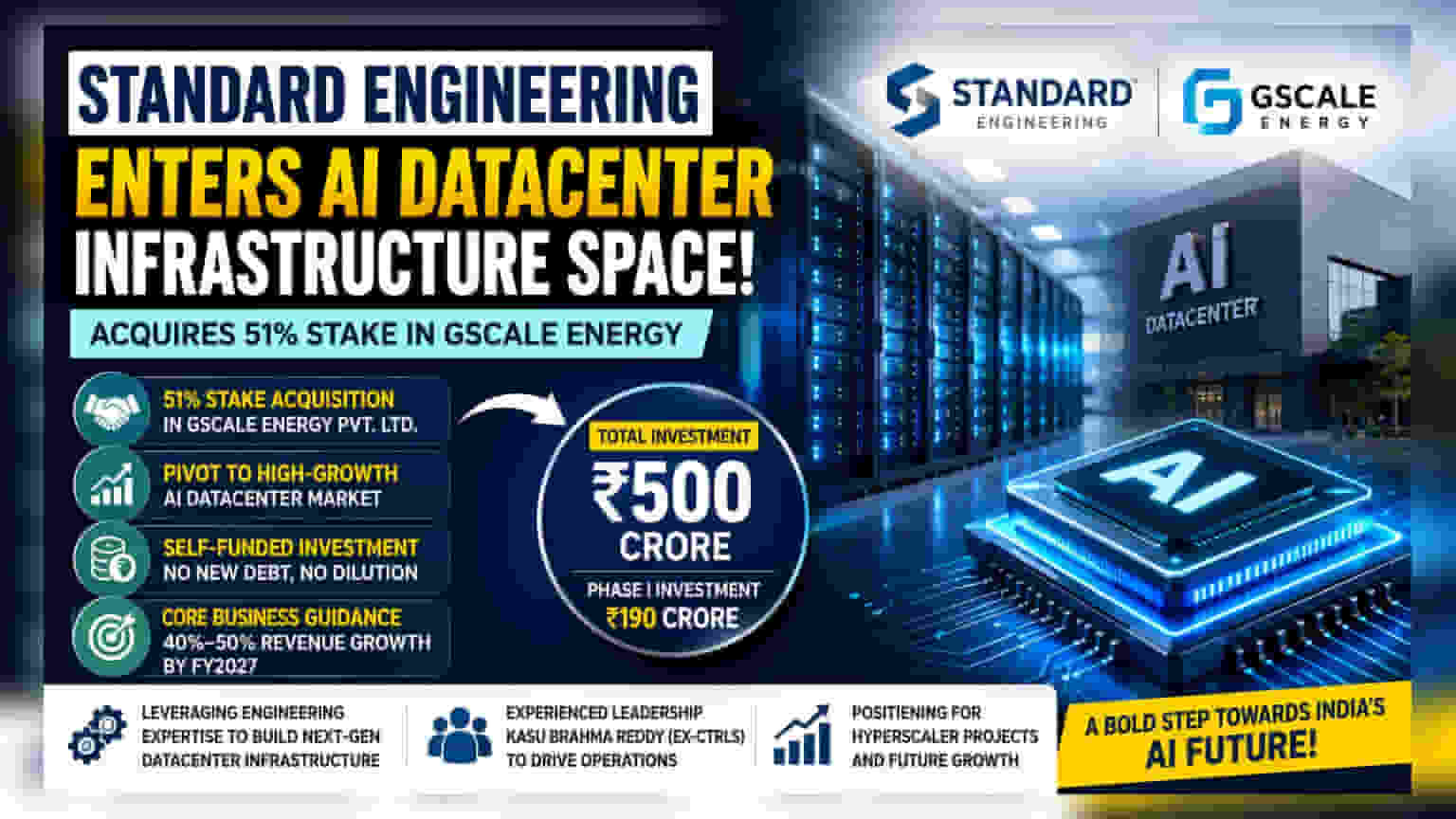
Standard Engineering Technology Ltd. is acquiring a 51% stake in GScale Energy Private Ltd. for ₹190 crore to enter the AI datacenter engineering market. The company plans a total investment of ₹500 crore, which it claims will be fully self-funded through internal cash flows. This strategic shift moves the firm beyond its traditional pharmaceutical and chemical engineering roots, aiming to tap into the expanding demand for AI infrastructure in India.
What Happened
Standard Engineering Technology Ltd. (SETL) has officially announced its entry into the AI datacenter infrastructure sector. The company’s board of directors approved the acquisition of a 51% majority stake in GScale Energy Private Ltd., a firm specializing in datacenter engineering and infrastructure solutions. The deal is structured through a mix of primary capital infusion and a share-swap arrangement with existing shareholders. SETL has committed to an initial Phase I investment of ₹190 crore. As part of a larger, phased expansion plan, the company has approved a total investment outlay of ₹500 crore to support equity acquisition, capacity expansion, and working capital needs for the new combined business.
A New Strategic Pivot
This acquisition marks a structural shift for Standard Engineering. Historically, the company has focused on precision and multidisciplinary engineering for the pharmaceutical, chemical, and biotechnology sectors. By acquiring GScale Energy, SETL is leveraging its existing design-to-commissioning capabilities to pivot toward the rapidly growing AI datacenter market. GScale Energy, led by its founder Kasu Brahma Reddy—a former industry veteran from CtrlS Datacenters—will continue to manage day-to-day operations, with SETL providing the capital and strategic oversight to scale the business. The company aims to use this partnership to immediately secure hyperscaler relationships and projects that are already in the pipeline.
The Investment And Cash Flow Question
Investors often worry about the financial strain of large acquisitions, particularly in the engineering sector where capital spending can be significant. However, Standard Engineering has stated that the entire ₹500 crore investment program will be self-funded through its internal cash flows and accruals. By emphasizing this, the company is attempting to reassure shareholders that the expansion will not require significant new debt or equity dilution that could impact the balance sheet. The ability to execute this phase-wise investment without adding debt is a key factor that market participants may watch, as it demonstrates the company's current ability to generate liquid capital from its core operations.
Core Business And Future Outlook
Alongside the AI expansion, SETL has provided guidance for its existing engineering business, aiming for 40% to 50% revenue growth by FY2027. This suggests that the management remains confident in the order pipeline of its traditional business, even as it diversifies into new areas. The success of this move will depend on whether the company can effectively integrate GScale’s expertise with its own manufacturing and engineering scale. The AI datacenter market in India is attracting significant capital, but it remains a competitive and technically demanding space.
What To Watch Next
For investors, the most critical monitorable will be the execution of the Phase I investment and the timeline for ramping up the datacenter infrastructure, which the firm plans to expand significantly by FY2028. Additionally, investors may monitor quarterly financial results to see if the promised growth in the core engineering business remains on track and if the margins of the combined entity are protected as the new AI vertical begins operations. As with any pivot, the company's ability to maintain its technical standards while operating in a new sector will be the primary measure of long-term success.