 Whalesbook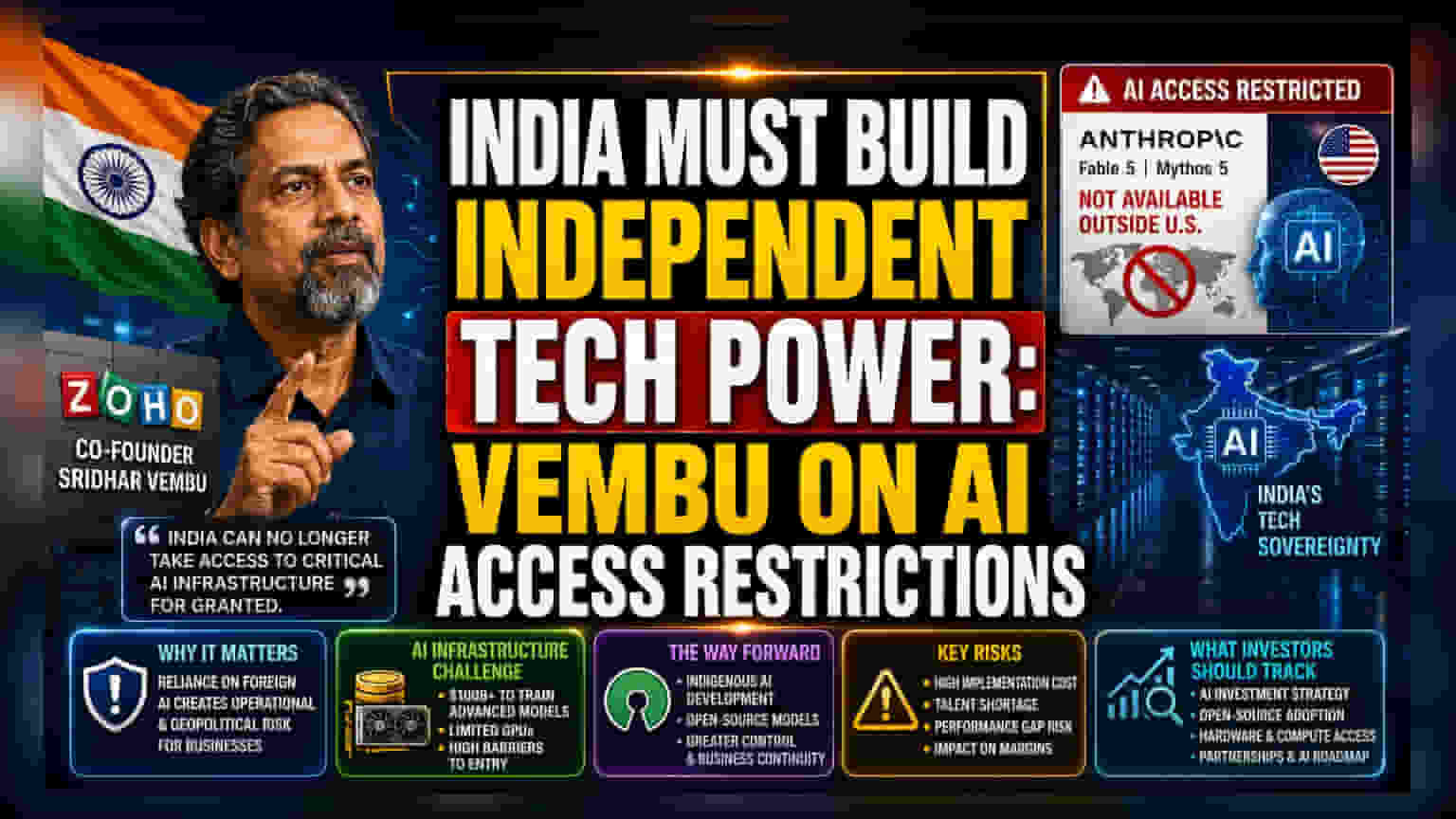


Zoho co-founder Sridhar Vembu has warned that reliance on foreign artificial intelligence platforms is a business risk. Following US-based Anthropic's restrictions on overseas access to its latest AI models, Vembu argued that India must prioritize indigenous, open-source AI development. For investors, this shift highlights the potential for geopolitical disruptions to impact Indian IT operations, making the move toward sovereign technology a key monitorable for long-term business resilience.
What Happened
Zoho Corporation co-founder Sridhar Vembu has called for an urgent focus on developing India's independent technology capabilities. This statement follows reports that US-based artificial intelligence company Anthropic has restricted access to its latest AI models, specifically the Fable 5 and Mythos 5, for users outside the United States. Vembu described this move as a significant development, noting that India can no longer assume continuous access to critical, foreign-developed AI infrastructure. He argued that globalization in the technology sector is facing challenges, with countries increasingly using technology as a tool for national strategy and security.
Why This Matters For Investors
The ability of Indian technology companies to deliver services depends increasingly on integrating artificial intelligence into their business models. If access to these advanced foreign models can be restricted by government directives or company policy, it creates a direct operational risk for businesses relying on them. For shareholders, this means that companies heavily dependent on third-party, foreign-controlled AI APIs may face service disruptions or increased costs if they are forced to migrate to alternative platforms on short notice.
The AI Infrastructure Challenge
Vembu highlighted the massive financial barriers to entry in the AI race. He pointed out that training advanced AI models requires enormous budgets—potentially exceeding $100 billion—and access to limited hardware like graphics processing units (GPUs). Even with sufficient capital, the scarcity of these chips and the control over AI software development remain significant hurdles. This suggests that the cost of building truly competitive AI infrastructure is immense, and Indian firms may need to decide carefully where to deploy their capital to ensure they remain relevant without overstretching their financial resources.
Business Strategy and Open-Source Options
To mitigate the risk of being cut off from foreign technology, Vembu advocates for a shift toward indigenous AI development and open-source models. For Indian IT firms, this could mean moving away from proprietary, foreign-controlled systems and instead adopting open-source alternatives that can be hosted and managed locally. This strategy may provide greater control over data and ensure business continuity. However, this transition requires significant investment in talent and research and development, which could impact short-term profit margins.
Risks and Market Challenges
The primary business risk is the high cost of implementation. Building domestic AI capabilities is capital-intensive and requires specialized talent that is currently in short supply. If Indian companies fail to innovate quickly enough, they may find themselves at a disadvantage compared to competitors who have secured more stable, long-term access to global AI technologies. Additionally, there is the risk that even with domestic efforts, the performance gap between indigenous models and top-tier global AI systems could widen, potentially affecting the quality of services offered to international clients.
What Investors Should Track
Investors may want to monitor how major Indian IT service providers and tech companies plan to navigate these sovereignty risks. Key areas to watch include management commentary on AI infrastructure investments, the adoption of open-source versus proprietary foreign models, and any steps taken to secure long-term access to hardware and computing resources. Additionally, observing whether companies allocate more capital toward building proprietary AI solutions or partnerships with domestic entities will be important to understand their long-term resilience against potential geopolitical and supply chain disruptions.