

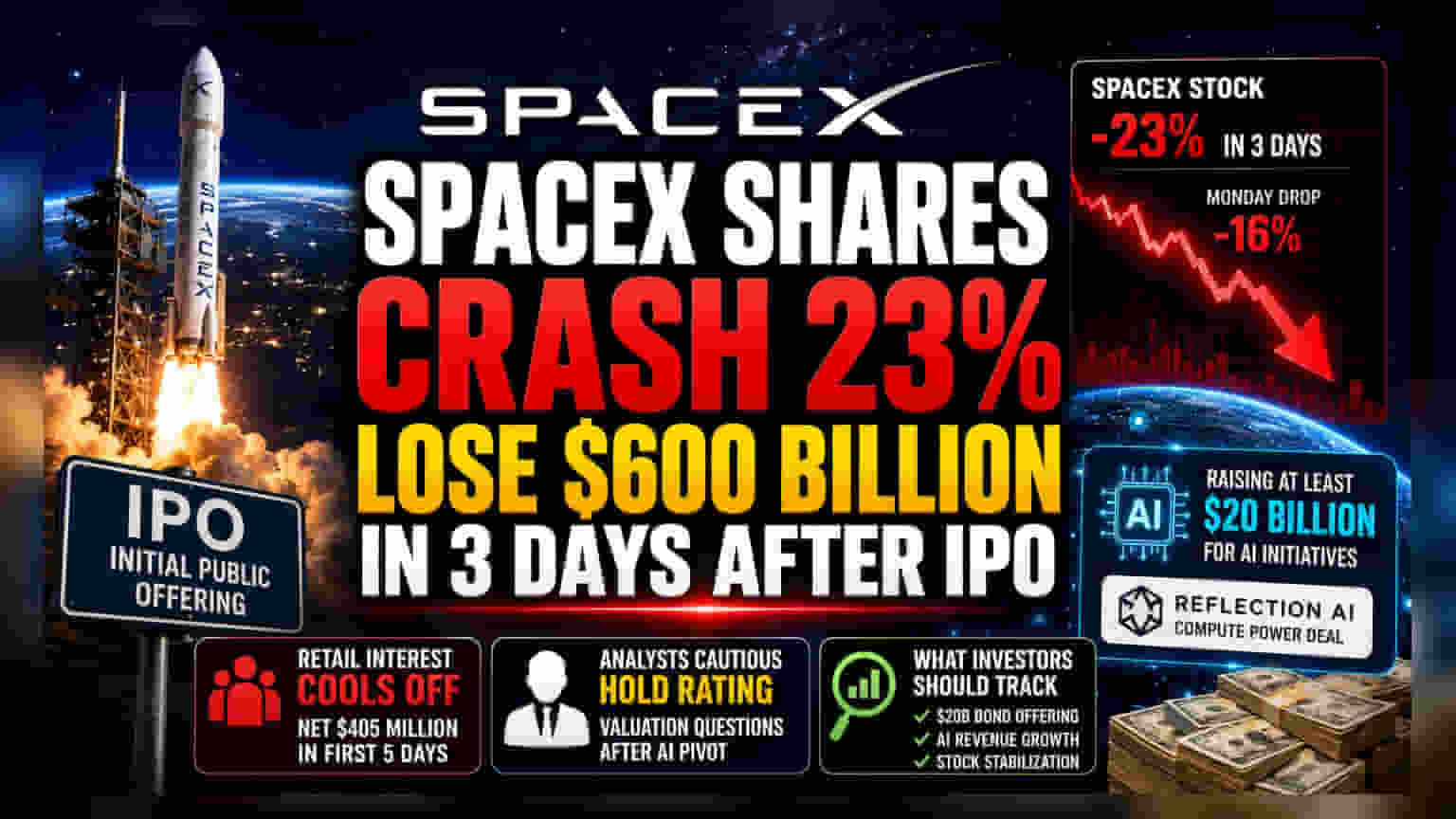
SpaceX has shed $600 billion in market value three days after its public debut. The sharp decline reflects investor caution regarding the company's plan to take on debt for AI expansion and signs that retail buying interest is cooling.
What Happened
SpaceX shares have seen a significant pullback, losing over $600 billion in total market capitalization within three trading sessions of its initial public offering. After an initial surge of excitement that pushed the company to a massive valuation, the stock has dropped 23% in three days, including a 16% decline on Monday alone. This sudden reversal indicates that the market is rapidly reassessing the stock's price, moving away from the initial wave of post-IPO enthusiasm.
The AI Expansion And Debt Question
A major point of concern for investors is the company's strategy regarding artificial intelligence. SpaceX is reportedly planning to raise at least $20 billion through bond offerings to fuel its AI initiatives. This includes a major agreement to supply computing power to the startup Reflection AI. While the move into AI is intended to open new growth paths, it has introduced a new layer of risk for shareholders. Investors are specifically watching the impact of this debt load and whether the capital spending on AI will deliver returns as quickly as the market expects.
Why Retail Interest Is Cooling
Retail investors were a primary force behind the stock's early momentum. According to data from Vanda Research, retail participants invested a net $405 million into SpaceX during its first five trading days, a volume that outpaced investments in several major tech stocks. However, recent trading data shows a sharp slowdown in this buying activity. This shift suggests that the "retail frenzy" that often supports a stock immediately after an IPO may be fading, leaving the shares more exposed to profit-taking by earlier investors.
What Analysts Are Saying About Valuation
As professional analysts begin to cover the stock, the focus has shifted to whether the current share price justifies the company's long-term business potential. KeyBanc Capital Markets initiated coverage with a "hold-equivalent" rating. While the analyst note recognized SpaceX's dominance in space-launch services, it questioned if the current valuation accurately reflects future growth, especially given the company's recent pivot to becoming a broader technology and AI-focused entity via its xAI acquisition.
What Investors Should Track
Investors may monitor a few key areas in the coming weeks. First, the success and terms of the proposed $20 billion bond offering will be critical; high debt costs could pressure profit margins. Second, the company's ability to demonstrate tangible revenue growth from its AI computing resources will be a key performance test. Finally, watching for any stabilization in the stock price could help determine if the recent decline is a short-term adjustment or if the market is adjusting its long-term expectations for the business.