

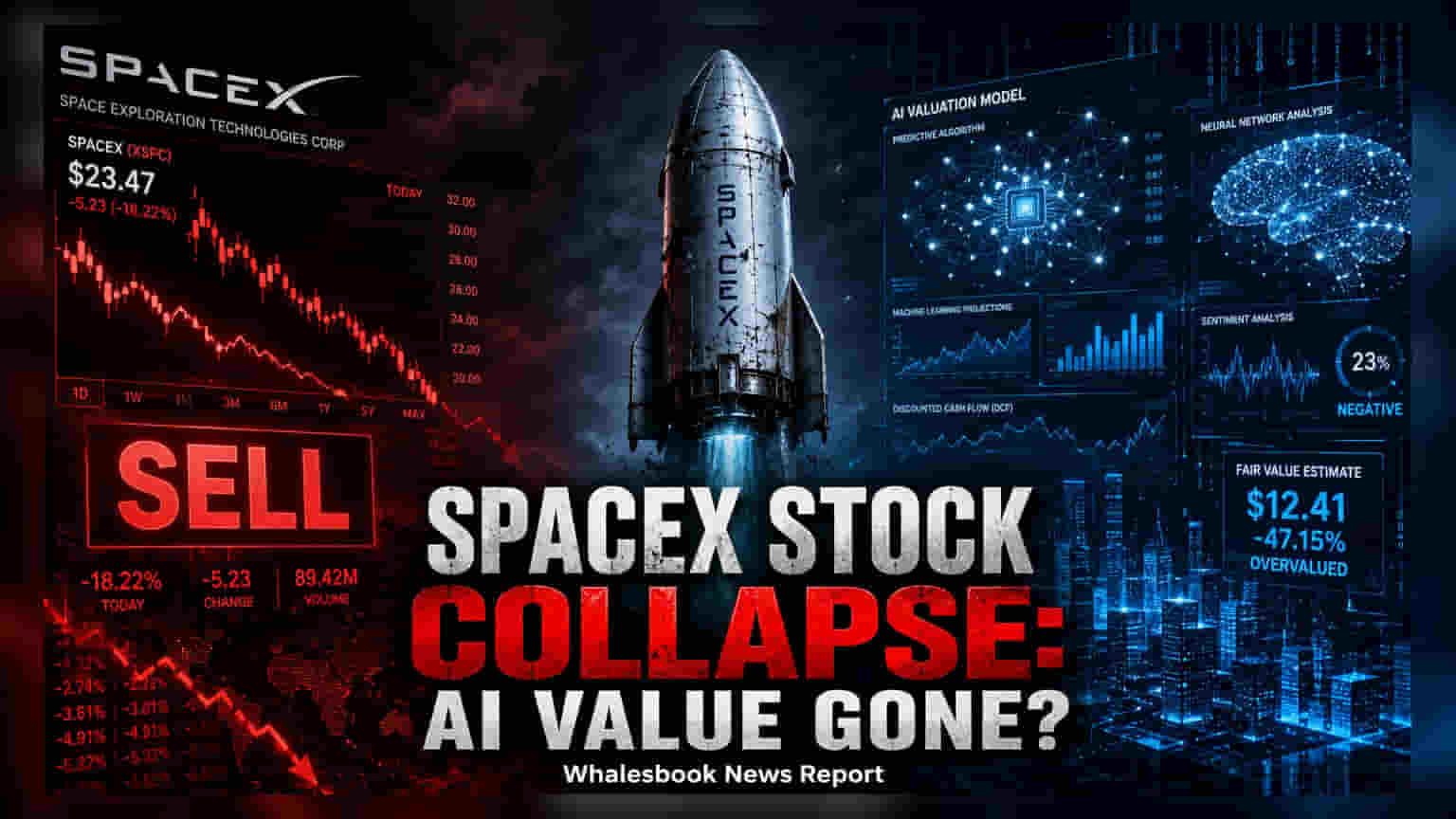
SpaceX shares have fallen 51% from their post-IPO peak, currently trading 18% below their initial issue price. Analysts suggest that if the stock price drops toward $100, the market would effectively value the company's AI business at zero. Investors are currently weighing the risks of heavy capital spending on AI against the company's long-term business potential.
Detailed Coverage
SpaceX has faced a challenging period in the public markets, with its stock price experiencing a significant decline since its initial public offering. Shares have dropped approximately 51% from their highest point, and they are currently trading about 18% below the price at which they were originally issued to the public. This downward trend has been driven by investor caution regarding the substantial amount of money the company is spending on artificial intelligence initiatives.
Impact of Potential Price Decline on AI Valuation
Recent analysis from Morgan Stanley highlights the sensitivity of the company's valuation to its share price. According to analyst Adam Jonas, if the stock were to fall to the $100 level, the market would essentially be placing no value on the company's AI division. This assessment reflects a growing skepticism among some market participants about whether the company's heavy investment in AI infrastructure will yield clear financial returns in the near term. The concern is compounded by the upcoming expiration of the lock-up period, which will allow early investors to sell their shares, potentially adding further pressure to the stock price.
Spending Pressures and Market Sentiment
Investors are increasingly scrutinizing companies that commit large sums to AI development, particularly in a climate of economic uncertainty and geopolitical instability. The high level of capital spending required for these projects, combined with the difficulty of predicting when they will become profitable, has led some to move away from high-risk technology stocks. Management's strong focus on these AI initiatives has also caused some observers to question the short-term impact on cash flow and overall margins.
Despite these challenges, many institutional analysts maintain a positive outlook on the company's fundamental business strength. Data shows that a large majority of analysts covering SpaceX hold a favorable view, with a significant number of firms, including major financial institutions like Goldman Sachs, Bank of America, Citigroup, and JPMorgan Chase, having issued positive ratings. The debate among investors largely centers on whether the current stock price accurately reflects the long-term potential of the company's core operations or if the concerns about AI spending are overshadowing its underlying value.
For investors, the key monitorables moving forward will include the company's actual spending on new infrastructure, its ability to generate revenue from these investments, and how the stock performs once the lock-up period for early investors ends. Management's upcoming commentary on project timelines and capital allocation will be important for assessing the company's financial discipline.