

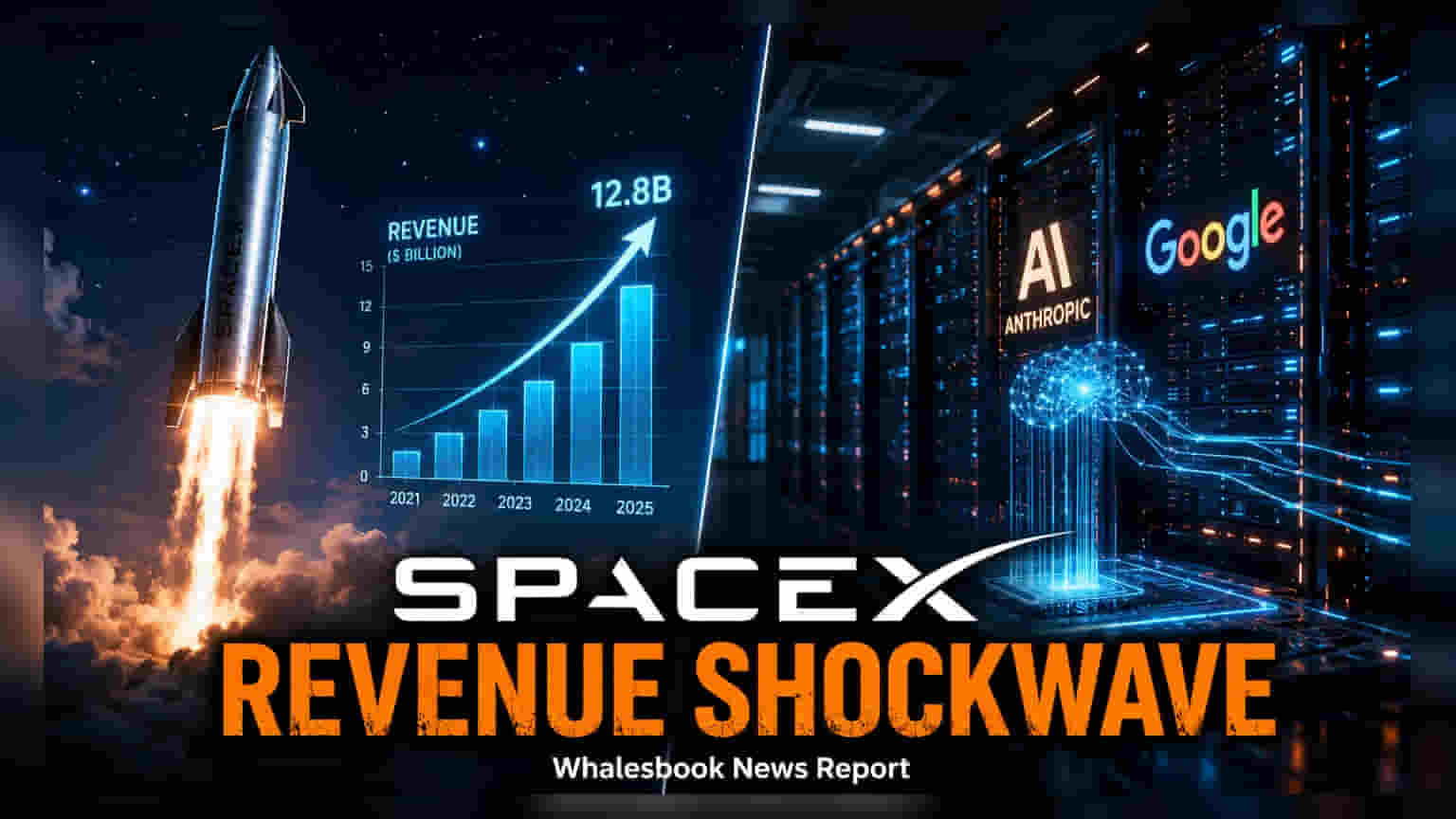
SpaceX reported a 92% revenue surge in its first quarterly earnings as a public company, reaching $7.8 billion. While the loss narrowed to $541 million, investors are focused on the upcoming expiration of an insider lock-up period on August 6, 2026, which could increase the supply of shares in the market.
SpaceX has reported its first quarterly earnings as a public company, showing a sharp 92% increase in revenue to $7.81 billion. This performance highlights the rapid scaling of its business segments, specifically in satellite internet and artificial intelligence infrastructure. The company’s revenue growth was notably driven by its Connectivity unit, Starlink, and a surge in data center capacity leasing.
Revenue Drivers and Spending
The AI segment emerged as a significant contributor, with revenue climbing 247% to reach $2.56 billion. This segment has benefited from leasing compute power to large technology firms, including Google and Anthropic. Meanwhile, the Starlink service recorded $4.29 billion in revenue. Despite this strong top-line growth, the company continues to report losses. Net loss for the quarter stood at $541 million, which is an improvement compared to the $1 billion loss recorded during the same period last year.
The cost to achieve this growth remains high. SpaceX reported capital spending of $18.37 billion for the quarter. This massive investment is being directed toward expanding its AI data center footprint and accelerating the development of the Starship rocket program. For investors, the ability of the company to eventually turn these heavy investments into consistent profits remains the central long-term focus.
Market Reaction and Lock-Up Risk
The company's stock has experienced notable volatility since its IPO on the Nasdaq in June 2026, currently trading below its initial listing price. Beyond operational performance, the immediate market sentiment is being shaped by technical factors related to the IPO structure. Investors are closely tracking August 6, 2026, which marks the expiration of the insider lock-up period. This restriction prevents early employees and initial investors from selling their shares. When this period ends, a large volume of shares—estimated at over 900 million—could potentially become eligible for sale. Historically, such events often lead to increased selling pressure, which may weigh on the share price in the near term.
Moving forward, the primary monitorables for the market will be how SpaceX manages its high level of spending while scaling its AI and space operations. Additionally, the trading activity following the lock-up expiration will provide insight into the appetite of long-term shareholders compared to those looking to exit their positions.