 Whalesbook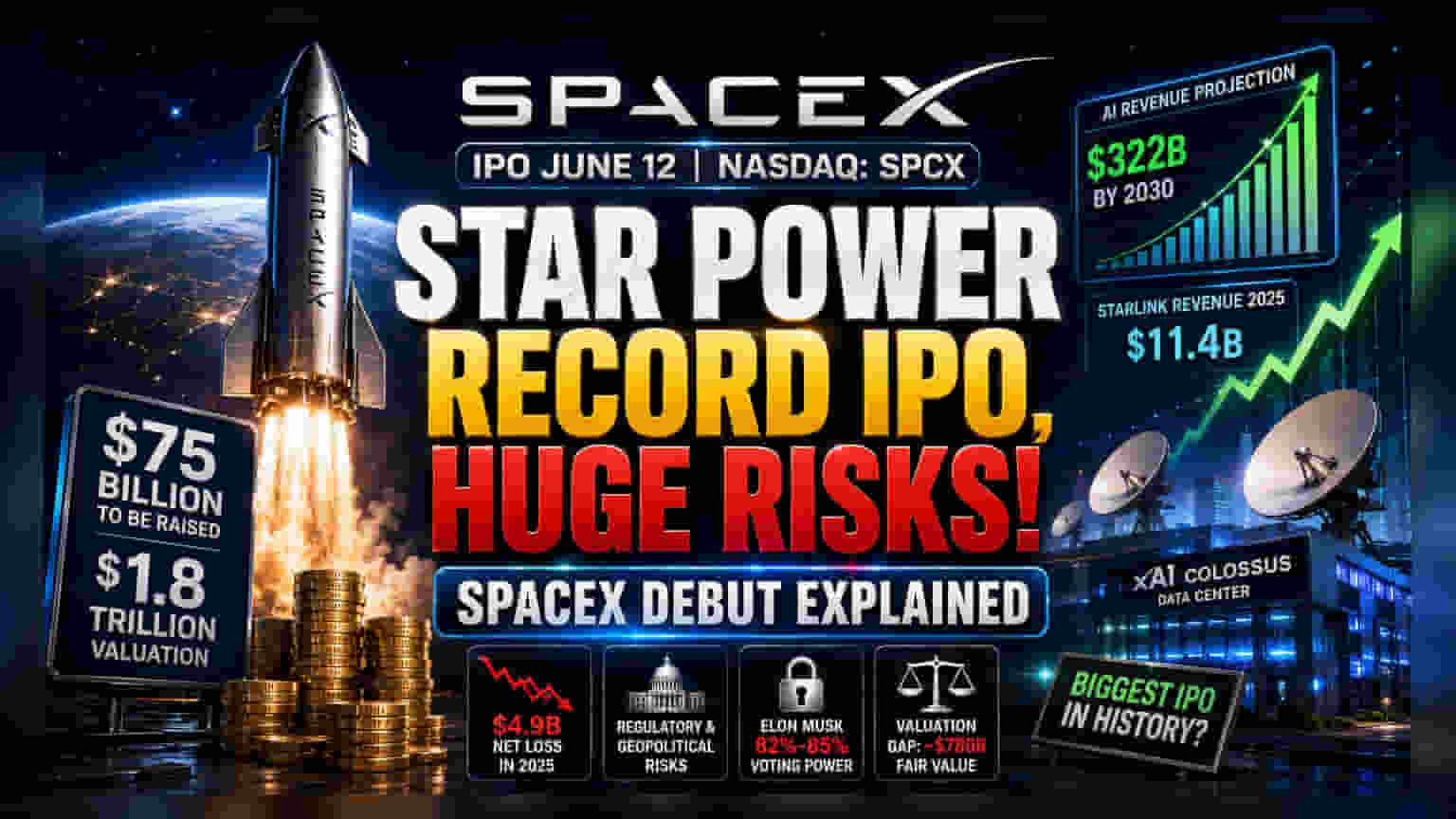


The Valuation Gap
Market anticipation for the SpaceX initial public offering has reached a fever pitch, with the company aiming to raise $75 billion at a $1.8 trillion valuation. This debut, scheduled for June 12 on the Nasdaq under the symbol SPCX, stands to shatter records, far surpassing the $29.4 billion raised by Saudi Aramco in 2019. Despite this scale, a disconnect persists between the company's aggressive internal revenue projections and the skeptical stance adopted by institutional researchers. Analysts argue that the current pricing, fixed at $135 per share, demands an unprecedented leap in profitability that far outpaces historical performance.
The AI Revenue Narrative
Investment banks are leveraging a high-growth AI narrative to justify the $1.8 trillion price tag. Projections suggest SpaceX’s AI segment—now bolstered by the consolidation of xAI—could see revenue scale 100-fold by 2030, potentially hitting $322 billion. This narrative hinges on the commercialization of orbital computing and the utilization of the Colossus data center infrastructure. However, the financials reveal a different story: the AI business currently operates at a significant loss, heavily subsidized by the Starlink connectivity unit. While Starlink remains a cash engine, delivering $11.4 billion in revenue in 2025, it is tasked with funding the capital-intensive ambitions of both the AI division and the ongoing Starship rocket development program.
The Forensic Bear Case
Critics point to a fundamental mismatch between the IPO valuation and actual earnings. Morningstar analysts, for instance, have pegged the company's fair value at roughly $780 billion, suggesting the current market target is inflated by nearly 50%. The bear case is rooted in the company's GAAP net loss of $4.9 billion in 2025, driven largely by intense research and development spending. Furthermore, SpaceX operates in a strategic domain where geopolitical dependencies and regulatory scrutiny could curb international growth, unlike pure-play tech giants. Investors should also note the governance structure: Elon Musk retains approximately 82% to 85% of voting power through a dual-class share structure, effectively limiting public shareholder influence over the long-term strategic direction of the firm.
The Future Outlook
As the roadshow progresses, the IPO will test the market's appetite for long-duration, high-risk assets in the current macro environment. While the promise of dominance in space-based internet and orbital AI is compelling, the path to achieving these revenue targets remains speculative. Investors must weigh the potential for transformative returns against the reality of a company that is pricing in years of future growth at current entry levels. The success of the listing will likely hinge on whether institutional demand can absorb the record-breaking issuance without triggering a liquidity crunch in other growth-oriented tech sectors.