 Whalesbook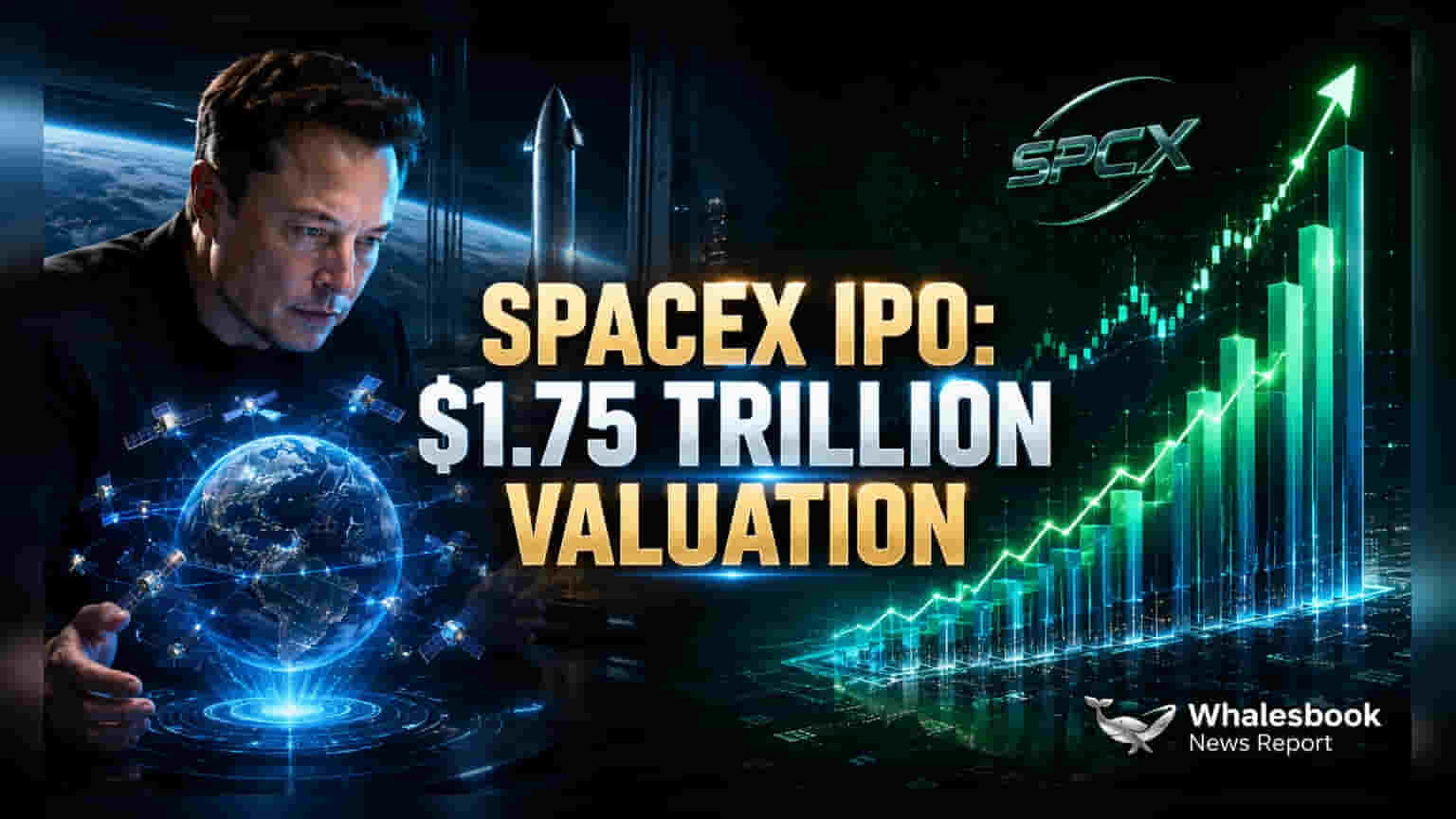


SpaceX Pivots to AI Infrastructure for Nasdaq IPO
SpaceX has officially filed for its Initial Public Offering (IPO) on the Nasdaq, aiming for an ambitious valuation of $1.75 trillion. This move signals a significant strategic shift, with the company positioning itself as a key player in AI infrastructure. This valuation target places it among the world's largest public companies right from the start.
Starlink Fuels Ambitious AI Expansion
The company's financial strategy relies heavily on its profitable Starlink satellite internet service. Starlink, which now serves over 10 million subscribers and contributes about 69% of quarterly revenue, is funding SpaceX's aggressive investments in AI. These investments include developing orbital data centers and enhancing advanced computing infrastructure for artificial intelligence.
Key AI Partnerships and Mergers
SpaceX has secured a significant compute infrastructure agreement with Anthropic, valued at approximately $1.25 billion per month through 2029. The company's merger with xAI further cements its identity as an AI-focused entity. These collaborations are set to redefine investor perceptions of technology valuations.
Elon Musk Retains Control Amid Aggressive Timeline
Elon Musk will maintain substantial control over SpaceX through a dual-class share structure, holding 85.1% of the voting power. The IPO process is moving quickly, with investor roadshows set to begin on June 4 and trading expected to start around June 12, 2026. The sheer size of SpaceX's IPO could lead to its inclusion in the Nasdaq-100 index soon after listing, potentially attracting significant investment from passive funds.
Profitability Concerns and Regulatory Hurdles
Despite the high valuation and AI strategy, SpaceX reported a net loss of $4.94 billion in 2025 on $18.64 billion in revenue. The significant capital needed for AI infrastructure and space expansion raises questions about the long-term viability of its valuation. SpaceX also faces competition from established cloud providers and must navigate complex regulatory landscapes in both space exploration and AI development. Elon Musk's strong control could also be a deterrent for some institutional investors. The company's reliance on Starlink's success to offset losses in its launch and AI divisions requires consistent performance.