 Whalesbook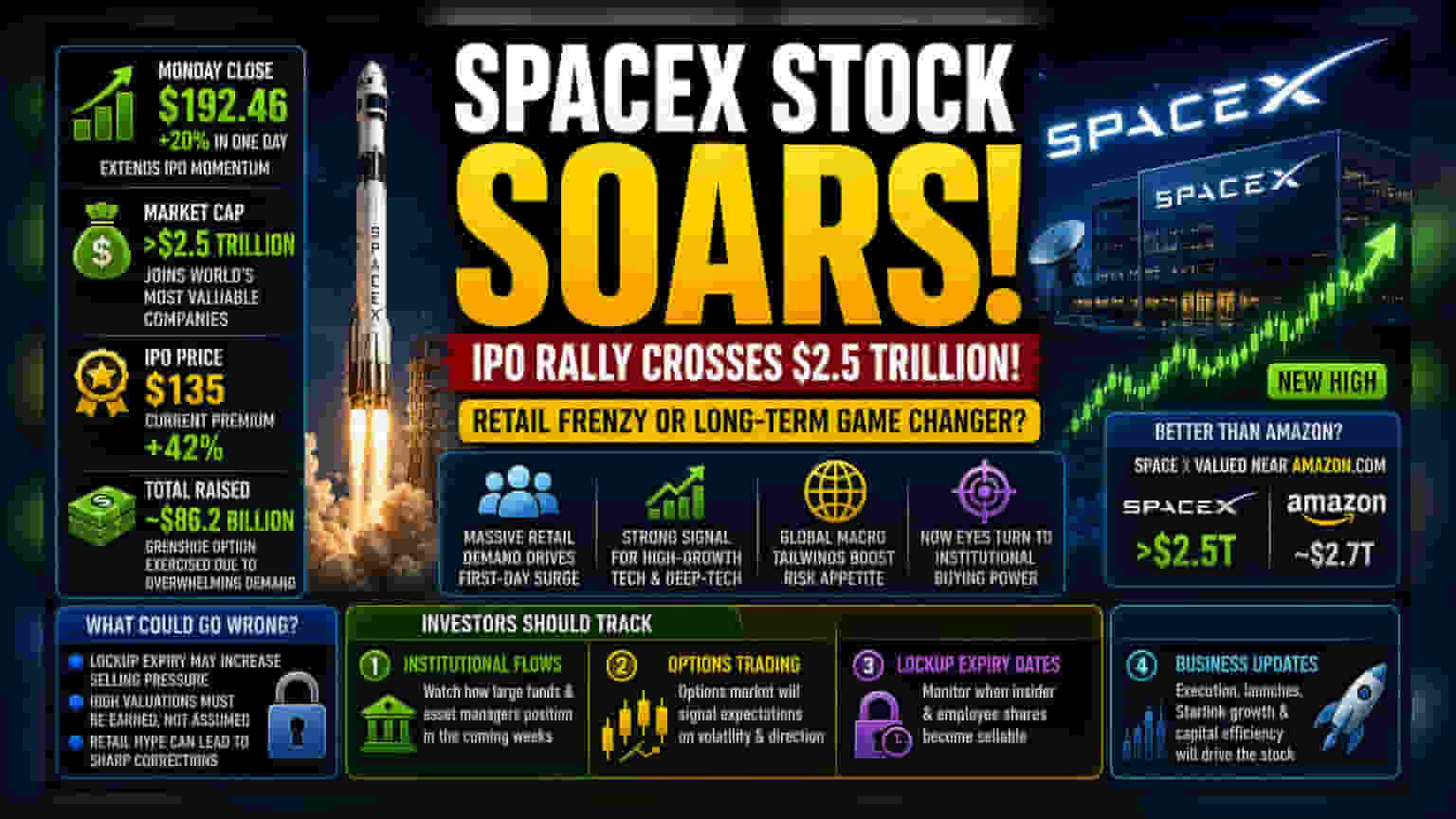


SpaceX shares have jumped over 42% since their IPO, pushing the company's total market value past $2.5 trillion. While heavy retail demand is driving the current rally, investors should watch for potential volatility as lockup periods for early investors and employees eventually expire.
What Happened
SpaceX, the space exploration and aerospace company, has seen its share price rally aggressively following its recent initial public offering (IPO). On Monday, the stock closed at $192.46, marking a 20% gain for the day and extending the momentum from its Friday debut. With this move, the company’s total market value has crossed the $2.5 trillion mark. The stock is now trading at a premium of more than 42% over its IPO price of $135.
This valuation places SpaceX among the world's most valuable public companies, putting it within striking distance of Amazon.com. Following the strong market reception, the company exercised its "greenshoe" option—a mechanism that allows underwriters to sell additional shares to meet high demand. This increased the total capital raised in the IPO to approximately $86.2 billion.
Why This Matters For Investors
The successful IPO of such a large company provides a signal about the current appetite for high-growth, technology-focused businesses. For global investors, the entry of SpaceX into the public market is a significant event, often viewed as a bellwether for the broader artificial intelligence and deep-tech sectors. The high retail participation, as noted by market data trackers, suggests that there was significant pent-up demand for the stock before it became available for public trading.
How Investors May Read This
The current rally is largely driven by retail investor demand, which has been intense during the first two trading days. This type of momentum can sometimes lead to sharp price swings. While the initial excitement is clear, professional investors often look beyond the first few days of trading to determine the long-term price level. The market is also keeping an eye on how these new shares affect broader indices, as the company’s massive size means its performance will likely impact the movement of major tech indices.
What Could Go Wrong
While the stock is currently enjoying a strong start, experienced market participants often point to the risks associated with newly listed, high-profile companies. One key factor to monitor is the upcoming expiry of "lockup" agreements. These agreements prevent early investors, company employees, and insiders from selling their shares for a specific period after the IPO. When these restrictions are lifted, it can lead to a significant increase in the number of shares available for trading, which may create selling pressure if those holders decide to cash out.
Additionally, high valuations can sometimes be difficult to sustain. As the initial "retail frenzy" cools, the stock will need to be supported by institutional investors—large funds and banks—who typically rely on consistent business performance and earnings growth rather than market hype. If the company fails to meet the growth expectations priced into its $2.5 trillion valuation, the stock price could face pressure.
The Bigger Business Context
The market sentiment surrounding the SpaceX IPO has also been supported by a generally improving global macro environment. Investors have been reacting positively to news of geopolitical easing, specifically reports regarding the reopening of the Strait of Hormuz, which has helped lower risk aversion. Furthermore, anticipation surrounding upcoming Federal Reserve meetings has created a climate where investors feel more comfortable moving back into growth-oriented stocks.
What Investors Should Track
Going forward, the most important monitorable is the transition from retail-driven trading to institutional-led price discovery. Investors may track the following:
Institutional Flows: Watch how large asset managers and mutual funds position themselves in the stock in the coming weeks.
Options Trading: With options contracts beginning to trade, the options market will provide clues about whether traders expect the stock to stay volatile or stabilize.
Lockup Expiry Dates: Pay attention to news regarding when shares held by insiders and early employees will become eligible for sale.
Business Updates: As the dust settles, the company’s ability to execute its long-term business goals and manage its significant capital spending will become the primary driver of its stock price, rather than just market sentiment.