

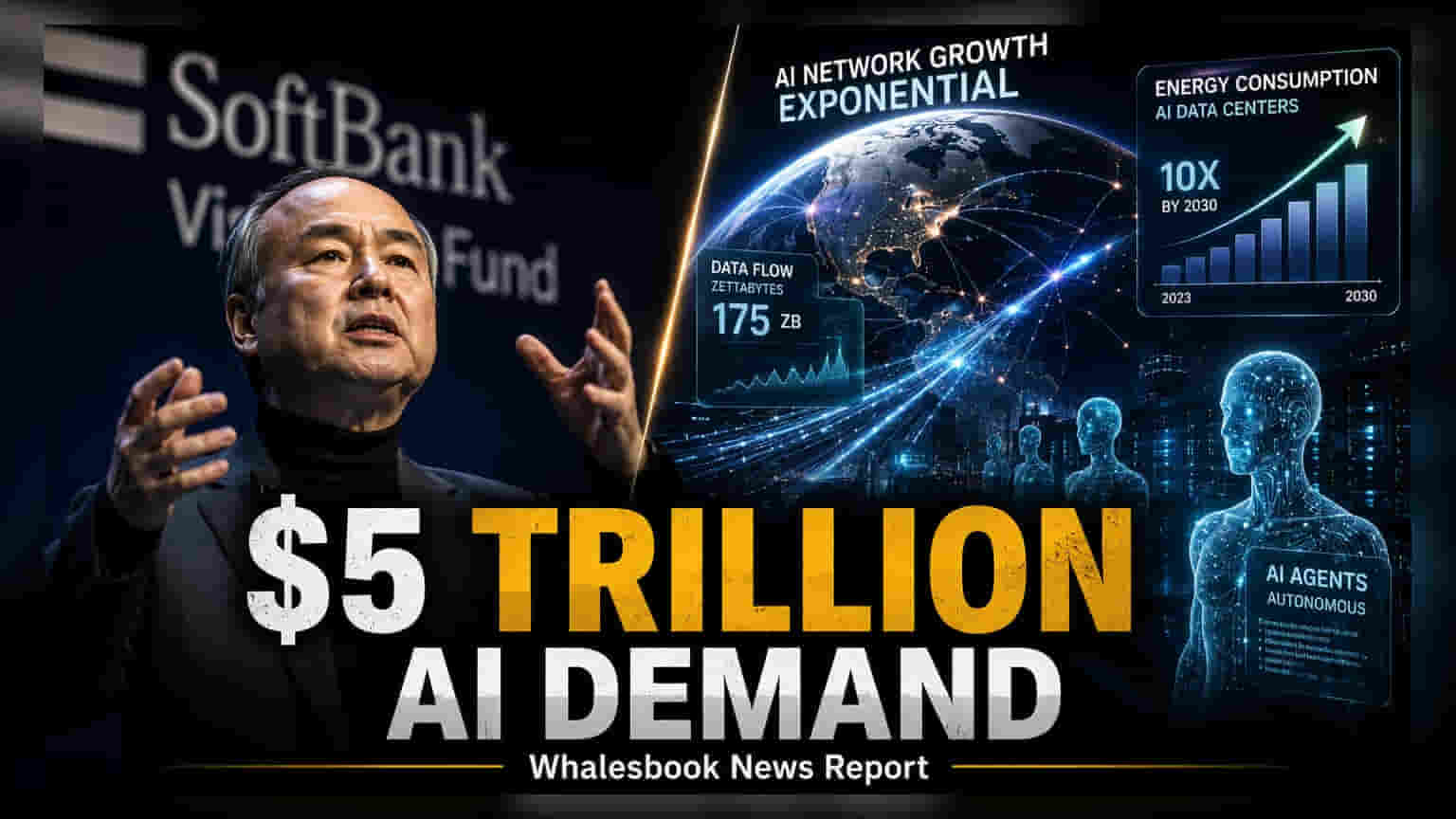
SoftBank Group CEO Masayoshi Son has projected that global annual investment in artificial intelligence will reach $5 trillion by 2040. He argued that this massive capital allocation is necessary for essential infrastructure like data centers and robotics, dismissing concerns regarding a potential AI bubble.
Masayoshi Son, the CEO of Japanese investment giant SoftBank Group, recently stated that he expects artificial intelligence to drive a massive wave of global investment reaching $5 trillion annually by 2040. Speaking at the company’s annual conference in Tokyo, Son dismissed the idea that the current growth in AI spending constitutes an economic bubble. Instead, he framed the projected expenditure as a logical necessity for building the infrastructure required for an AI-powered future.
Infrastructure Demands and Energy Needs
A major component of Son’s projection involves the physical requirements for AI growth. He estimates that by 2040, the world will need roughly 3 terawatts of power generation capacity specifically to support AI data centers. This would require nearly double the current global power consumption. To meet this demand, Son pointed toward advanced energy solutions, specifically suggesting that nuclear fusion could eventually become a primary energy source to sustain the massive electricity requirements of global AI infrastructure.
SoftBank's Strategic Pivot
SoftBank has been positioning its investment portfolio to capitalize on this vision. Over the past two years, the firm has deployed billions of dollars into the sector, focusing on key areas such as robotics, data center financing, and direct stakes in prominent AI development companies like OpenAI. This capital allocation strategy reflects an attempt to secure a central role in the industry as AI shifts from a research tool to a foundational element of the global economy. By linking these investments to a potential future where AI contributes up to 20% of global GDP, Son aims to justify the high costs associated with early-stage AI infrastructure.
The Move Toward Agent-Centric Systems
Beyond basic infrastructure, Son outlined a vision for an agent-centric world, where he predicts up to 100 trillion autonomous AI agents will function independently. These agents would theoretically communicate and perform tasks without human intervention, marking a significant evolution in how global economic activity is conducted. While this vision suggests immense future growth, investors should note that such long-term projections involve significant uncertainty, particularly regarding the speed of technological adoption, the actual profitability of these AI agents, and the massive upfront capital spending required by tech firms to build this ecosystem. The primary monitorables for shareholders will be SoftBank’s ability to manage its leverage while funding these long-term projects and the real-world revenue growth generated by its current AI-focused investments.