 Whalesbook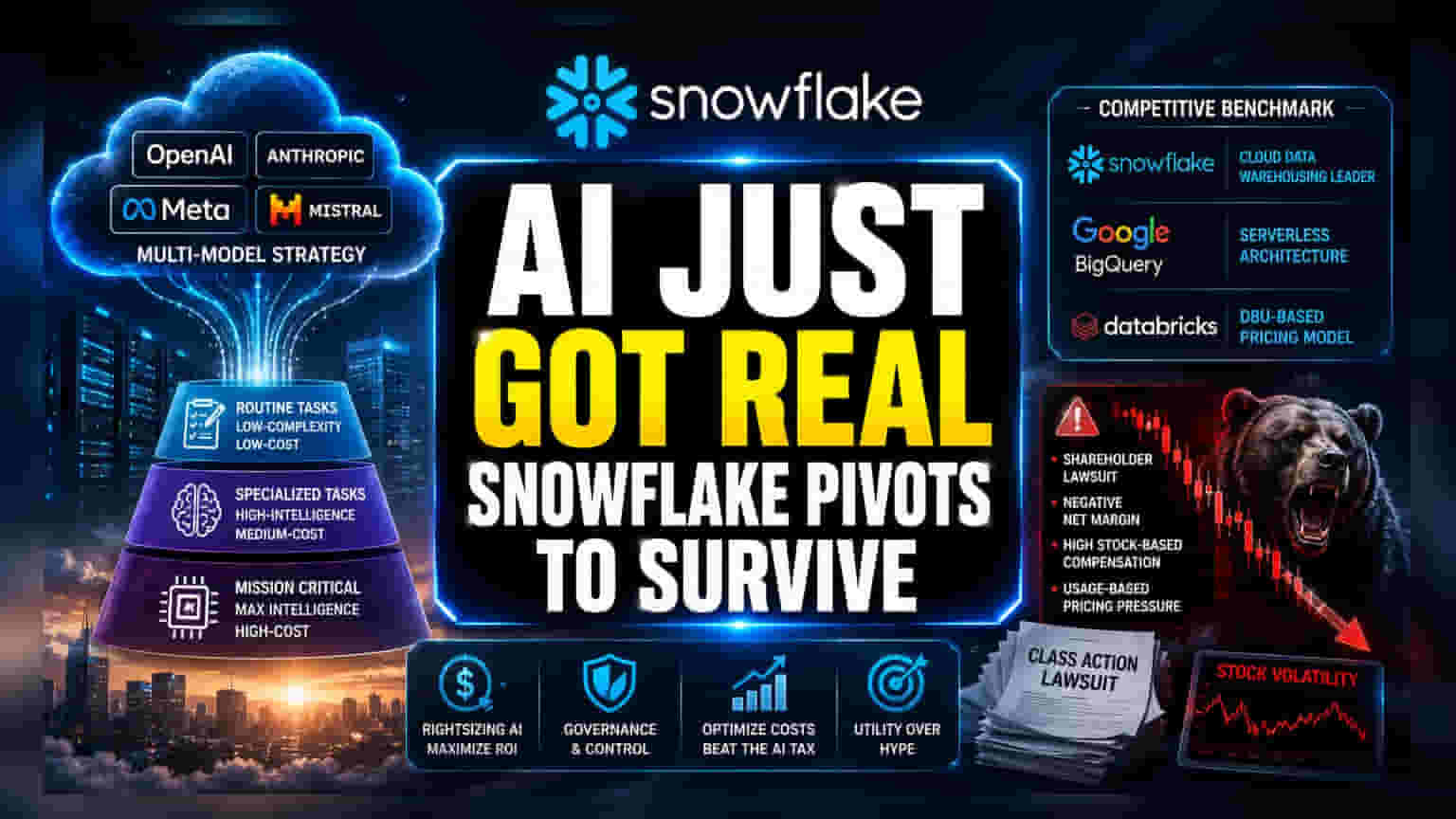


The Economic Realignment of AI
Corporate interest in artificial intelligence has moved past the initial phase of unbridled experimentation. As organizations face mounting pressure to demonstrate tangible ROI, the narrative has shifted from deploying the most sophisticated models to selecting the most economical ones. This change in appetite is forcing platforms like Snowflake to adapt, moving away from promoting sheer model intelligence and toward operationalizing efficiency. The strategic focus now centers on rightsizing AI deployments, where businesses evaluate models based on their specific utility rather than top-line performance metrics.
The Multi-Model Paradigm
Under the leadership of CEO Sridhar Ramaswamy, Snowflake is aggressively promoting a multi-model strategy. This approach encourages enterprises to treat AI as a tiered utility, utilizing deterministic systems for routine, low-complexity queries while reserving high-cost, high-intelligence models for more specialized tasks. This modularity is designed to combat the rising 'AI tax' that has emerged as companies scale their usage. By facilitating the integration of various providers, including open-source and proprietary options, Snowflake is attempting to position itself as the governance layer where these varied economic choices are managed and optimized.
Competitive Benchmarking and Market Context
Snowflake’s pivot arrives as it contends with intensifying competition from hyperscalers like Google BigQuery and specialized platforms such as Databricks. While Snowflake offers robust multi-cloud flexibility and zero-copy cloning features that have historically appealed to enterprise clients, the market is increasingly scrutinizing its high usage-based pricing models. Benchmarking data suggests that while Snowflake remains a leader in cloud data warehousing, competitors are highlighting differences in cost structures—such as Databricks’ DBU-based pricing or BigQuery’s serverless architecture—forcing Snowflake to sharpen its value proposition. Investors remain cautious, evidenced by a volatile share price and persistent questions regarding whether the platform’s growth can decouple from its heavy reliance on high-intensity, expensive compute workloads.
Structural Risks and the Bear Case
Despite the push toward efficiency, significant structural risks remain. The company has navigated a difficult 2026, including a shareholder class-action lawsuit alleging that consumption revenue growth was misrepresented. Furthermore, with a significant portion of its operating costs tied to research and development and marketing, the firm is grappling with a negative net margin. Skeptics point to the company’s heavy use of stock-based compensation—which has periodically exceeded free cash flow—as a potential long-term overhang. As the AI hype cycle transitions into a pragmatic evaluation of utility, Snowflake must prove that its platform can sustain growth without the massive, unsustainable expenditure levels that characterized the early AI boom.