

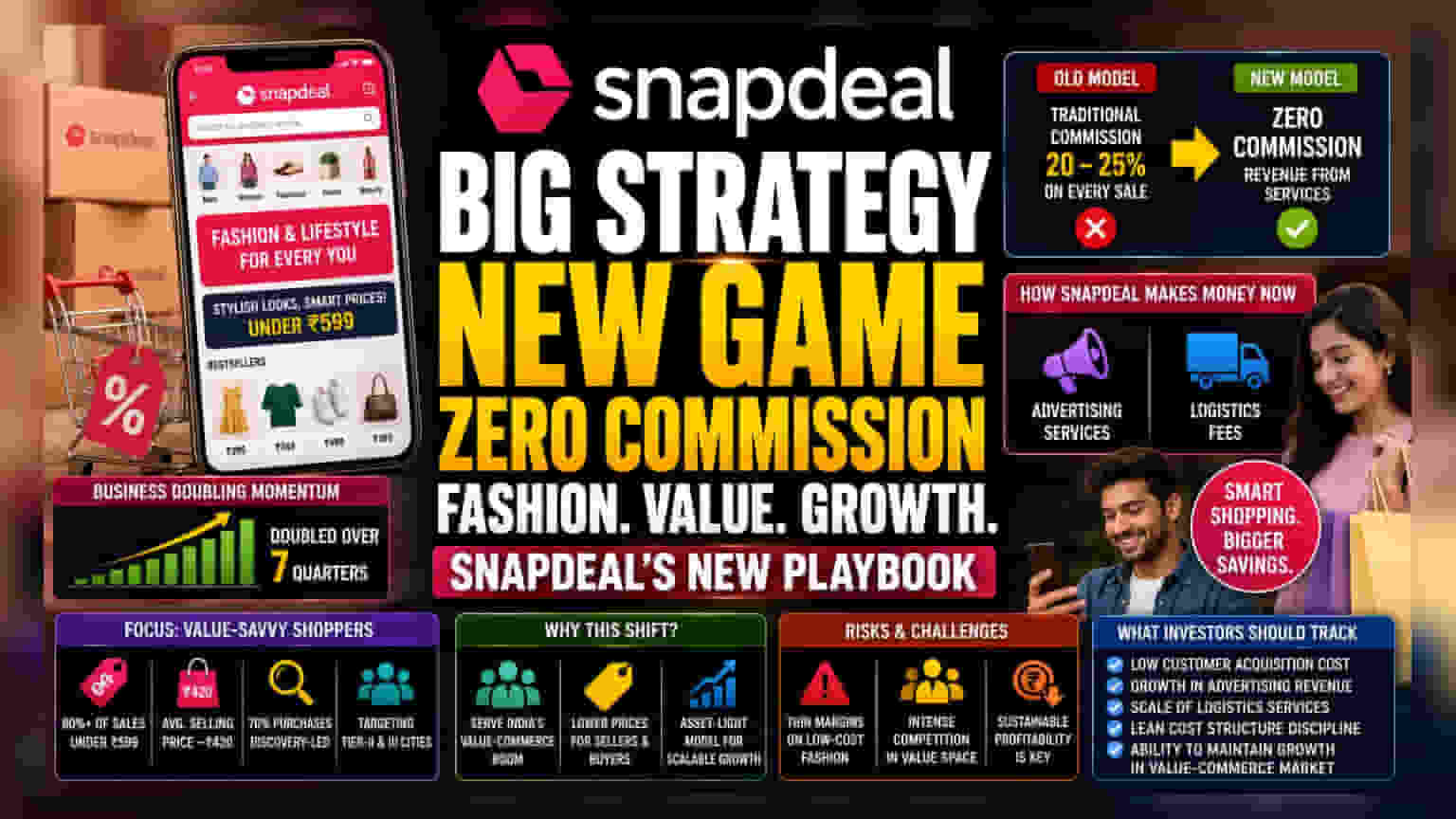
Snapdeal, now operating as AceVector Ltd, is shifting its business model to target value-conscious shoppers in India’s smaller towns. By replacing traditional seller commissions with a service-fee model, the company aims to capture the budget-friendly fashion market. This pivot reflects the broader trend in Indian e-commerce, where platforms are moving away from heavy discounts to build sustainable revenue streams through advertising and logistics.
What Happened
Snapdeal, the e-commerce brand now operating under the entity AceVector Ltd, is executing a major strategic shift. After moving away from its early focus on electronics and general merchandise, the platform is now positioning itself as a lifestyle and fashion destination for budget-conscious consumers, particularly in India's Tier-II and Tier-III cities. The company reports that its business has doubled over the last seven quarters, driven by this new approach.
The Shift to Service Fees
A central part of this strategy is the removal of traditional commissions. Historically, e-commerce platforms charged sellers a percentage of every sale, often ranging from 20% to 25%. Under the new model, most sellers on the platform operate on a zero-commission basis.
Instead of taking a cut of product sales, the company generates revenue through advertising services and logistics fees. This model allows sellers to price their goods more competitively while giving the platform new ways to earn money from the services it provides, rather than just the products sold.
Targeting the Value-Savvy Consumer
The company is focusing heavily on fashion and lifestyle products, with over 80% of its sales coming from items priced below ₹599. The average selling price on the platform is approximately ₹420. By focusing on this price point, the company is targeting “value-savvy” shoppers—a segment that prefers affordable, aspirational products over high-end brands. The company notes that its platform is discovery-led, meaning about 70% of purchases happen through browsing rather than users searching for specific items.
Business Context and Sector Pressure
This move comes at a time when the broader Indian e-commerce sector is intensely focused on the 'Bharat' market—India's non-metro towns and cities. The value-commerce segment is seeing high competition, as platforms fight to acquire customers who are price-sensitive.
While the company is not directly competing with premium e-commerce players, it faces the constant challenge of maintaining profitability in a segment characterized by thin margins. The shift to an asset-light, advertising-driven revenue model is a strategy also used by other players in the space, such as Meesho, to build scale without the heavy costs of traditional inventory-led models.
Risks and Sustainability
For an e-commerce business, the primary hurdle remains achieving sustainable profitability. While the zero-commission model attracts a large volume of sellers and buyers, the business relies heavily on the success of its advertising and logistics arms. If the company cannot scale these services efficiently, the thin margins on low-cost fashion products could put pressure on the bottom line. Additionally, the competition for the price-conscious consumer remains fierce, as large conglomerates and other specialized e-commerce players continue to invest heavily in the same geographic segments.
What Investors Should Track
Since AceVector Ltd is an unlisted entity, it does not share public stock performance or quarterly filings in the same way as listed retail companies. However, this shift provides a clear look at how the e-commerce sector is evolving. Future monitorables include the company’s ability to keep customer acquisition costs low, the growth of its advertising revenue, and whether it can maintain its lean cost structure as it attempts to capture a larger share of the value-commerce market.