

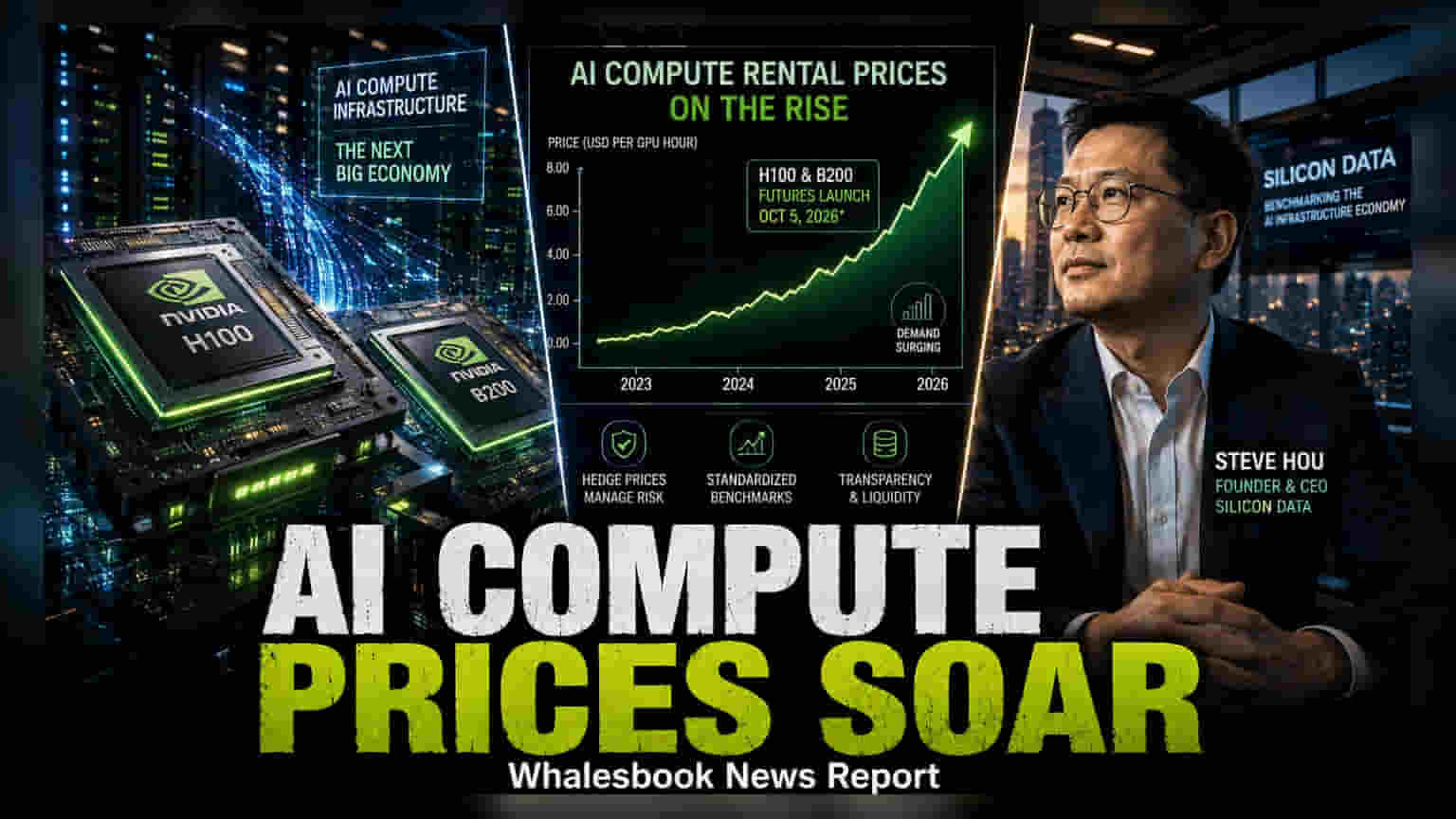
Silicon Data has secured $30.5 million in Series A funding to build an independent benchmark for GPU rental prices. The startup is partnering with CME Group to launch compute futures contracts on October 5, 2026, pending regulatory approval, offering businesses a way to manage the volatile costs of AI hardware.
Silicon Data, a startup focusing on the economics of artificial intelligence infrastructure, has closed a $30.5 million Series A funding round led by the Valor Atreides AI Fund. The investment marks a move to standardize how companies track and manage the cost of AI computing power, a resource that has become a major expense for businesses developing artificial intelligence products.
Partnering with CME Group for Futures Trading
The core of the company's growth strategy involves a partnership with CME Group to introduce financial instruments based on AI infrastructure. Pending regulatory approval, Silicon Data plans to launch two cash-settled compute futures contracts on October 5, 2026. These contracts are designed to track the hourly rental costs for Nvidia’s H100 and B200 GPUs. By offering these futures, the company aims to provide a way for businesses to hedge against price fluctuations in the rental market for high-end AI chips.
Currently, there is no standardized way for companies to lock in future prices for AI compute capacity. As AI infrastructure investments grow, the ability to manage cost volatility is becoming a priority for data center operators and AI developers. Silicon Data operates as a neutral benchmark layer, offering tools like SiliconMark for performance measurement and forward curves to help market participants understand the rental market.
Regulatory and Market Hurdles
While the introduction of compute futures seeks to add stability to a rapidly changing market, investors should track several risks. The most immediate is the regulatory approval process. As the launch of these futures contracts is subject to review, any delay or denial by regulators could affect the company’s timeline and business model.
Beyond regulation, the startup faces challenges related to the nature of AI hardware. Defining a standard unit of compute is difficult because performance can vary significantly even among the same chip models. This variability complicates the creation of a reliable price index. Additionally, the AI compute market is heavily concentrated, with Nvidia supplying the vast majority of the chips used in these data centers. This reliance on a single major supplier creates systemic risk; any disruption in supply or pricing strategies by the hardware manufacturer could impact the stability of the indices Silicon Data is creating.
Finally, the success of these new financial products will depend on market adoption. For the futures contracts to be effective, they need sufficient liquidity, which requires widespread participation from firms that rent AI capacity. The company’s ability to gain trust as a neutral benchmark provider while navigating these infrastructure and market challenges will be the key monitorable for the coming months as it approaches its planned October launch date.