

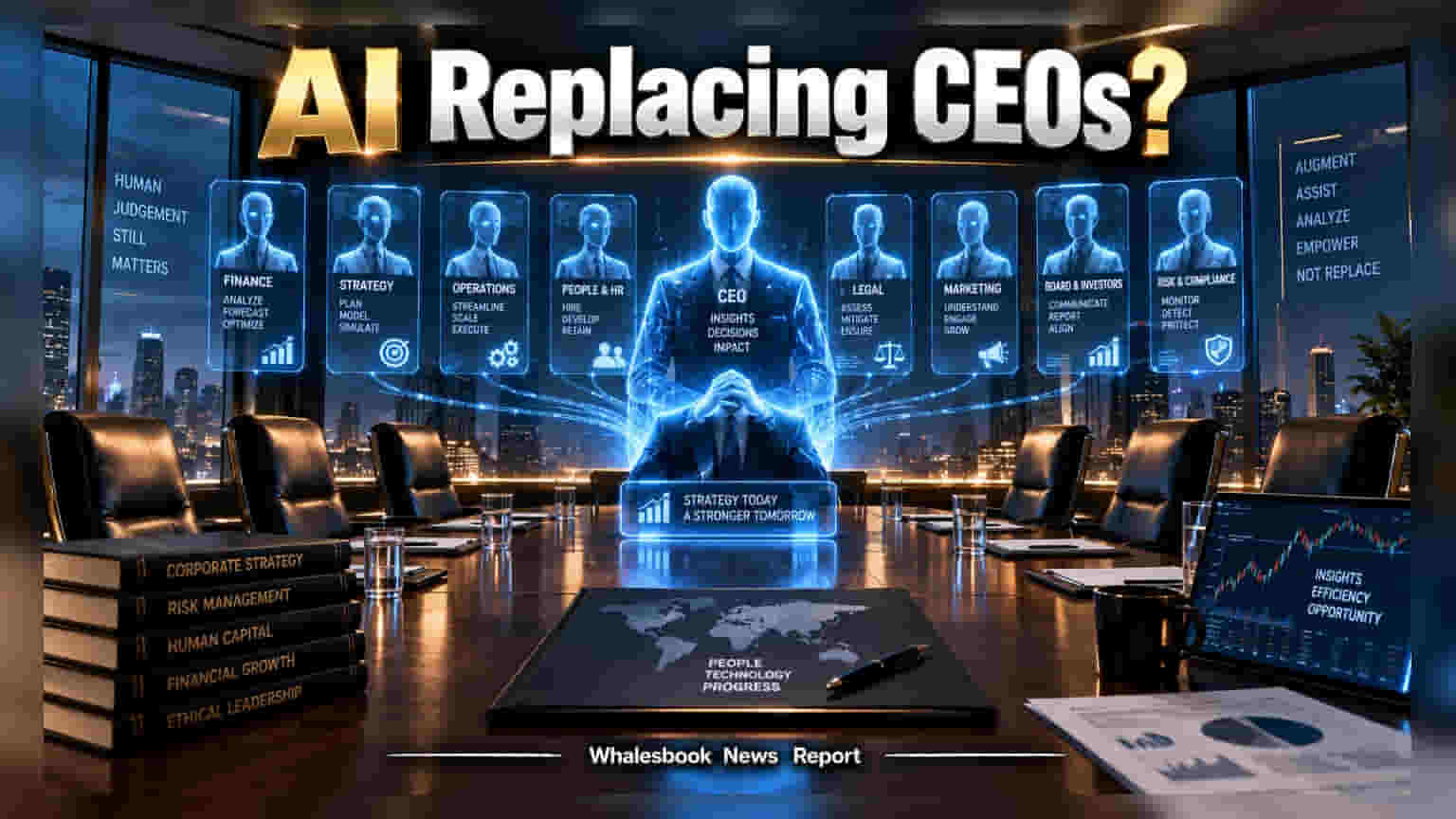
SenteLabsAI has released OpenExecutive, an open-source project using AI agents to simulate C-suite executive tasks. Designed as an analytical assistant for strategy and operations, it is a tool for corporate support rather than a replacement for human leadership. Notably, SenteLabsAI is a private, community-driven initiative and has no publicly traded stock.
SenteLabsAI has introduced OpenExecutive, an open-source AI platform designed to replicate C-suite executive functions. By utilizing a network of eight specialized AI agents powered by Anthropic's Claude models, the system aims to provide analytical support across domains such as finance, human resources, legal, and board communications.
For companies looking to integrate the tool, OpenExecutive is built to be self-hostable. This allows organizations to run the software on their own infrastructure, utilizing their internal data to generate recommendations. The goal is to provide a framework for digital platforms to incorporate automated decision-support, effectively functioning as an analytical assistant for executives rather than an autonomous decision-making authority.
Understanding the Role of AI in Corporate Governance
Despite the sophisticated technical structure, there are clear boundaries to the software's application. An AI agent, no matter how advanced, lacks the legal standing and fiduciary duties required of a human CEO or director. Corporate leadership involves ethical oversight and crisis management that current autonomous models cannot replicate. Consequently, OpenExecutive is positioned as a support system meant to streamline operations and offer insights, rather than a replacement for human accountability.
Security and Operational Risks
Investors and corporate stakeholders should be aware of the operational challenges associated with such technology. Integrating internal company documents into an AI system, particularly one utilizing Retrieval-Augmented Generation (RAG), creates a critical need for data security. If the system is not managed with rigorous protocols, there is a risk of exposing proprietary or sensitive information.
Furthermore, there is the risk of operational over-reliance. Excessive dependency on AI-driven recommendations without sufficient human validation could lead to systematic errors, bias, or flawed strategic decisions. As these tools become more accessible, the governance of how such AI is deployed within a corporate structure will remain a key monitorable for companies.
Context of the Launch
The project has gained significant attention as a narrative response to the broader conversation regarding AI-driven workforce displacement. By targeting the C-suite—the highest tier of the corporate hierarchy—rather than entry-level roles, the developers behind the project are highlighting the potential universality of AI efficiency. It serves as a symbolic statement in the ongoing debate about how automation might impact organizational structures. Since this is an open-source initiative and not a listed company, it does not have a ticker, share price, or quarterly financial results for investors to track.