 Whalesbook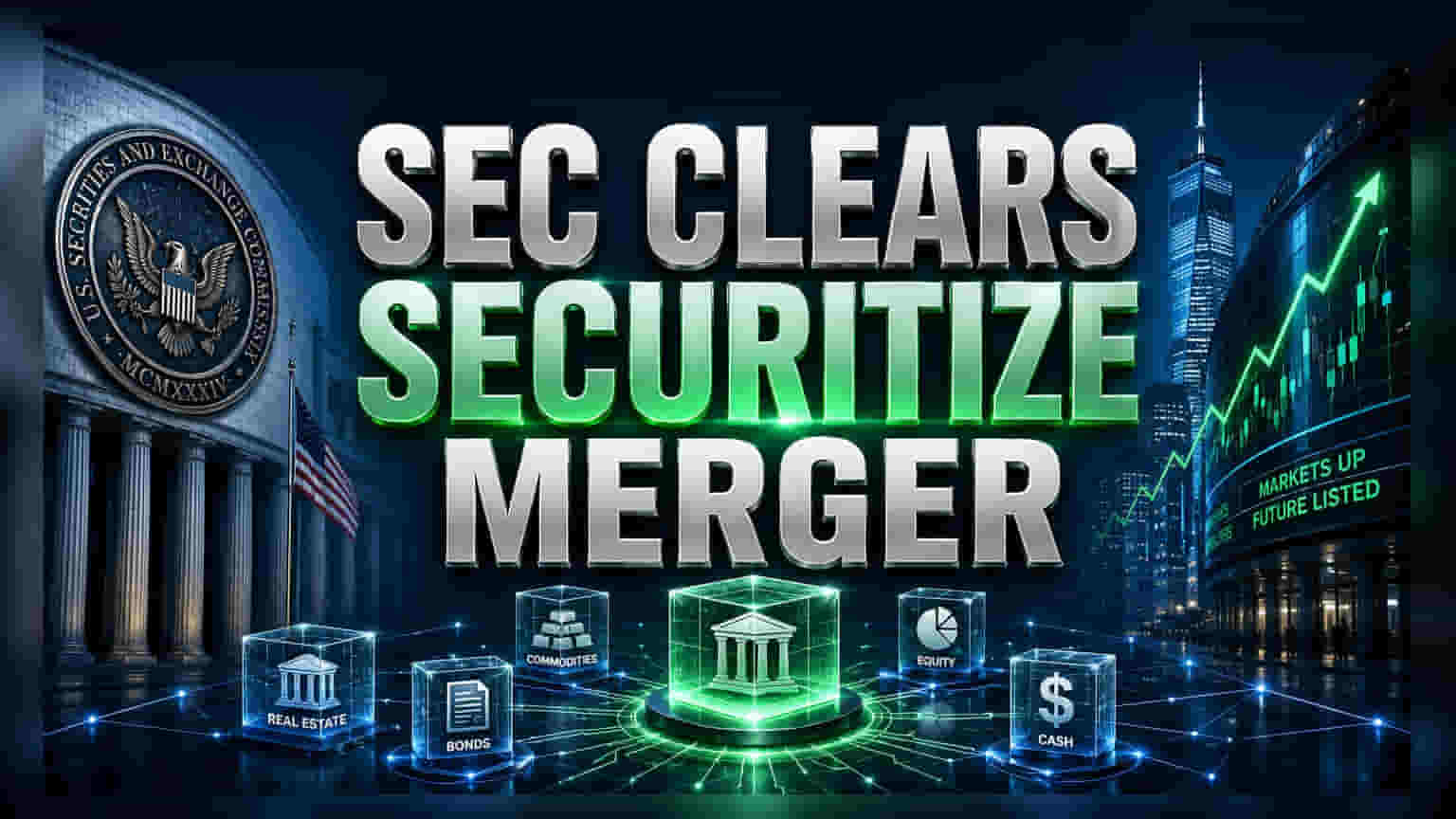


The Regulatory Green Light
The U.S. Securities and Exchange Commission has declared the S-4 registration statement for Securitize effective, removing a significant procedural barrier to the firm's transition into a public entity. By merging with Cantor Equity Partners II (NASDAQ: CEPT), a SPAC sponsored by an affiliate of Cantor Fitzgerald, Securitize is positioning itself to become one of the first infrastructure providers for real-world asset (RWA) tokenization to secure a listing on the New York Stock Exchange. The transaction, initially valued at approximately $1.82 billion, now proceeds to a definitive shareholder vote on June 29.
Scaling the Tokenized Infrastructure
Beyond the headline merger, the move validates a vertical integration strategy that distinguishes Securitize from niche blockchain startups. By operating as an SEC-registered transfer agent, broker-dealer, and alternative trading system (ATS), the company consolidates the fragmented layers of traditional finance into a single, compliant stack. This infrastructure has already gained traction with institutional heavyweights, most notably through its role in BlackRock's BUIDL fund, which has emerged as a major Treasury-backed digital product. Unlike retail-focused decentralized platforms, Securitize is targeting the $134 trillion global stock market, aiming to prove that on-chain settlement can coexist with traditional regulatory frameworks.
The Bear Case and Operational Risks
Despite the enthusiasm surrounding the SECZ ticker, the firm faces a challenging macroeconomic environment for crypto-adjacent equities. Tokenized asset platforms are highly sensitive to broader equity market rotations. As investors move capital toward established tech giants and stable, yield-bearing assets, speculative interest in RWA infrastructure could face compression. Furthermore, the firm operates in a regulatory environment where cross-border standards remain inconsistent. While Securitize has aligned itself with institutional mandates, any future shifts in SEC enforcement regarding digital ownership or atomic settlement could disrupt its operating model. Investors should also note that SPACS—once a frenzy-driven vehicle—have faced intense scrutiny, and any failure to sustain market liquidity following the listing could expose the entity to significant volatility, particularly if institutional adoption of tokenization lags behind the aggressive growth projections floated by industry proponents.
Future Market Outlook
If the merger passes, the listing will serve as a bellwether for the institutional appetite for blockchain-enabled finance. With major analysts observing increased inquiries into RWA capabilities, the successful debut of SECZ could prompt a wave of similar firms seeking public validation. However, success will ultimately hinge on the company’s ability to convert partnerships with firms like KKR, Apollo, and Hamilton Lane into consistent, fee-generating transaction volume, rather than relying solely on the narrative momentum of the tokenization trend.