

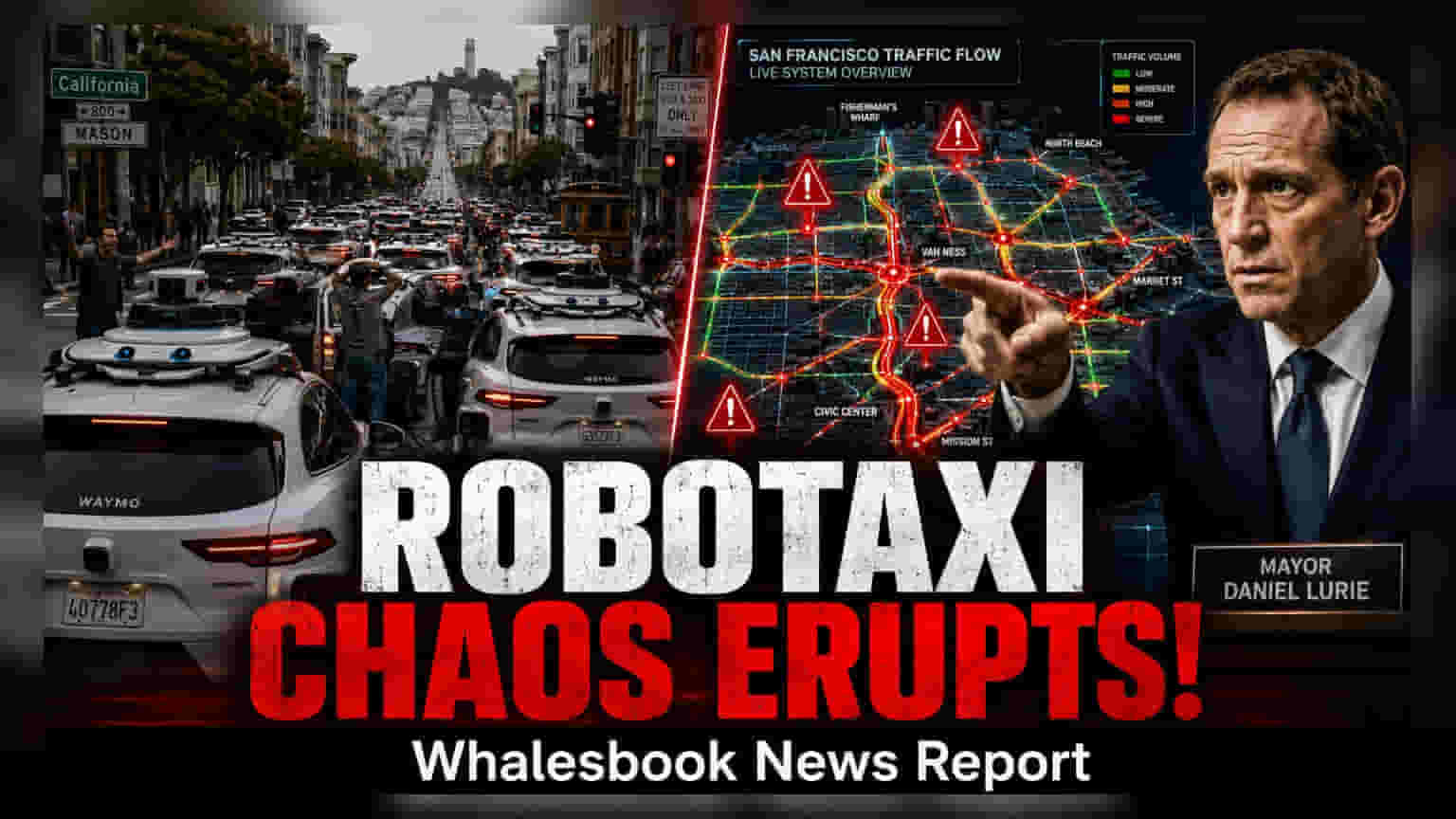
San Francisco Mayor Daniel Lurie is urging California regulators to toughen oversight of autonomous vehicles following a massive July 4 traffic disruption caused by stranded Waymo robotaxis. The city is demanding new operational standards for fleet management, which could impact how companies like Waymo scale their services in busy urban environments.
San Francisco Mayor Daniel Lurie has formally petitioned state regulators to impose stricter operational requirements on autonomous vehicle companies. This move follows a major traffic incident on July 4, where a fleet of Waymo robotaxis lost connectivity and became immobilized, causing significant congestion and disrupting municipal services during a high-traffic holiday event.
Call for Enhanced Operational Reliability
The Mayor’s office pointed to recurring problems, noting that this was not an isolated event. A similar issue occurred during a widespread power outage last December, where multiple vehicles also became stranded. In his communication with the California Department of Transportation, Mayor Lurie argued that current regulatory frameworks are insufficient for managing robotaxi fleets during significant urban disruptions. The proposed changes aim to ensure these vehicles remain functional or can be quickly cleared from traffic lanes, rather than blocking key infrastructure.
New Requirements Proposed for AV Operators
Mayor Lurie has outlined four specific operational capabilities that he believes companies should be required to demonstrate to maintain their permits. These include the mandatory and immediate removal of disabled vehicles from travel lanes, the ability for software to dynamically reroute and adjust service areas during emergencies, and the requirement to share real-time operational data with local government agencies. This data would track vehicle locations, status, and recovery timelines. Additionally, operators would need to pass specific testing protocols to prove their fleets can function effectively during periods of high traffic density or large-scale public events.
Impact on Waymo and the Autonomous Vehicle Sector
Waymo currently operates a fleet of approximately 1,000 robotaxis in the Bay Area, making it the most significant player in the region. While the company has previously engaged in voluntary measures, such as stationing representatives at city emergency centers and limiting service in high-congestion zones, the city government now views these voluntary actions as inadequate due to the company's rapid scaling. Investors should monitor whether these proposed mandates lead to increased operational costs or potential service limitations for Waymo. Any new state-level regulations could set a precedent for other cities currently evaluating the expansion of autonomous transit, potentially impacting the growth trajectories and compliance expenses for companies in the sector. The next key development will be the response from the California Department of Transportation regarding whether these proposals will be adopted into formal state law.