

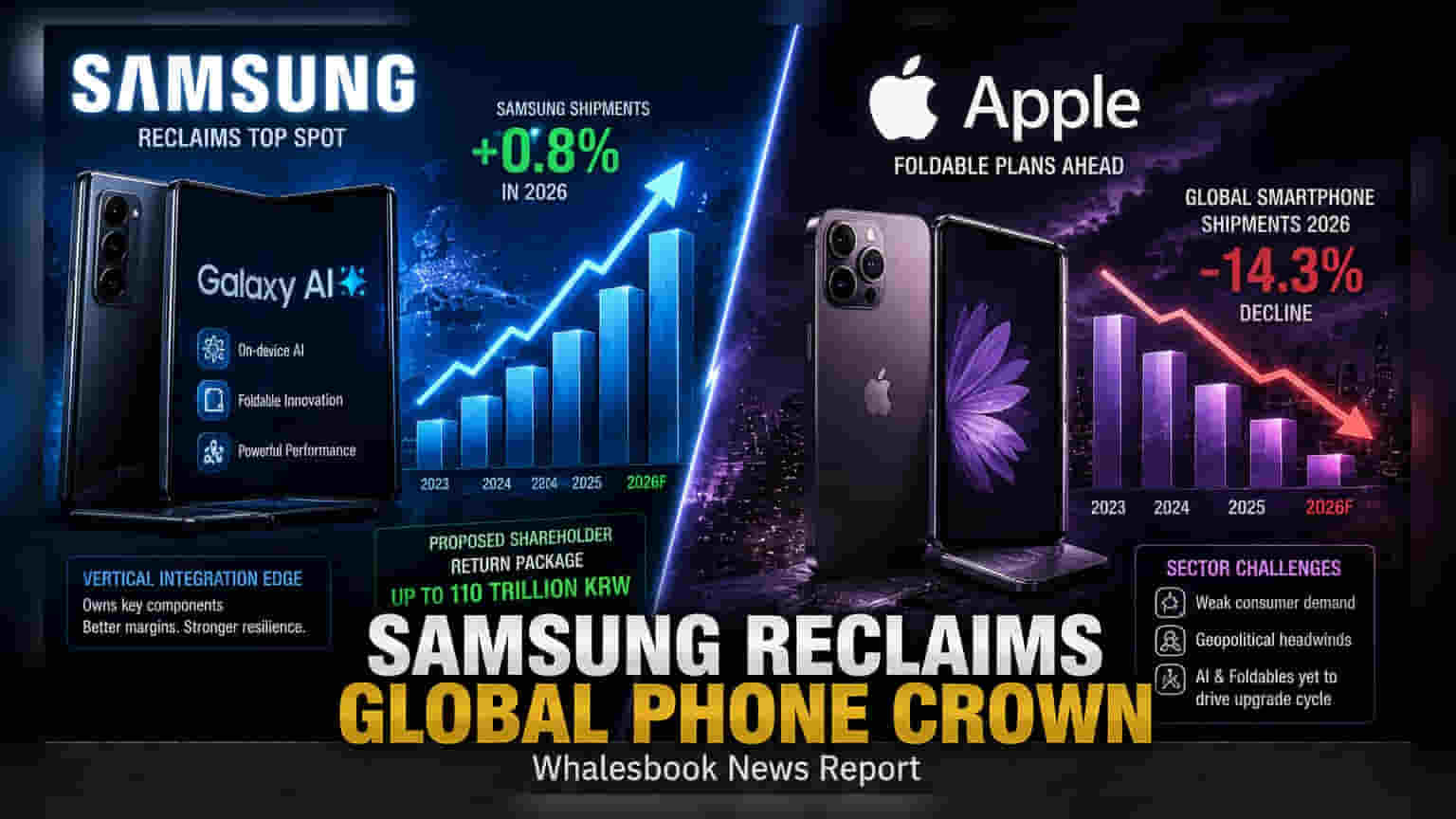
Counterpoint Research forecasts a 14.3% decline in global smartphone shipments this year, yet Samsung is poised to overtake Apple as the market leader. Samsung’s ability to manage rising memory chip costs is providing a competitive edge over rivals. Furthermore, Samsung shares rose today on reports of a significant shareholder return package.
The global smartphone industry is facing a difficult period, with shipments projected to drop by 14.3% in 2026. Despite this contraction, Samsung Electronics is expected to reclaim the top position in the market. While the broader smartphone sector is not expected to recover until 2028, analysts at Counterpoint Research forecast that Samsung will achieve a slight growth of 0.8% in its shipment volumes for the year.
Supply Chain Edge
Samsung’s relative resilience is primarily due to its vertically integrated business model. By manufacturing its own key components, including memory chips, the company has a better buffer against the rising component costs currently affecting the industry. This capability allows Samsung to maintain better margins and manage pricing more effectively than competitors who are more dependent on external suppliers. This structural advantage is helping the company navigate the supply chain crunch that is hurting manufacturers globally.
Sector Challenges
For investors, the outlook remains cautious as the market struggles with macroeconomic headwinds and geopolitical instability, which have dampened consumer demand. Lower-end smartphone manufacturers, particularly many Chinese brands, are facing significant pressure. These companies are bearing the brunt of the shipment decline, with some brands facing potential product line reductions. Additionally, newer technological trends such as on-device AI and foldable phones are currently failing to drive a major consumer upgrade cycle, meaning they are unlikely to boost total shipment volumes significantly in the near term.
Shareholder Return Catalyst
Alongside the market share news, Samsung Electronics stock traded higher on August 21, 2026. The positive sentiment was further supported by reports of a proposed shareholder return package, which could reach up to 110 trillion KRW. This move, aimed at increasing capital returns to investors, has been a key factor driving stock interest alongside the company’s improved competitive standing. While Huawei is the only other major vendor expected to see growth due to its independent hardware supply chain, the overall smartphone market continues to face a prolonged downturn that may force further industry consolidation in the coming years.