 Whalesbook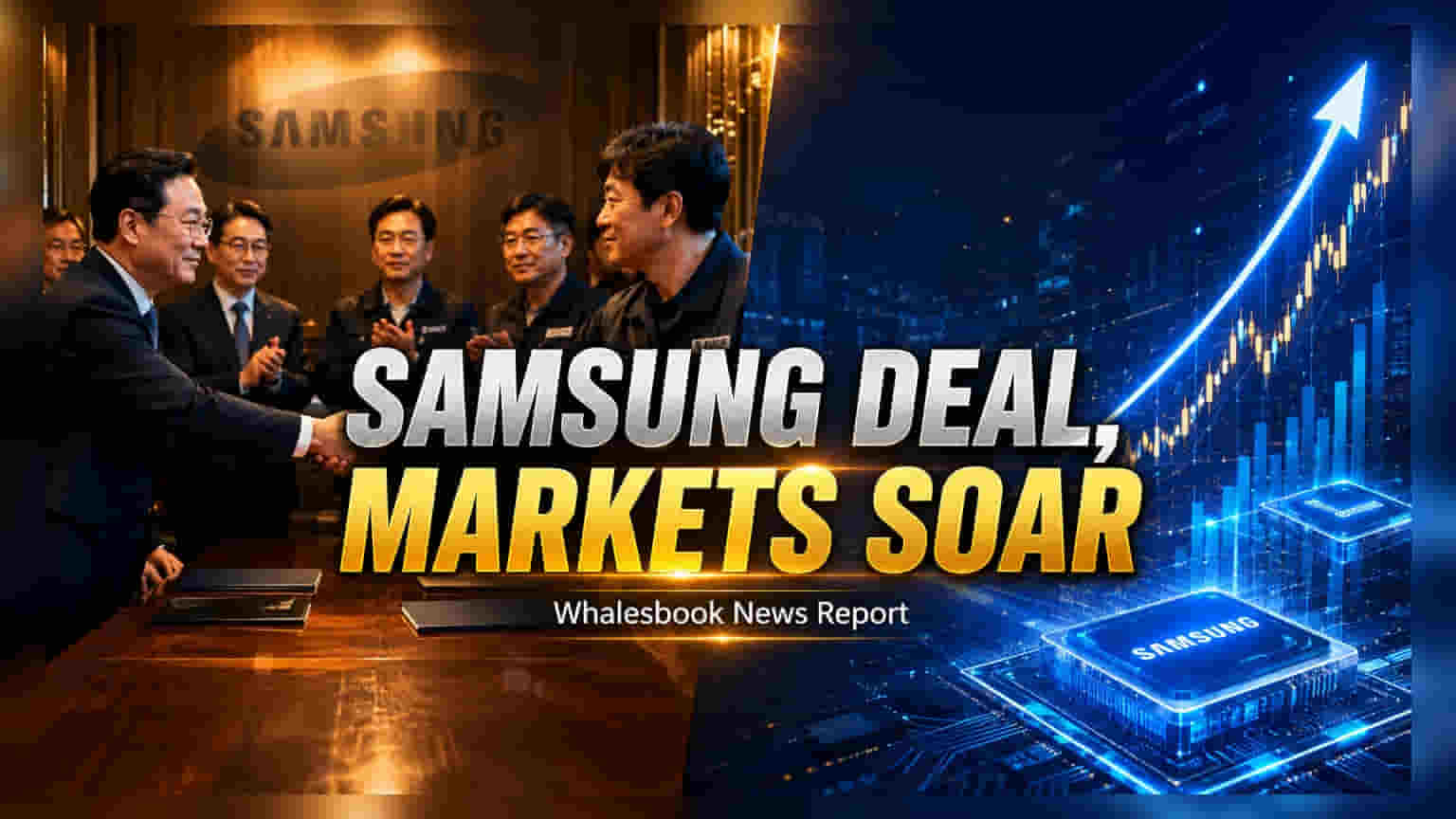


A potential strike at Samsung Electronics has been averted after the company and its union reached a tentative agreement, easing concerns over global memory chip supply and boosting investor confidence.
Market Rallies on Deal News
The KOSPI index climbed more than 8% following the announcement of the agreement. This development removed a significant concern for Samsung and the wider semiconductor industry, allowing the company to focus on meeting high demand for AI-powered memory chips. Samsung Electronics' stock rose over 7.5%, while rival SK Hynix saw an even larger jump of more than 11%. Automakers Hyundai Motor and Kia also benefited, with both posting gains of around 13%. The market optimism is further fueled by continued enthusiasm for artificial intelligence, following strong performances from U.S. chipmakers.
Samsung's Market Position and Deal Details
Samsung Electronics is a major player in the memory chip market, holding substantial shares in DRAM and NAND flash. The company's semiconductor division reported a near 50-fold increase in operating profit in the first quarter. The tentative agreement proposes allocating 10.5% of operating profits to unionized workers in the semiconductor division, subject to member approval.
Competitor Landscape and Auto Sector Gains
SK Hynix has been increasing its presence in the high-bandwidth memory (HBM) market and even surpassed Samsung in overall DRAM market share in the first quarter of 2025. SK Hynix leads the HBM market with over 53% share and impressive operating margins driven by AI demand. In the automotive sector, Hyundai Motor and Kia have also experienced positive market sentiment. Hyundai Motor, a leading global automaker, reported strong revenue growth and a high single-digit operating margin for 2024. Kia, with a significant share of the global auto market, also posted strong revenue and an operating margin of 11.8% for 2024. Both are investing in electric and software-defined vehicles.
Cost Concerns and Continued AI Demand
While the averted strike is a relief, the financial impact of the wage agreement requires attention. The deal includes a 10.5% uncapped performance bonus for the semiconductor division, alongside an average salary increase of 6.2%. These concessions will raise labor costs for Samsung. Despite higher labor expenses, the strong and persistent demand for AI memory is expected to continue benefiting the sector. Brokerages have raised price targets for Samsung and SK Hynix, anticipating that the AI memory shortage could last until 2027, driving earnings growth.
Positive Outlook for Memory Market
With labor tensions resolved, Samsung Electronics is expected to operate in a stable environment as it addresses the booming AI chip market. The sustained demand for memory solutions, especially HBM, is projected to benefit both Samsung and SK Hynix. Analysts forecast the memory supply-demand imbalance to continue, supporting price increases and earnings growth through at least 2027.