

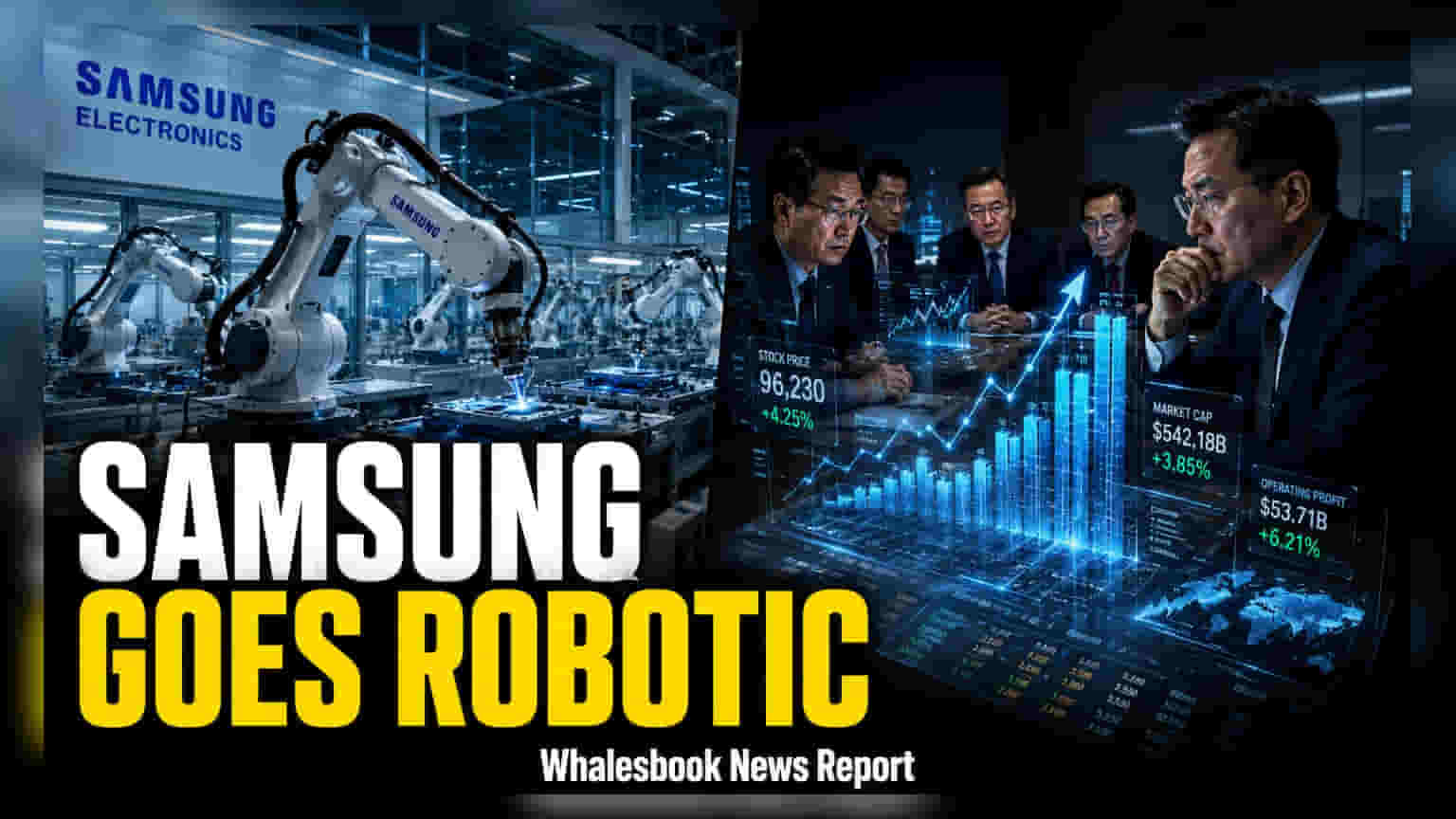
Samsung Electronics has launched the Robotics eXperience (RX) division to lead its humanoid robot development. Reporting directly to the CEO, the new unit will manage long-term strategy and global research as the company seeks to integrate robots into manufacturing and home environments.
Detailed Coverage
Samsung Electronics has officially moved to strengthen its position in the emerging robotics market by forming the Robotics eXperience (RX) division. This new entity will operate under the direct oversight of the chief executive officer, highlighting the high priority the company is placing on its humanoid robotics ambitions. The move is designed to unify the company's robotics strategy, research efforts, and business execution under a single, focused leadership team.
Global Research Expansion and Technology Focus
To support its technological goals, Samsung is setting up research hubs in the United States, China, and Japan. By establishing these bases in major tech markets, the company aims to tap into local innovation ecosystems and specialized talent pools. The RX division will concentrate on advancing physical artificial intelligence, a key technology that allows robots to navigate and interact with real-world environments more effectively. This focus on core technology is central to Samsung's plan to move from experimental concepts to commercially viable products.
Strategic Shift Toward Automation
Samsung has been signaling a pivot toward robotics for some time, with recent investor communications emphasizing the goal of achieving measurable progress in humanoid robotics this year. The company's vision involves a phased rollout of its robotic solutions. Initial deployment is expected to begin in manufacturing and factory settings, where robots can immediately boost productivity. Following these initial applications, Samsung plans to explore the home and retail markets, where the robots would be designed to assist with daily tasks and enhance user experiences.
Capital Allocation and Competitive Landscape
This move reflects a broader corporate strategy to find new growth drivers beyond traditional consumer electronics like smartphones and memory chips. Earlier this year, the company indicated that it would actively look for investment opportunities and acquisitions to speed up its development timeline. This approach is similar to how other global technology leaders are leveraging partnerships to gain a competitive edge in artificial intelligence and robotics. For investors, the key monitorable will be the company’s ability to turn these development costs into actual revenue and profit margins over the coming years. While the initial focus is on operational efficiency in manufacturing, the long-term success of the RX division will depend on how effectively Samsung can navigate the high costs of development and the intense global competition in the automation sector. Investors should track future earnings calls for updates on specific investment amounts, partnership deals, and the timeline for moving these robots from research labs to real-world commercial use.