

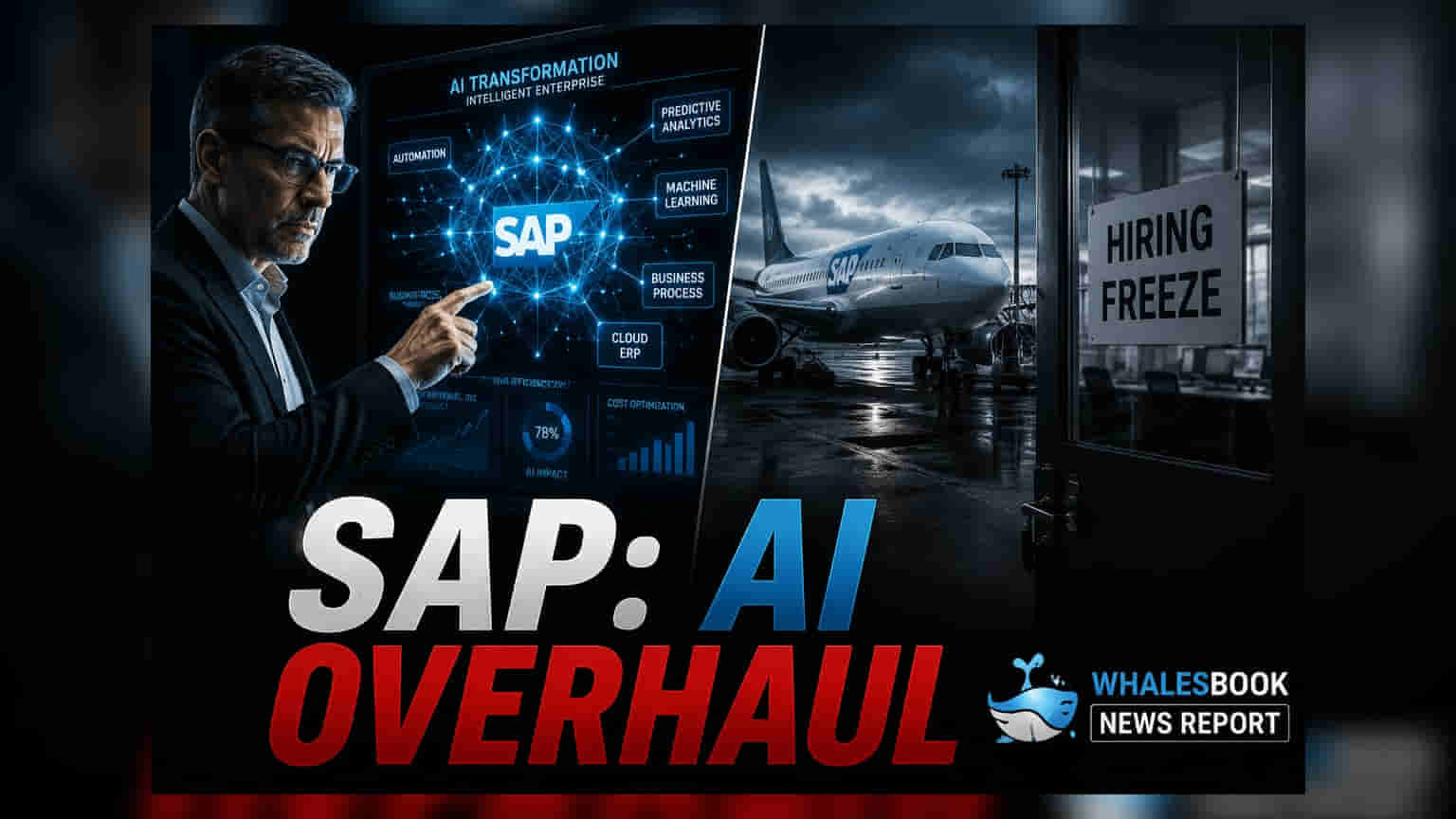
Global software major SAP is implementing a hiring freeze for non-essential roles and pausing internal travel to redirect capital toward artificial intelligence projects. This move aims to offset rising infrastructure costs and support the company's long-term AI product roadmap.
What Happened
German enterprise software giant SAP SE is tightening its operational spending to prioritize capital allocation toward artificial intelligence. In a recent internal directive, the company announced it is curbing non-essential hiring and pausing internal travel. These austerity measures are part of a broader strategy to fund the research, development, and infrastructure necessary for building AI-powered enterprise tools. While the company is limiting general expenditures, it plans to continue hiring for core roles that are critical to its AI initiatives.
Why This Matters for Investors
For investors, this shift indicates that SAP is prioritizing long-term growth in the AI sector over immediate operational convenience. The company identified that the adoption of AI and the costs associated with token consumption—the digital processing units used by AI models—have created significant financial pressure. By re-establishing a 'Spend Council' for procurement, SAP aims to exert stricter control over third-party costs. This move suggests that the company is bracing for sustained, high-level investment needs as it seeks to integrate AI across its cloud and software offerings.
The Cost of AI Innovation
SAP's move highlights the reality faced by major software companies today: the high expense of AI development and model training. Unlike traditional software, AI-driven products often involve ongoing consumption costs for compute power and specialized cloud infrastructure. Investors may view this as a necessary transition, but it also means that profit margins may come under pressure in the short term as the company funnels more cash into these infrastructure-heavy projects. The success of this strategy will depend on the company's ability to eventually monetize these AI capabilities through premium product offerings.
Strategic Reallocation of Capital
This decision marks a pivot in how SAP manages its balance sheet. By limiting non-critical spending, the company is attempting to maintain its financial flexibility while avoiding excessive debt or dilution to fund its growth plans. The focus on 'All in on AI' signifies that SAP believes its future competitive advantage depends on quickly deploying these technologies. The company is also open to strategic acquisitions if they provide the necessary data or technical expertise to accelerate its AI agenda, which may further impact cash reserves.
What Investors Should Track
Investors should monitor the company's upcoming quarterly financial results for details on how these cost-saving measures are impacting operating margins. Key monitorables include the rate of return on AI-related investments, whether the company can maintain cloud growth despite spending controls, and how the new procurement process affects overall third-party expenditures. The timeline for when these AI investments translate into higher revenue growth will be essential for assessing the effectiveness of this capital allocation strategy.