

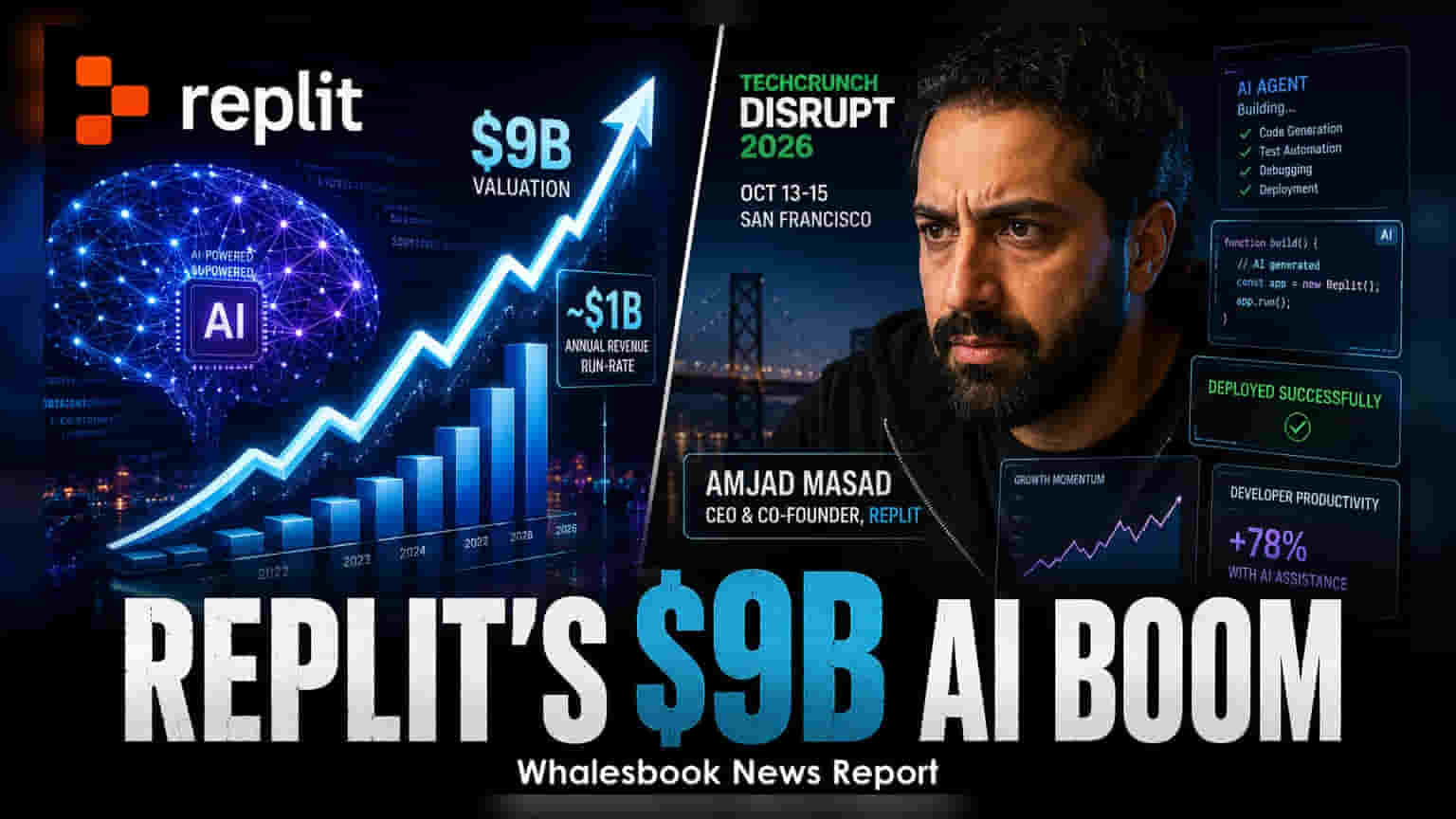
Replit CEO Amjad Masad will headline TechCrunch Disrupt 2026 this October as the firm navigates a $9 billion valuation. As a private company, Replit remains outside traditional stock exchanges, making secondary market investments highly speculative for those tracking the AI-driven software development boom.
Amjad Masad, the CEO and co-founder of Replit, is scheduled to deliver a keynote address at the TechCrunch Disrupt 2026 conference in San Francisco. The event, taking place from October 13-15, will spotlight the evolving world of programming and the role of artificial intelligence in automating software development. Masad’s appearance comes as the company continues to scale rapidly, with reports indicating its annual revenue run-rate—a projection of earnings based on recent trends—is approaching $1 billion.
This growth trajectory has attracted significant attention, leading to a $9 billion valuation in the company's latest funding rounds. While the company's progress has been swift, it is important for investors to note that Replit is a private company. It is not listed on the National Stock Exchange (NSE), Bombay Stock Exchange (BSE), or any other major public exchange. This means individual retail investors cannot purchase shares through standard brokerage apps or demat accounts.
For those interested in the private equity space, shares of companies like Replit are occasionally accessible via secondary market platforms such as Hiive or UpMarket. However, these investments carry distinct risks compared to public stocks. The primary risk is low liquidity, meaning it is often difficult to sell these shares or exit the investment when needed. Furthermore, because these companies do not provide the same level of public financial disclosures as listed firms, information can be less transparent.
The broader sector of AI-assisted coding also faces unique challenges. Companies like Replit are heavily dependent on large language models (LLMs), which involve high infrastructure costs. Keeping profit margins healthy while scaling these expensive models is a constant pressure. Additionally, the regulatory environment for generative AI remains fluid, with ongoing debates regarding intellectual property, copyright issues for AI-generated code, and data privacy laws. These legal and operational uncertainties could impact the long-term stability and profitability of the business.
Investors monitoring this space should look beyond headlines about valuation and focus on how the company manages these operational costs and whether it can maintain its competitive edge against larger tech incumbents. The primary milestone for most stakeholders will be any future announcement regarding a potential public listing, which would subject the company to the rigors of public financial reporting, though no such plans have been confirmed by the firm.