

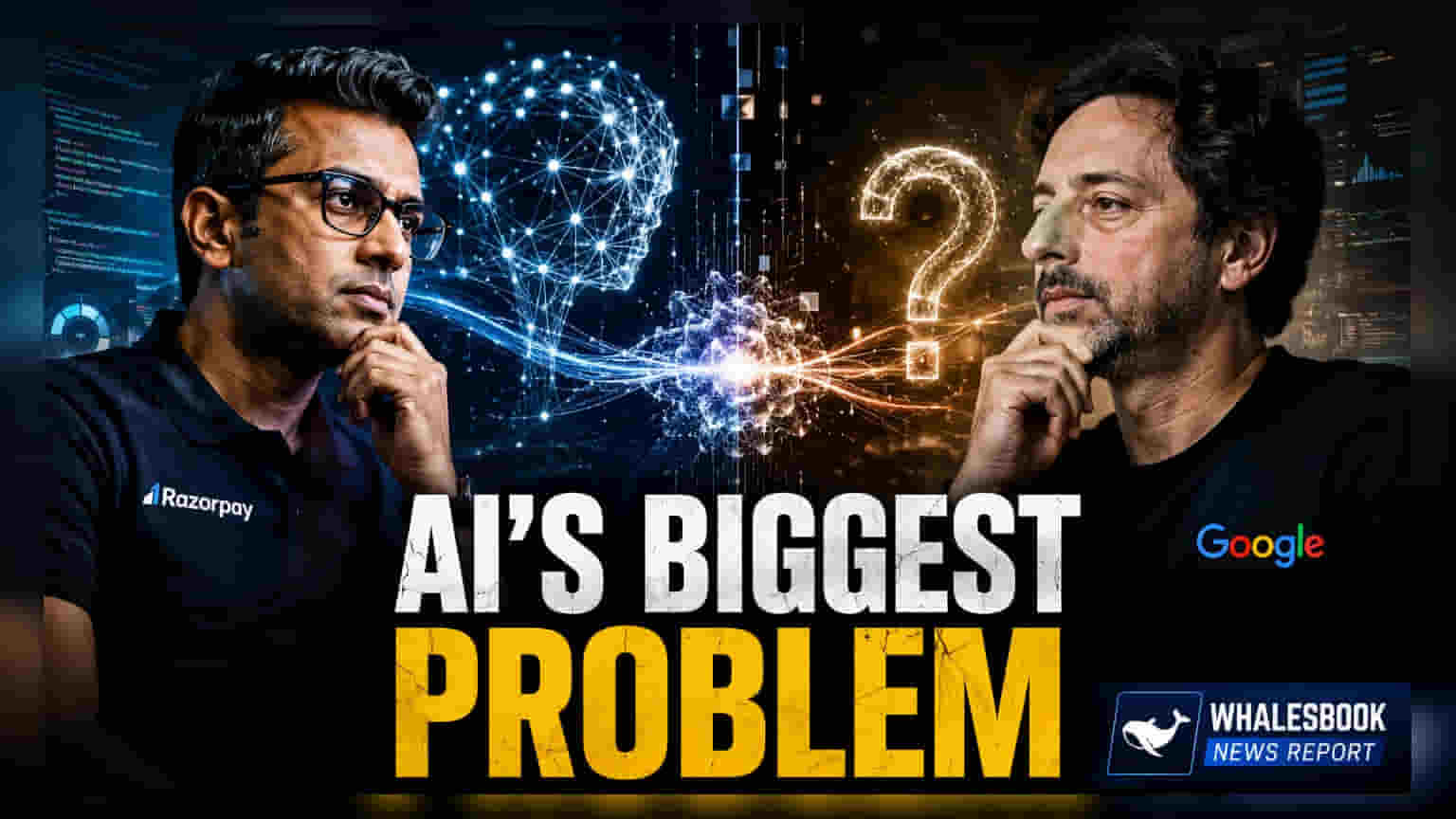
Razorpay CEO Harshil Mathur says businesses are still struggling to use AI effectively at scale. While many companies are rushing to launch AI tools, challenges in reliability and cost remain significant. Investors should watch how firms balance expensive AI experimentation with the need for practical, profitable results.
The rapid push to integrate artificial intelligence across the Indian corporate landscape is currently more about experimentation than established success. Razorpay CEO Harshil Mathur recently commented that despite the widespread enthusiasm for AI, no company has yet mastered the ability to deploy these technologies at a large scale. This perspective aligns with similar observations from global technology leaders, suggesting that the industry is still in a learning phase.
Challenges in Financial AI Deployment
For companies operating in the financial services sector, such as payment gateways and fintech firms, the requirements for AI are significantly more rigid than in other industries. Unlike general creative tools, AI in finance must be highly accurate, reliable, and secure for critical tasks like fraud detection and automated customer support. Mathur noted that the industry is currently moving away from the excitement of simply building powerful models toward the harder work of making those models cost-effective and dependable for daily business operations.
Balancing Innovation and Practical Costs
Many businesses are currently spending heavily on AI development, which creates pressure on profit margins. Investors should monitor whether these high costs lead to tangible revenue growth or improved operational efficiency. The transition from experimental projects to real-world applications is essential for long-term value creation. If companies fail to turn their AI experiments into reliable, low-cost solutions, the return on their capital spending could be lower than expected.
The Path Forward for Tech Investors
This period of uncertainty and trial-and-error is likely to continue as firms refine their strategies. For stakeholders, the core focus should not be on how many AI features a company announces, but on how these tools perform under real-world conditions. Future updates from companies in this sector will likely shed more light on whether AI is genuinely reducing costs or if the heavy investment phase will continue to weigh on profitability in the near term.