

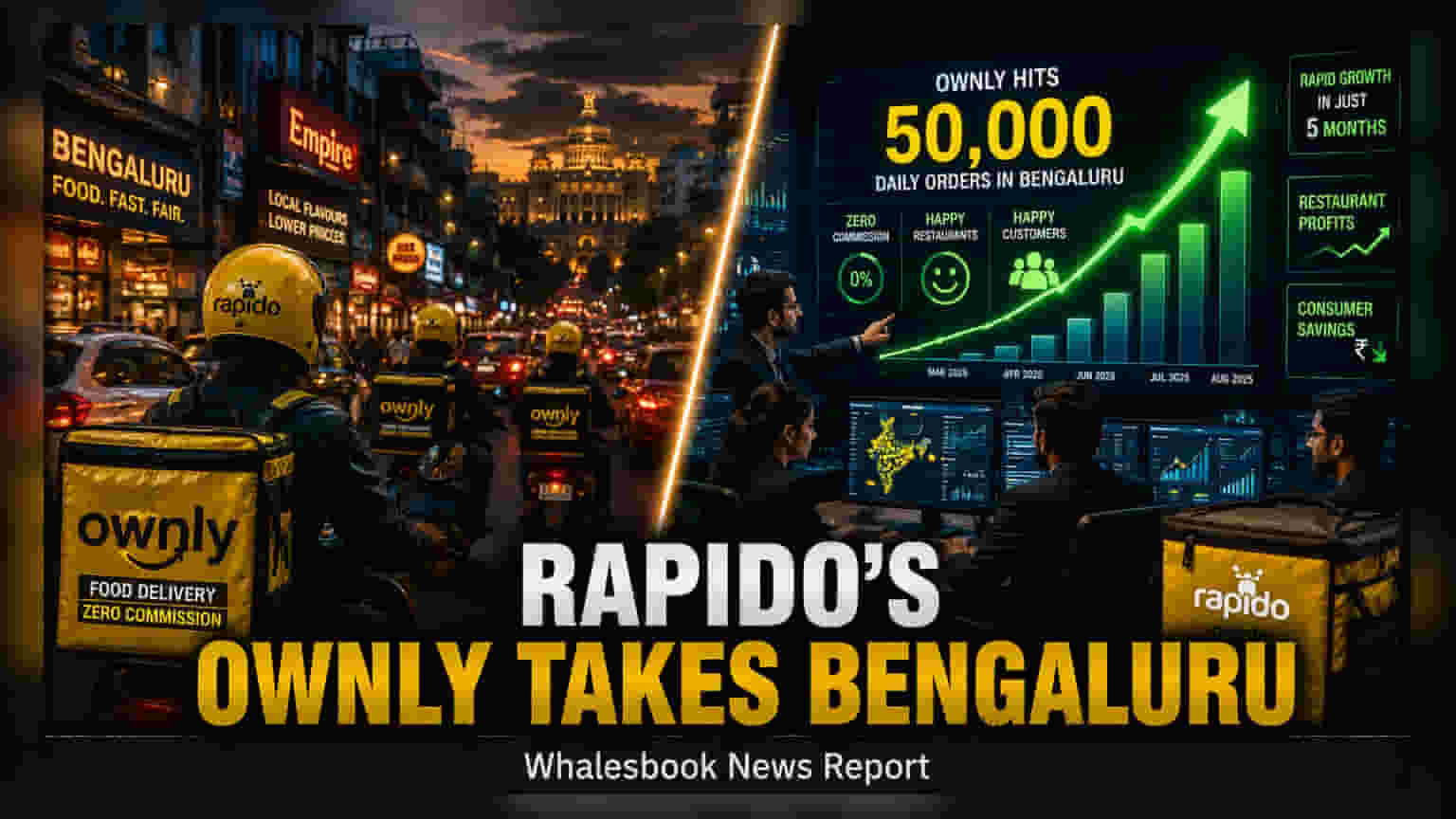
Rapido's zero-commission food delivery platform, Ownly, has reached 50,000 daily orders in Bengaluru five months after launch. This rapid growth challenges the established duopoly of Zomato and Swiggy. Industry observers are now tracking whether this model can maintain profitability at scale while facing aggressive competition and operational hurdles.
Rapido’s food delivery service, Ownly, is showing rapid growth, reaching 50,000 daily orders in Bengaluru just five months after its launch. The platform is attempting to disrupt the Indian food delivery sector by changing how restaurants are charged. Unlike the traditional model used by major incumbents like Zomato and Swiggy, which typically charge a percentage of the order value as commission, Ownly utilizes a zero-commission structure. Instead, it charges restaurants a fixed fee or subscription, which allows restaurants to maintain lower menu prices while aiming for better profit margins for themselves.
The success of this model has drawn attention from local restaurant chains, such as Empire, which has reported a significant increase in orders through the platform since early 2026. By removing the percentage-based commission, Ownly aims to attract both price-sensitive consumers and restaurants that have historically struggled with the high commission costs on other delivery apps.
This growth occurs within a broader sector shift. The Indian food delivery market, long dominated by Zomato and Swiggy, is seeing a move toward more affordable and value-based offerings. Incumbents are responding with their own strategies, such as Swiggy’s 'Toing' and Zomato’s 'Bistro' services, while new players like Flipkart are preparing to enter the space using the government-backed ONDC (Open Network for Digital Commerce) infrastructure. These moves suggest that the industry is trying to expand the total market by capturing consumers who previously found app-based food delivery too expensive.
However, the long-term sustainability of the zero-commission model remains a key point of discussion. Achieving scale without the revenue cushion of percentage-based commissions requires high operational efficiency. The platform faces several hurdles, including intense competition from incumbents who have deep pockets for discounts and loyalty programs. Additionally, the delivery business carries significant operational risks, including the need for high delivery density to ensure profitability and the constant challenge of maintaining service quality and delivery speed.
Beyond market competition, the business also faces regulatory and operational risks. The gig-economy model, which relies heavily on bike-taxi and delivery logistics, has faced legal and regulatory scrutiny in various Indian states. There are also ongoing concerns regarding the safety and working conditions of delivery partners, which can impact supply chain stability. As Rapido looks to scale Ownly, the ability to balance aggressive growth with unit economics and regulatory compliance will be the primary factor determining its future success in the highly competitive food delivery space.