

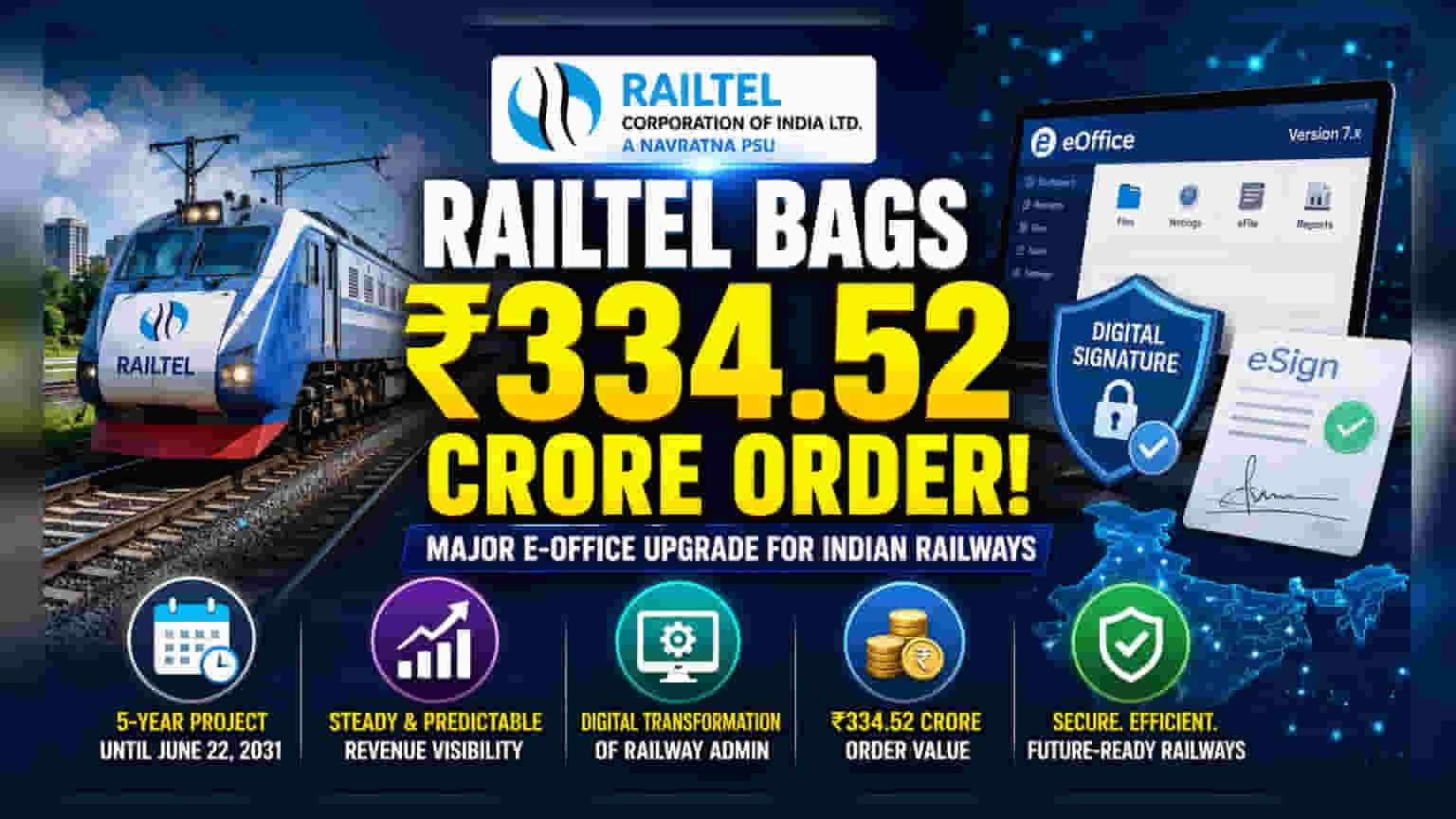
RailTel Corporation has secured a ₹334.52 crore contract from the Ministry of Railways to upgrade its e-Office system to Version 7.x. This five-year project improves the company’s revenue visibility. While the order strengthens RailTel's position in digital infrastructure, investors should monitor its high reliance on government projects and the potential for margin pressure.
What Happened
RailTel Corporation of India, a Navratna public sector undertaking, has bagged a fresh order worth ₹334.52 crore (excluding taxes) from the Ministry of Railways. The project involves a comprehensive upgrade of existing e-Office instances across various Zonal Railways and administrative units to Version 7.x.
As part of this contract, RailTel will also implement mandatory Digital Signature Certificates (DSC) and eSign facilities across these offices. The project is a long-term commitment, with an execution timeline extending until June 22, 2031. This development comes as the company continues to play a central role in the digital transformation of India's railway administrative workflows.
Why This Order Matters
For RailTel, this contract is more than just a software upgrade. It reinforces the company's shift from being primarily a telecom bandwidth provider to becoming a full-stack digital solution integrator for government agencies. By managing the e-Office upgrade, RailTel deepens its integration into the critical administrative infrastructure of the Indian Railways.
From a financial perspective, the five-year duration of this contract provides RailTel with steady, predictable revenue. Long-duration projects are generally viewed favorably by investors as they help the company manage its resources better and provide clear revenue visibility for several years ahead, reducing the uncertainty often associated with short-term, one-off tenders.
The Business Context and Client Concentration
RailTel operates on a business model where it leverages its exclusive right of way along railway tracks to build telecom and digital infrastructure. While this gives the company a unique advantage in winning railway-related projects, it also introduces a significant structural risk: client concentration.
A substantial portion of RailTel's revenue comes from orders placed by the Ministry of Railways and other public sector entities. While this ensures a constant flow of business, it also means the company’s growth is closely tied to the government's spending budget and policy priorities. Investors often monitor whether the company can successfully diversify its order book by winning more private sector or non-railway government projects to reduce this dependency.
Margin and Execution Risks
While the project adds to the order book, investors should be mindful of the operational realities of such large-scale system integration contracts. Unlike high-margin telecom infrastructure services, large project-based contracts often come with thinner profit margins. As the proportion of project-based revenue increases, there is a risk of overall operating profit margins moderating.
Additionally, an execution timeline extending until 2031 brings its own set of challenges, including potential cost overruns, technology obsolescence, or regulatory changes in how railway administrative systems are managed. The company will need to ensure efficient execution and cost control to maintain the profitability of this long-term contract.
What Investors Should Track
Going forward, investors may look for updates on the pace of project execution. Key monitorables include the company's quarterly operating margins, the speed at which it converts its large order book into actual revenue, and whether management continues to win projects from other government departments or private sectors to balance its railway-heavy portfolio.