

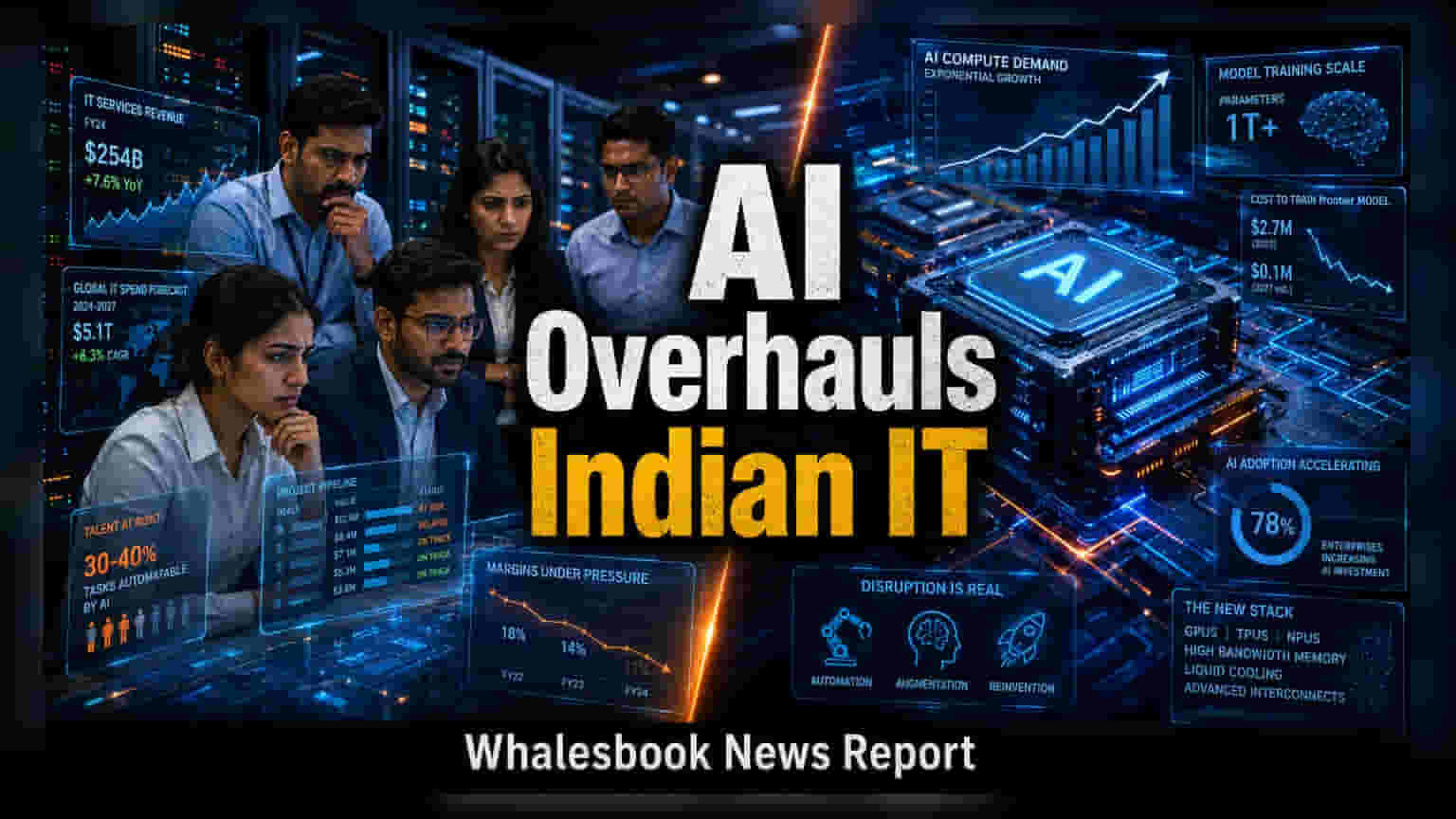
Veteran investor Raamdeo Agrawal expects artificial intelligence to significantly reshape the business models of Indian IT service companies. While the shift toward AI integration presents new opportunities for implementation work, it also forces firms to rethink their traditional operations. Agrawal suggests that despite these changes, AI-driven cost reductions could ultimately help improve profit margins for the sector.
Artificial intelligence is expected to bring fundamental changes to the Indian information technology services sector, according to veteran investor Raamdeo Agrawal. Rather than focusing solely on consumer applications, the primary transformation is likely to occur through enterprise-level AI adoption. As businesses across the globe look to integrate these new technologies into their daily operations, Indian IT firms are positioned to lead the implementation process.
This shift creates a complex scenario for IT service providers that have relied on established delivery models for decades. The reliance on large-scale human labor has been the cornerstone of the Indian IT sector's growth, but the rise of AI-driven automation may require these companies to pivot their strategies. The challenge lies in balancing the integration of AI tools with the need to maintain existing revenue streams while avoiding the risk of operational disruption.
Potential Impact on Profitability and Margins
Agrawal remains constructive regarding the earnings prospects of the sector. The central argument is that AI integration can significantly lower operational costs. If companies can leverage automation to reduce the expenses involved in providing services, the resulting efficiency may lead to better profit margins. Investors should monitor how effectively these firms can pass these efficiency gains to their bottom lines while simultaneously managing the transition costs associated with retraining staff and upgrading technological infrastructure.
Labor Dynamics and Industry Evolution
The adoption of AI is likely to alter the balance between capital and labor within the industry. While demand for highly specialized talent may increase, leading to higher compensation for experts, roles focused on lower-level tasks may face significant disruption. This evolution echoes past technological shifts, such as the introduction of the internet and mobile computing, which fundamentally changed how companies operated. However, the speed of AI development appears to be faster than previous cycles, which may accelerate the timeline for companies to adapt their workforce and service offerings.
For investors, the key monitorable will be the ability of individual IT firms to successfully navigate this transition without losing their competitive advantage. It will be important to track management commentary on how AI is impacting project delivery timelines, pricing power, and the overall cost structure. Companies that can demonstrate a clear roadmap for adopting these tools while maintaining high-quality service delivery are likely to be better positioned in this changing environment.