

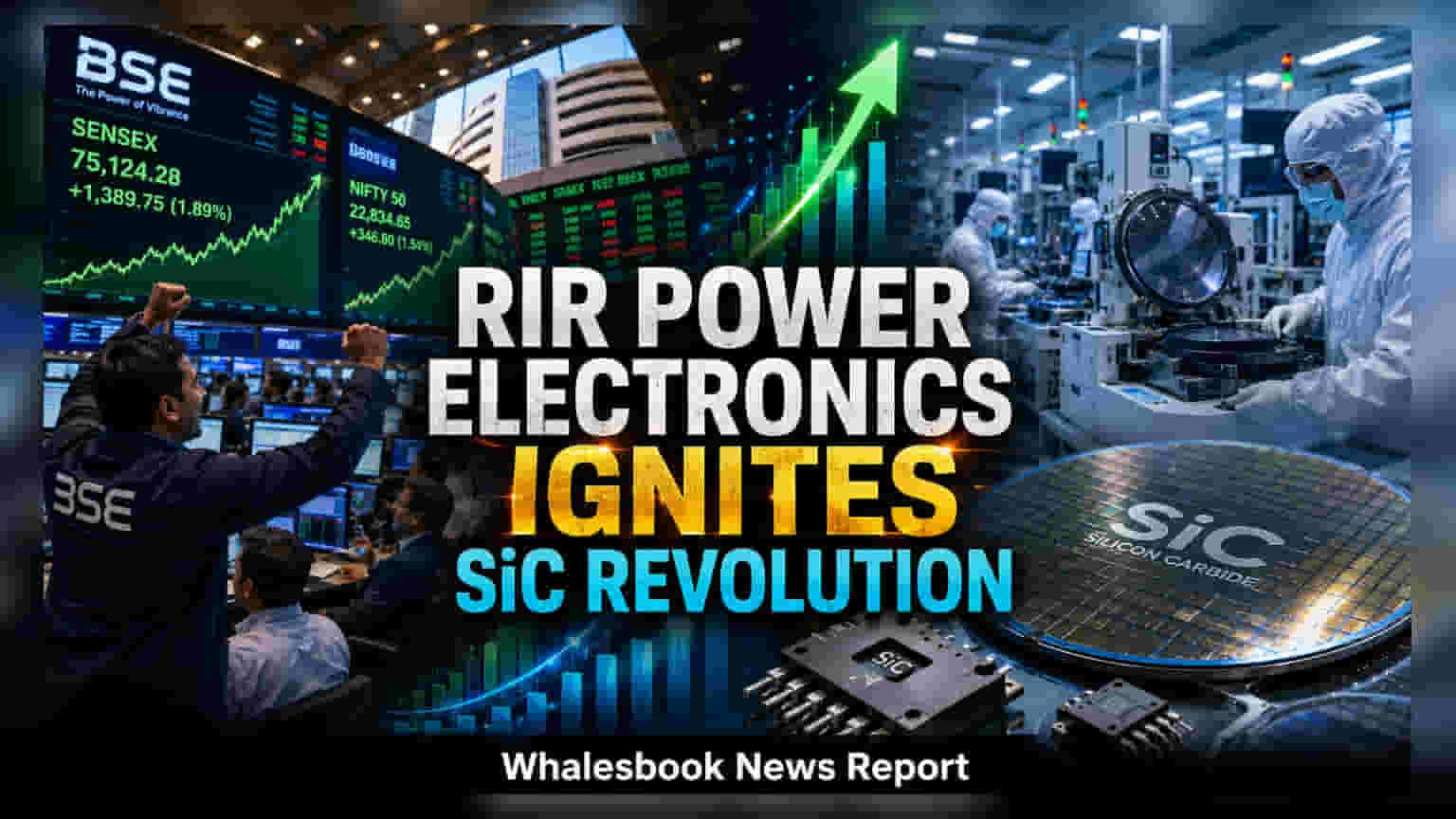
RIR Power Electronics has expanded its market presence by listing on the NSE. The company is currently setting up a Silicon Carbide manufacturing facility in Odisha, with commercial production expected in FY2027, as part of a 618 crore investment plan to boost India's semiconductor capabilities.
RIR Power Electronics has officially commenced trading on the National Stock Exchange (NSE), marking a transition for the company which has historically been listed on the BSE since 1986. This move is aimed at enhancing liquidity for shareholders and broadening the company's visibility among institutional investors.
Scaling Up Silicon Carbide Manufacturing
The company is currently focused on an ambitious investment plan totaling 618 crore to build a vertically integrated ecosystem for Silicon Carbide (SiC) semiconductors. These materials are essential for high-power electronics used in electric vehicles, renewable energy infrastructure, and defense equipment. The new facility in Bhubaneswar, Odisha, is a central part of this strategy. While the cleanroom construction is complete, the company is in the final stages of installing plant and machinery, with full readiness expected by the end of July 2026.
Production Timelines and Order Status
Investors tracking the company's growth should note that commercial production of epitaxial wafers at the Odisha plant is scheduled to begin in the second quarter of fiscal year 2027. This timeline is crucial for the company's revenue outlook as it attempts to move into more advanced manufacturing. Alongside this development, RIR has secured its first international order for 125-mm, 5 kV silicon-controlled rectifier thyristors. The execution of this order is expected to take place in phases through the end of 2026, providing a near-term revenue stream while the new plant ramps up.
Financial and Operational Context
RIR Power Electronics, which currently operates manufacturing units in Gujarat, holds a market capitalization of approximately 1,257 crore. The success of its expansion depends heavily on the timely commissioning of the Odisha plant and the company's ability to compete in the high-power semiconductor segment. Because semiconductor manufacturing is capital-intensive and involves complex technology, the company’s ability to manage its 618 crore capital spending without putting excessive pressure on its balance sheet will be a key factor for investors to monitor. Furthermore, the semiconductor sector is influenced by government incentives and global supply chain dynamics, which could impact the company's margins and long-term profitability. Future updates from the company regarding the actual start of commercial production and the progress of its international order book will be the next major milestones for stakeholders.