

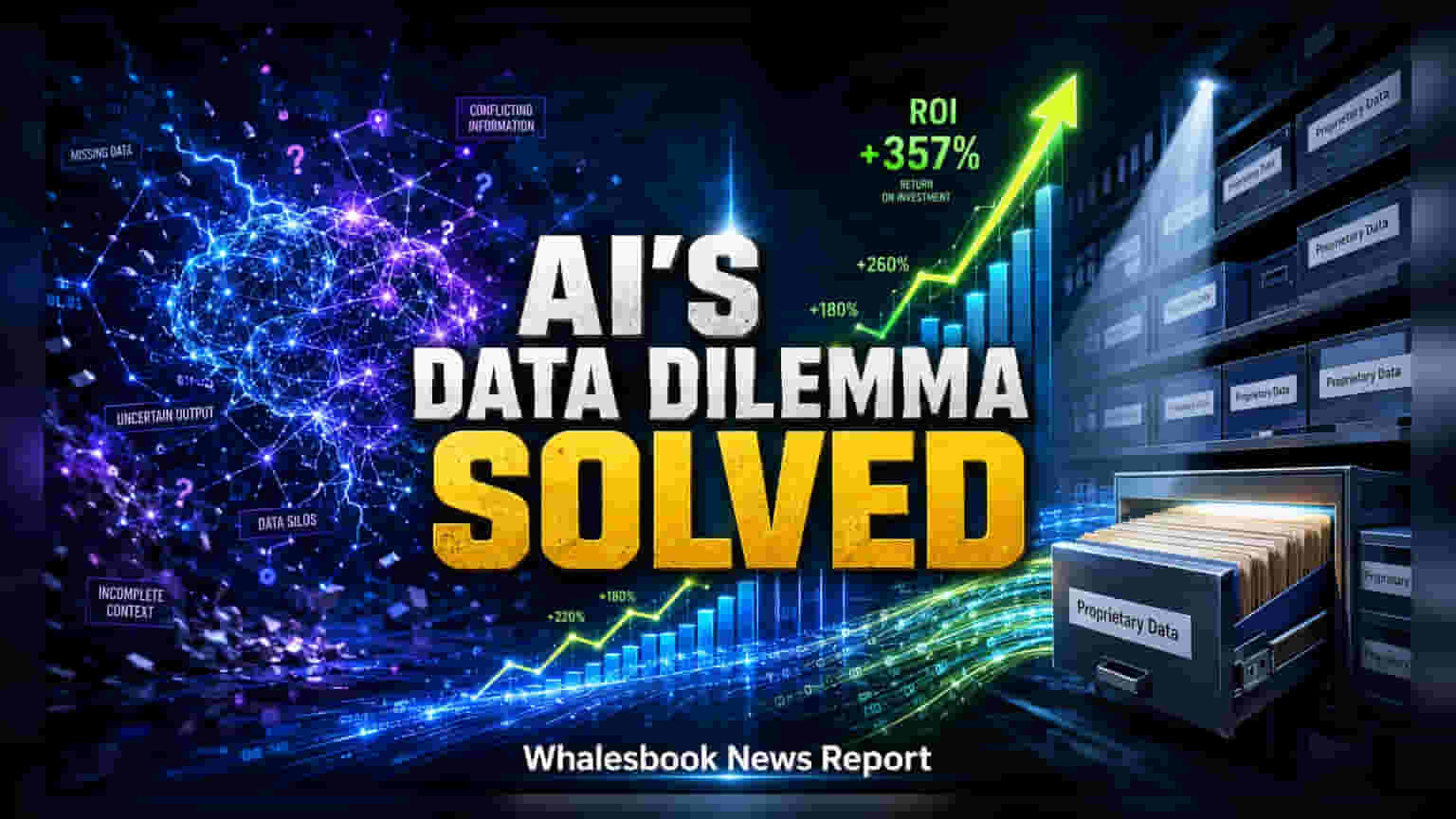
Retrieval-Augmented Generation (RAG) is transforming enterprise AI by connecting models to private company data to improve accuracy. Adoption of this technology rose to 51% in 2024, as businesses leverage it to prevent AI errors and improve decision-making. Investors should note that while adoption is high, success depends on data quality and ongoing system maintenance.
Detailed Coverage
Retrieval-Augmented Generation, commonly known as RAG, has emerged as a critical tool for companies aiming to make Artificial Intelligence (AI) reliable for business use. While standard AI models are trained on vast amounts of public information, they often struggle with specific, internal company data. This limitation can lead to inaccuracies or fabricated responses, commonly referred to as hallucinations.
RAG addresses this gap by creating a bridge between AI models and a company’s private knowledge base. Instead of relying solely on an AI's pre-trained memory, a RAG system first searches a company’s own documents—such as research reports, compliance files, or technical manuals—to find relevant facts before generating an answer. By providing the model with specific, verified context, the system ensures that responses are grounded in accurate, source-cited information.
Business Impact and Growth Trends
The adoption of RAG among enterprises has seen significant momentum. Data from 2024 indicates that 51% of organizations have integrated RAG into their operations, often dedicating 30% to 60% of their AI initiatives to these systems. The financial incentive is clear: businesses are reporting an average return of $3.70 for every dollar spent on RAG projects. This trend is fueling growth in the underlying infrastructure market, particularly for vector databases, which are specialized storage systems that help AI understand the meaning behind data. Analysts project this market could grow to $9.86 billion by 2030.
For industries such as finance, healthcare, and manufacturing, the value lies in efficiency and risk management. Compliance teams can quickly verify regulations against internal records, while engineers can troubleshoot equipment by accessing historical maintenance logs in real time. Because the system provides citations for its answers, it offers a level of traceability that is essential for industries where accuracy is non-negotiable.
Implementation Risks and Considerations
Despite the clear benefits, RAG is not a simple plug-and-play solution. As organizations scale their AI efforts, the complexity of managing these systems increases. If the data fed into the system is poorly organized or if the document segmentation is flawed, the AI’s retrieval accuracy can drop, potentially leading back to the very inaccuracies the system was designed to prevent.
Maintenance remains a significant hurdle. Companies must continuously update their indexes, ensure robust data security, and manage access controls to keep information safe. Investors should monitor how well companies treat RAG as an engineering discipline rather than a one-time project. The long-term viability of these deployments will depend on a firm's ability to maintain high data quality and adapt its infrastructure to handle growing volumes of information effectively.