

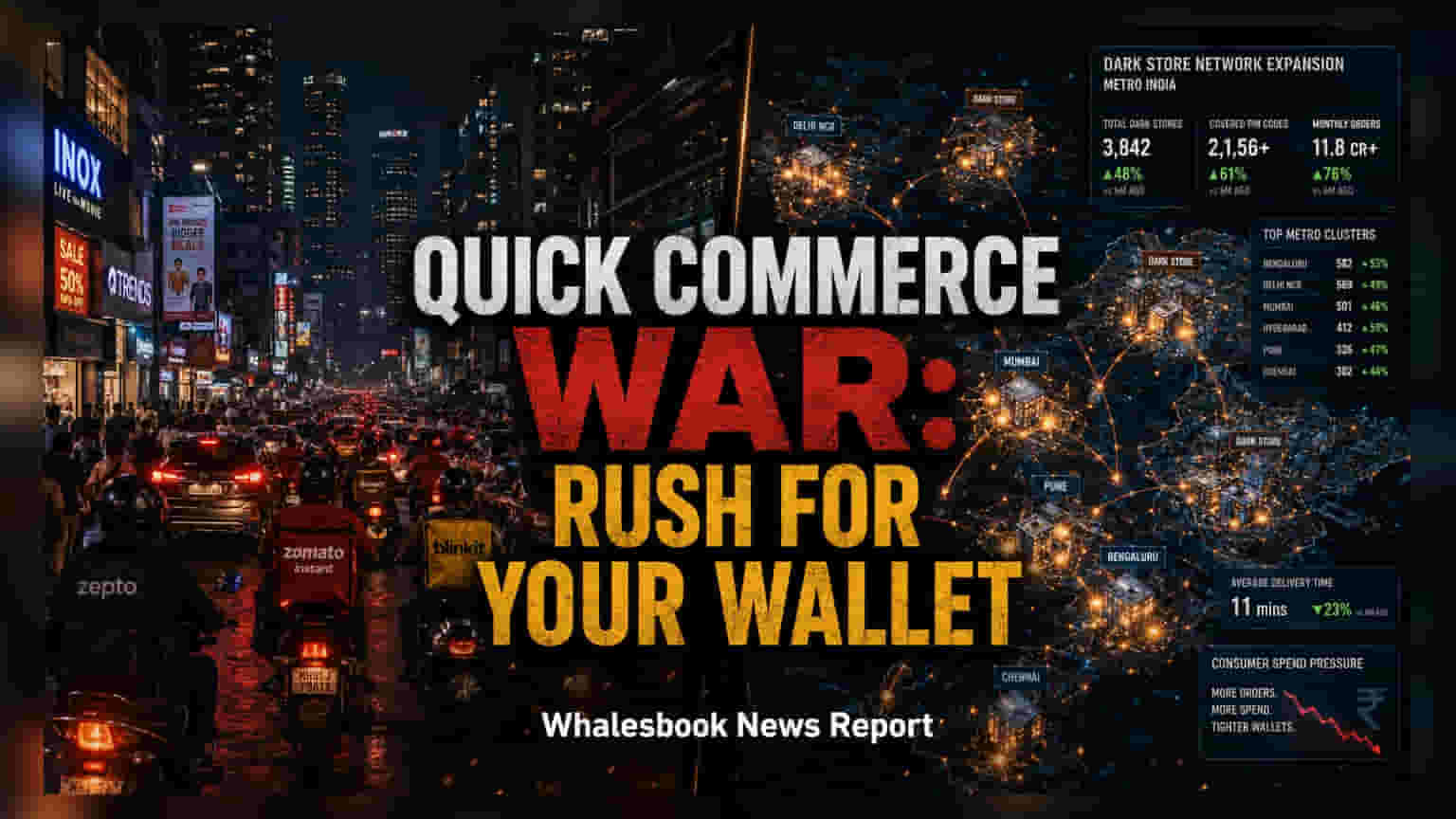
India's top five quick commerce players added nearly 900 delivery hubs between April and July 2026. This aggressive expansion focuses on deepening penetration in existing urban areas rather than entering new regions. Investors should monitor how this intensifying battle for market share affects unit economics and the timeline for profitability in the increasingly crowded sector.
India’s quick commerce sector is undergoing a massive infrastructure push as major players scramble to secure urban market share. Between April and July 2026, the country’s five largest operators added nearly 900 dark stores, bringing the total industry network to between 6,650 and 6,750 locations. This surge marks a distinct change in strategy from broad geographical expansion to intense density within already served pin codes.
Aggressive Store Addition by Major Players
Zomato-owned Blinkit led this expansion by adding 289 outlets to reach a total network of 2,511. Flipkart Minutes, backed by Walmart, grew its presence by 262 stores, now operating over 1,000 locations. Amazon Now nearly doubled its footprint by adding an estimated 250 sites, bringing its total to between 600 and 700. Meanwhile, IPO-bound Zepto expanded its reach by 90 stores, totaling 1,345, while Swiggy Instamart maintained its network at 1,187 stores.
Concentration and Profitability Risks
Despite the rapid addition of nearly 900 facilities, the total number of unique pin codes served increased by only 152. This suggests that operators are prioritizing presence in high-demand urban zones where competitors are already active. Data from Bernstein indicates that major metropolitan areas now host approximately 4,300 dark stores, a number that exceeds the estimated sustainable capacity of 3,600. The competitive overlap is also rising rapidly; the share of metro pin codes where all five major players operate jumped from 26% in April to 44% in July.
For investors, the critical question remains the path to sustainable profitability. While denser networks are intended to improve delivery efficiency and unit economics, the saturation of urban pin codes could lead to pricing wars and increased marketing costs. Established e-commerce giants like Amazon and Flipkart are using this expansion to defend their broader franchises by capturing the daily shopping habits of the top 50 to 60 million consumers. However, the high capital spending required to maintain these dense networks may keep profit margins under pressure for the foreseeable future.
Looking ahead, stakeholders will be monitoring quarterly financial updates for indicators of improved unit economics. Key factors to watch include average order values, delivery costs per unit, and whether the intense competition for the same customer base leads to a slowdown in user acquisition costs or if it continues to weigh on the overall financial performance of these companies.