

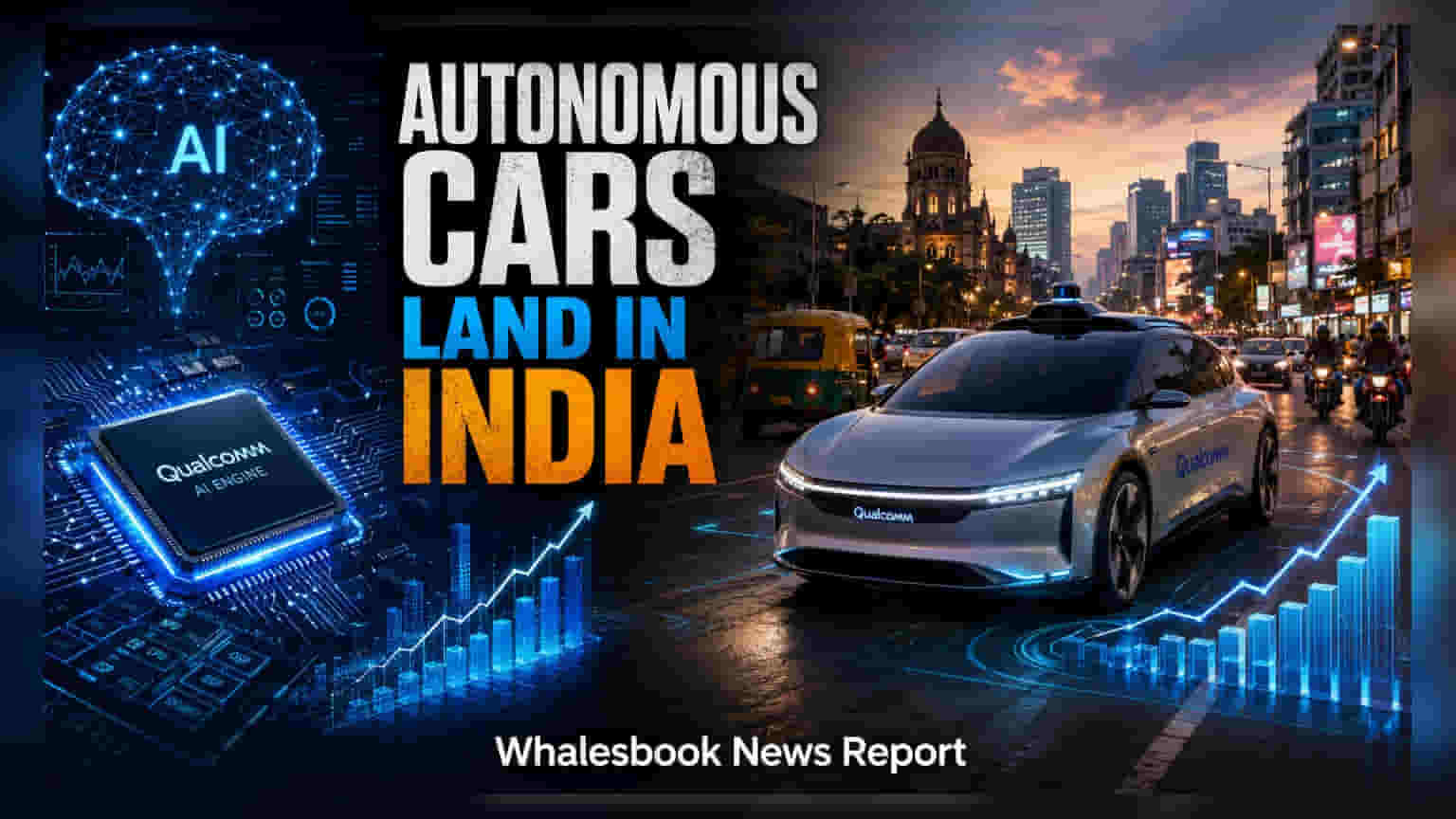
Qualcomm Technologies expects autonomous vehicles to enter the Indian market within ten years, supported by progress in artificial intelligence and semiconductors. The shift towards software-defined vehicles aims to enhance road safety by reducing human error, though widespread adoption will rely on developing local infrastructure and clear regulatory frameworks.
Self-driving technology is increasingly seen as a future fixture on Indian roads, according to insights from Qualcomm Technologies. Nakul Duggal, Executive Vice President at the company, noted that the core technology required for autonomous operation is maturing rapidly. While the potential for vehicles to operate more safely than human drivers is rising, the real-world deployment in India will hinge on the development of supporting infrastructure and the establishment of specific regulatory frameworks.
Transition to Software-Defined Vehicles
The automotive industry is shifting its focus from traditional mechanical engineering to software-centric design. Modern vehicles are evolving into sophisticated digital platforms, essentially becoming robots on wheels. This change is driven by the rise of electric vehicles and advanced semiconductor chips, which allow manufacturers to prioritize software intelligence over raw mechanical power. By integrating artificial intelligence, carmakers are looking to offer higher levels of safety and personalized user experiences.
India's Role in Automotive Innovation
India is increasingly being positioned as a global hub for automotive software development. Rather than simply importing foreign technology, domestic manufacturers are focusing on creating bespoke solutions tailored to India's unique driving conditions and consumer preferences. Qualcomm has been collaborating with local players, such as electric motorcycle manufacturer Ultraviolette, to develop technology specifically suited for the Indian market. This localized approach is crucial because autonomous systems must be trained to navigate complex and diverse road environments that differ significantly from those in other parts of the world.
Impact on Road Safety and Electronics
One of the primary arguments for autonomous systems is the potential to drastically reduce road accidents caused by human error. Advanced driver assistance systems use multi-sensor data to process driving environments faster and more reliably than a human driver. Beyond safety, the growth of this sector is expected to benefit India's broader electronics and semiconductor manufacturing ecosystem. As global supply chains continue to diversify, the demand for locally produced high-end chips and software solutions is likely to increase.
Future Monitorables
The transition to autonomous mobility is a long-term goal that will depend on several factors beyond technological readiness. Investors and market observers should monitor the progress of government policies regarding vehicle automation, the speed of infrastructure upgrades, and the ability of Indian manufacturers to scale these software-defined platforms. Success will ultimately be determined by how quickly the regulatory environment can adapt to accommodate these advanced technologies while ensuring public safety.