

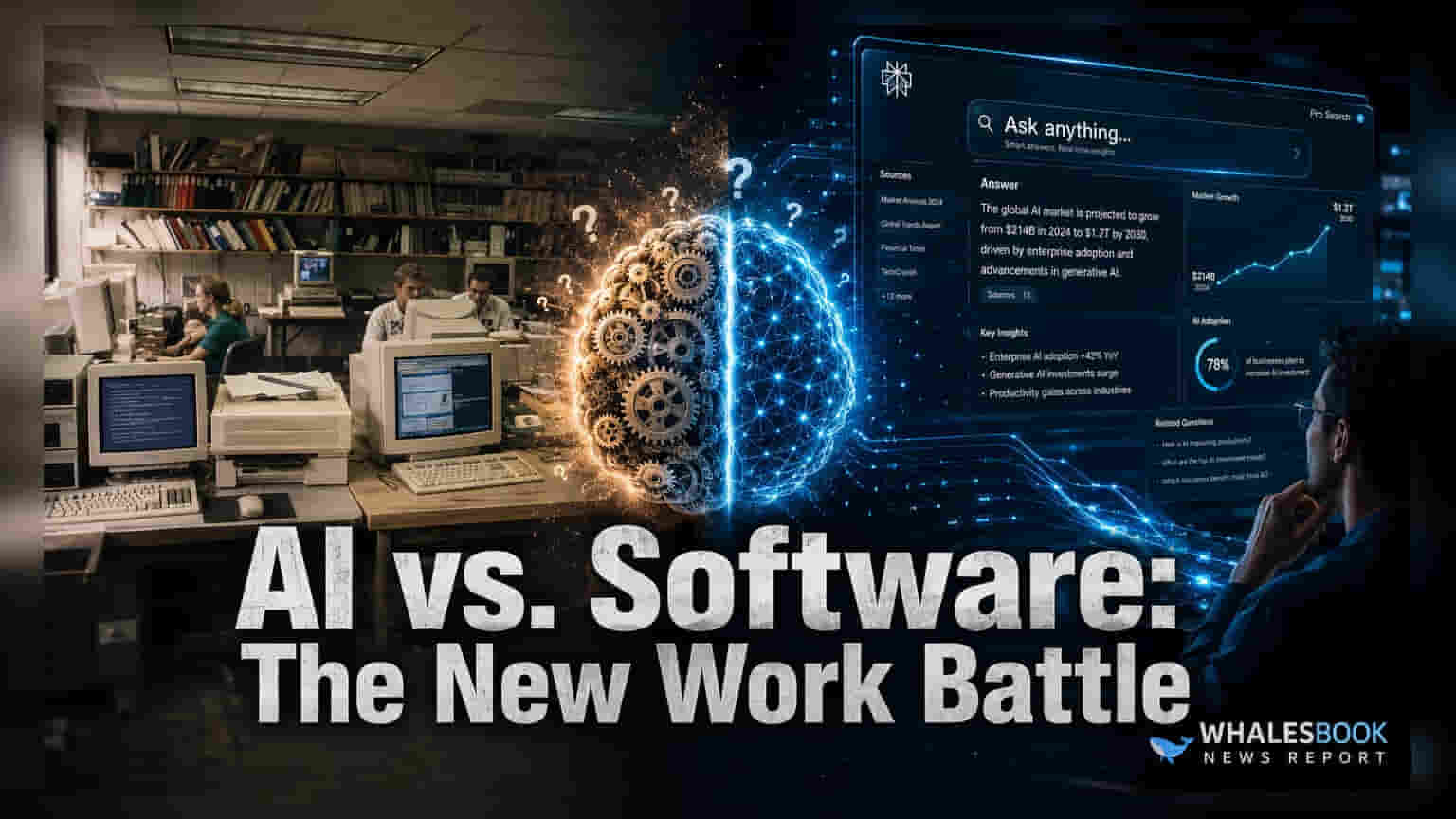
Perplexity AI CEO Aravind Srinivas stated that the concept of the 'knowledge worker' was driven by Microsoft's strategy to increase software adoption. He argues that AI may shift future workplace value toward human curiosity and critical questioning rather than technical software proficiency.
What Happened
Perplexity AI CEO Aravind Srinivas recently discussed the evolution of workplace dynamics during a podcast appearance. He suggested that the common professional label of the 'knowledge worker' was, in his view, a strategic construct popularized by Microsoft. The goal of this concept, according to Srinivas, was to ensure widespread adoption of desktop software like word processors and spreadsheets by making them essential for daily office productivity.
The Software-Dependent Workplace
Srinivas explained that Microsoft’s historic ambition to place a personal computer on every desk created an environment where employees became deeply reliant on specific software ecosystems. Over time, this grew to include cloud services, solidifying a model where professional value was tied to proficiency in these digital tools. He contrasted this with the design-led approach of competitors like Apple, which he described as focusing more on intuitive computing than broad enterprise software integration.
AI And The Shift In Professional Skills
Looking ahead, Srinivas argued that the rise of artificial intelligence could change what is considered valuable in the labor market. As AI tools increasingly handle routine data entry, document formatting, and information retrieval, he believes the focus will move away from rote software tasks. Instead, he suggests that human traits—specifically the ability to formulate insightful questions and maintain curiosity—will become more critical for professionals than simply knowing how to operate traditional software applications.
Challenges For Traditional Education
Srinivas also addressed the current education model, suggesting it often rewards students for providing the correct answer rather than for deep inquiry. He noted that in an age where AI can provide answers instantly, the school system may need to shift toward teaching the art of exploration and logical reasoning. He highlighted that skills like persistent questioning, which are sometimes discouraged in rigid classroom settings, are likely to become primary assets in an AI-integrated economy.
What Investors Should Track
While these comments focus on industry philosophy rather than immediate financial results, they highlight a potential long-term risk for companies heavily dependent on traditional, task-based software models. Investors in the technology sector may watch how major software providers adapt their product roadmaps to focus more on AI-driven reasoning and collaborative intelligence. The ability of established tech giants to transition from providing 'tools for knowledge workers' to offering 'AI-driven curiosity engines' will be a key factor in their future market relevance.