

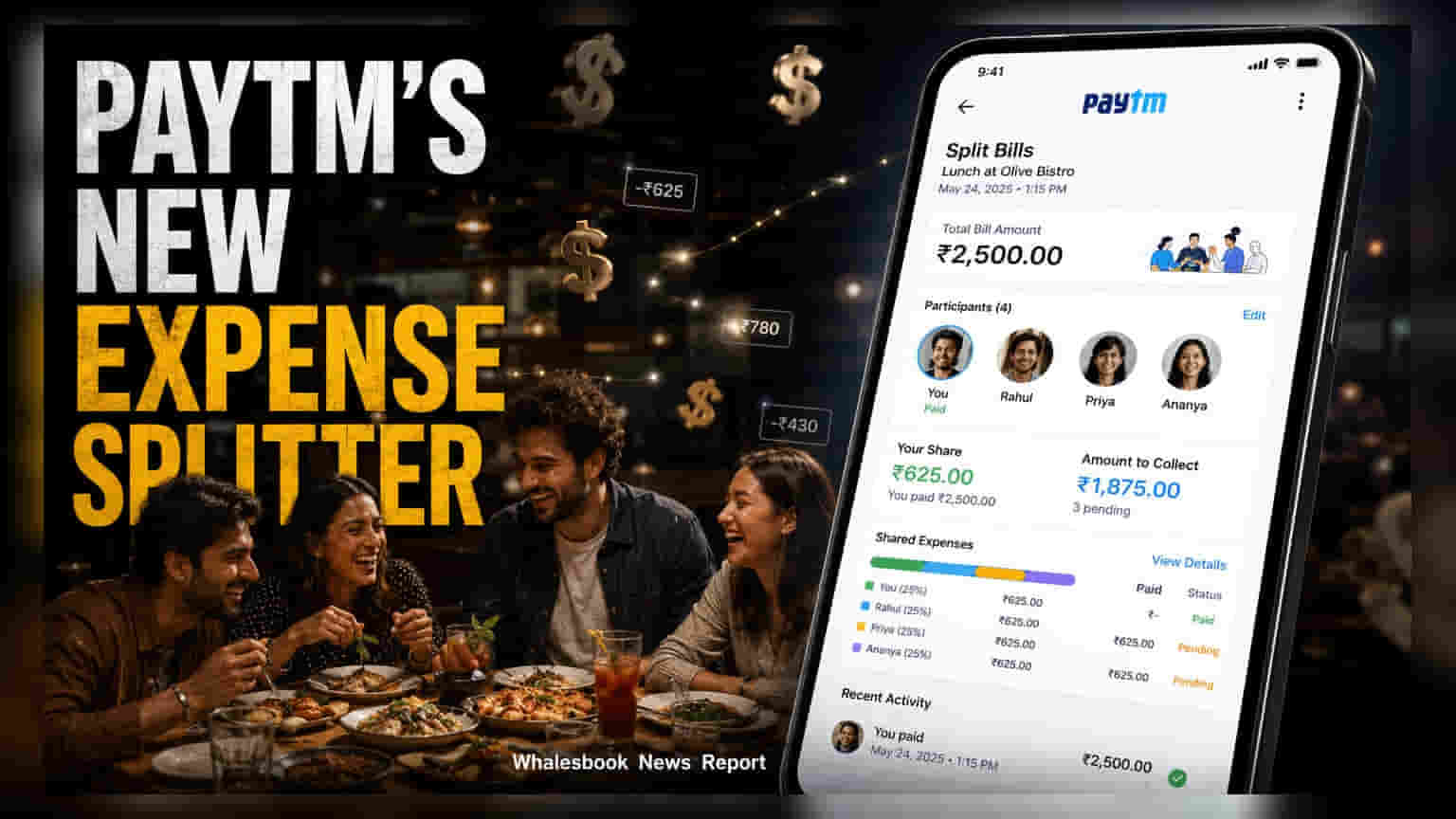
One97 Communications, the operator of Paytm, has introduced a 'Split Bills' tool to help users track and settle shared costs. The move aims to increase app engagement by offering a unified view of group spending. Investors may monitor whether such features successfully retain users amid intense competition in the digital payments sector.
Paytm, the digital payments brand managed by One97 Communications, has launched a new 'Split Bills' feature. Announced on July 29, 2026, the tool is designed to help users track and settle shared expenses within groups for activities like travel, dining, or fuel. By integrating this function, Paytm is positioning itself as a more comprehensive financial management app rather than just a transaction platform.
How the Split Bills Tool Works
The feature allows users to organize shared expenses into specific groups. It offers several ways to divide costs, including equal splits, exact amounts, specific shares, or percentages. A key aspect of this tool is its flexibility regarding payment methods. Users can log expenses paid via Paytm UPI, as well as those made through cash, cards, or other payment applications. This allows the app to act as a central hub for tracking communal spending, managing pending balances, and sending automated payment reminders to participants.
Strategic Context and Market Position
The launch follows a broader trend among Indian digital payment platforms to deepen user engagement through value-added services. By incorporating budgeting and expense-tracking tools, companies like Paytm aim to increase the time users spend within their applications. Increased engagement is often a priority for fintech platforms as they look to build customer loyalty in a market where transaction-based revenue faces stiff competition and regulatory scrutiny.
Financial and Regulatory Context for Investors
For investors, the success of such features is often measured by their ability to boost user retention and cross-sell other financial products. One97 Communications has historically faced pressure to demonstrate consistent profitability and sustainable revenue growth. The company’s financial performance remains tied to its ability to monetize its large user base through diversified offerings like credit, insurance, and wealth management services.
It is important to note that the digital payments space in India remains highly competitive, with major players like PhonePe, Google Pay, and banks’ own apps vying for market share. Additionally, the sector faces constant regulatory monitoring from the Reserve Bank of India regarding data privacy, transaction security, and fair business practices. While features like 'Split Bills' are aimed at improving the user experience, they do not directly alter the company’s core transaction fee margins. Investors may track future quarterly results to see if these engagement tools lead to improved adoption of higher-margin services, such as credit products, or if they contribute to meaningful growth in active users.