 Whalesbook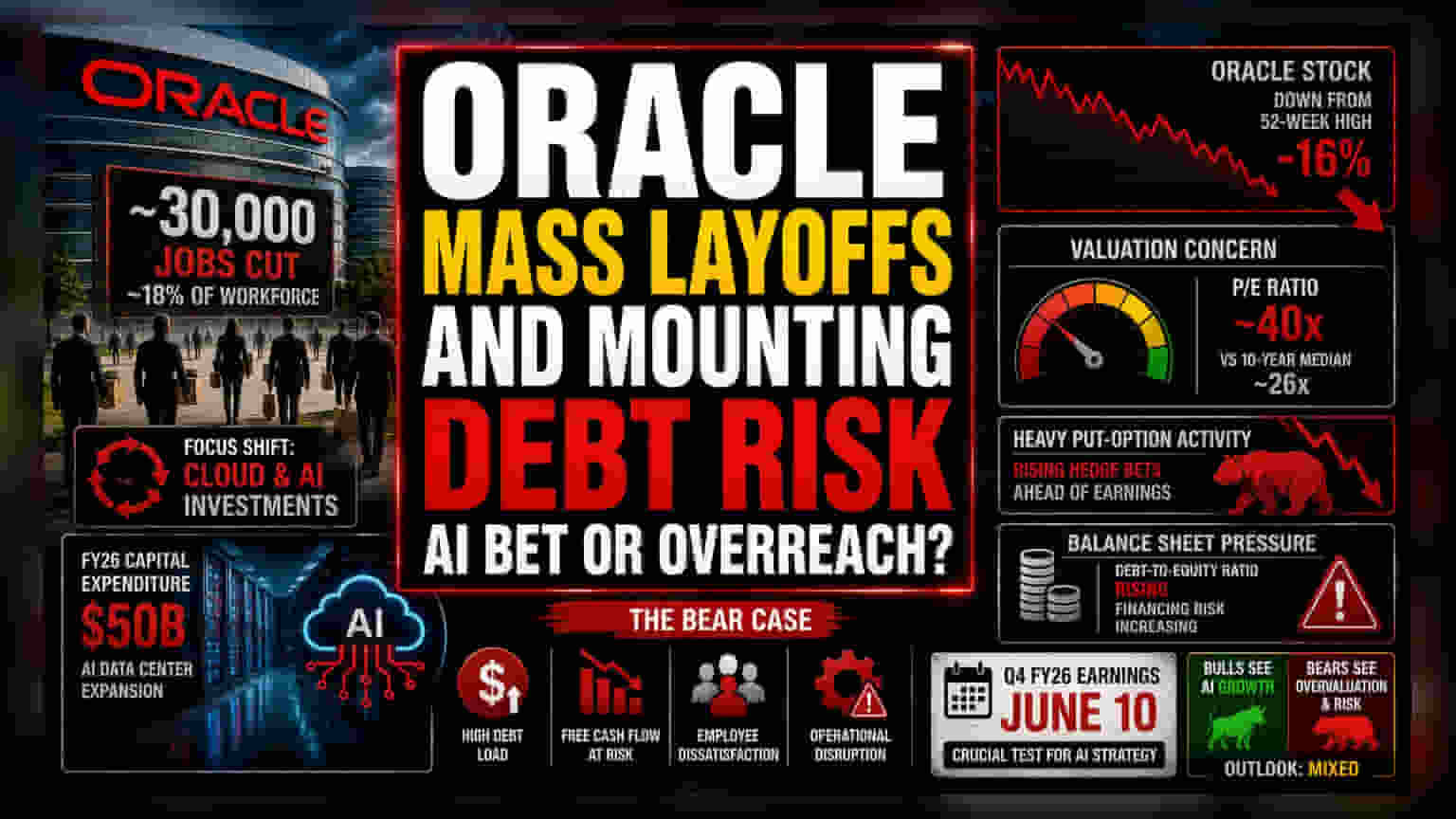


The Efficiency Pivot
Oracle is currently executing the concluding stage of its largest workforce reduction in corporate history. With approximately 30,000 positions impacted, the firm is shedding roughly 18% of its global headcount. While these departures are framed as a tactical reallocation of resources toward high-growth cloud and artificial intelligence sectors, the scale of this reduction suggests a more fundamental transformation. The company is aggressively funneling capital into its AI data center footprint, aiming to sustain its competitive positioning against hyperscale giants like Amazon Web Services and Microsoft Azure.
The Valuation Gap
Market sentiment toward the stock has soured recently, with shares slipping as investors weigh the company's ambitious $50 billion capital expenditure plan for fiscal 2026 against the reality of its mounting debt. Trading at a premium to the broader software sector, Oracle’s price-to-earnings ratio, currently hovering near 40x, significantly exceeds its 10-year median. This elevated multiple reflects investor expectations for rapid AI-driven growth, yet the current market volatility—highlighted by heavy put-option trading—suggests that institutional participants are increasingly hedging against a potential earnings miss in next week's fiscal fourth-quarter report.
The Forensic Bear Case
From a risk-averse perspective, the company’s current trajectory warrants skepticism. Unlike competitors with stronger balance sheets, Oracle faces mounting pressure from a debt-to-equity ratio that has drawn scrutiny from analysts concerned about long-term financing requirements. The aggressive pursuit of AI infrastructure, particularly through joint ventures like Stargate, necessitates a sustained burn rate that threatens to compress free cash flow. Furthermore, reports of employee dissatisfaction regarding the treatment of unvested stock awards during these layoffs point to potential cultural and retention risks that could impede productivity in key engineering departments. The combination of high financial leverage and the operational disruption of such a massive workforce departure creates a narrow margin for error for management.
Future Outlook and Analyst Sentiment
The consensus outlook for the upcoming June 10 earnings release remains mixed. While some analysts maintain bullish price targets, citing Oracle's potential as an essential AI infrastructure partner, others have downgraded the stock to a hold, warning of overvaluation and persistent balance sheet strain. With the stock price currently retracing from recent yearly highs, the next week will serve as a crucial test. Investors will be looking for concrete evidence that the massive investment in AI capacity is beginning to translate into sustainable, high-margin revenue growth, rather than just increasing the firm’s debt load.