

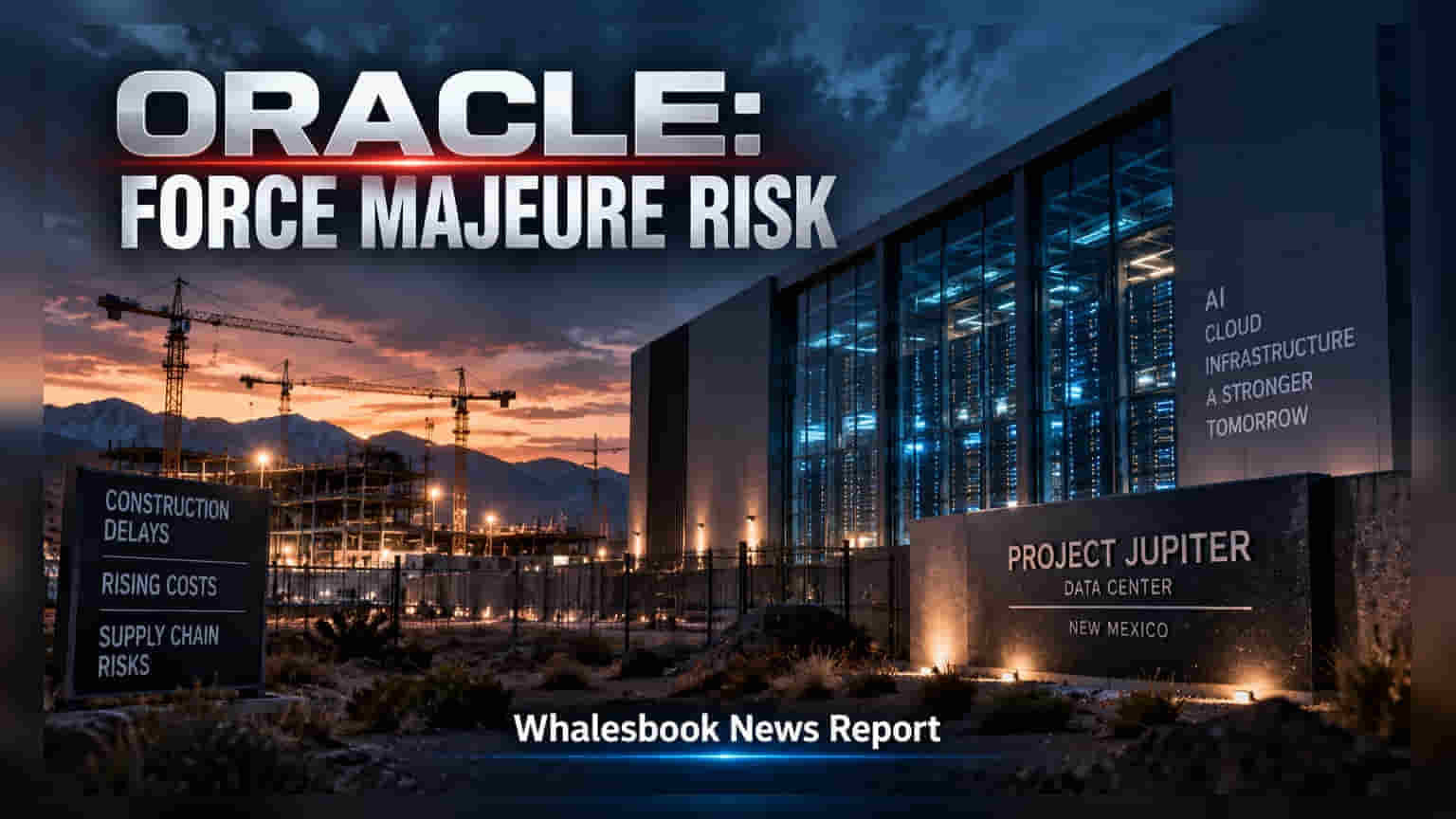
Oracle has triggered a force majeure clause for its 'Project Jupiter' data center in New Mexico to protect against rising costs and potential delays. The move allows the company to defer payments if the 2028 operational target is missed. This highlights investor sensitivity to massive infrastructure spending, leading to a 4% drop in premarket trading.
Oracle has activated a force majeure clause regarding its large-scale New Mexico data center development, known as Project Jupiter. This legal step involves the project developer, Blue Owl. By using this clause, Oracle aims to shield itself from financial obligations if the project fails to meet its planned 2028 operational deadline.
Why This Matters for Investors
This move is not necessarily an exit from the project. Instead, it serves as a safety mechanism. Building massive data centers for artificial intelligence is extremely expensive and complex. By invoking this clause, Oracle is essentially creating a backup plan to manage costs and limit financial risk if the construction schedule gets delayed or costs go out of control.
Investors reacted quickly to the news, with the stock falling 4% in premarket sessions. The market is particularly sensitive to how tech giants are spending on infrastructure. While building data centers is essential for Oracle to support its cloud and AI services, it requires billions in capital spending. Any sign of delay or cost pressure in these major projects can raise questions about how efficiently the company is deploying its cash.
Managing Execution Risk
Large infrastructure projects often face risks like supply chain issues, rising labor costs, and permitting delays. A force majeure clause allows a company to pause its responsibilities during unforeseen events. For shareholders, this highlights that Oracle is being cautious about its capital allocation. The primary concern is whether such projects can be completed on time and within budget to start generating returns.
Neither Oracle nor Blue Owl has officially confirmed the specific details or the status of their negotiations. Moving forward, the key things for investors to monitor will be any updates on the project’s construction timeline and whether the company provides more clarity on its strategy for managing these massive infrastructure costs.