

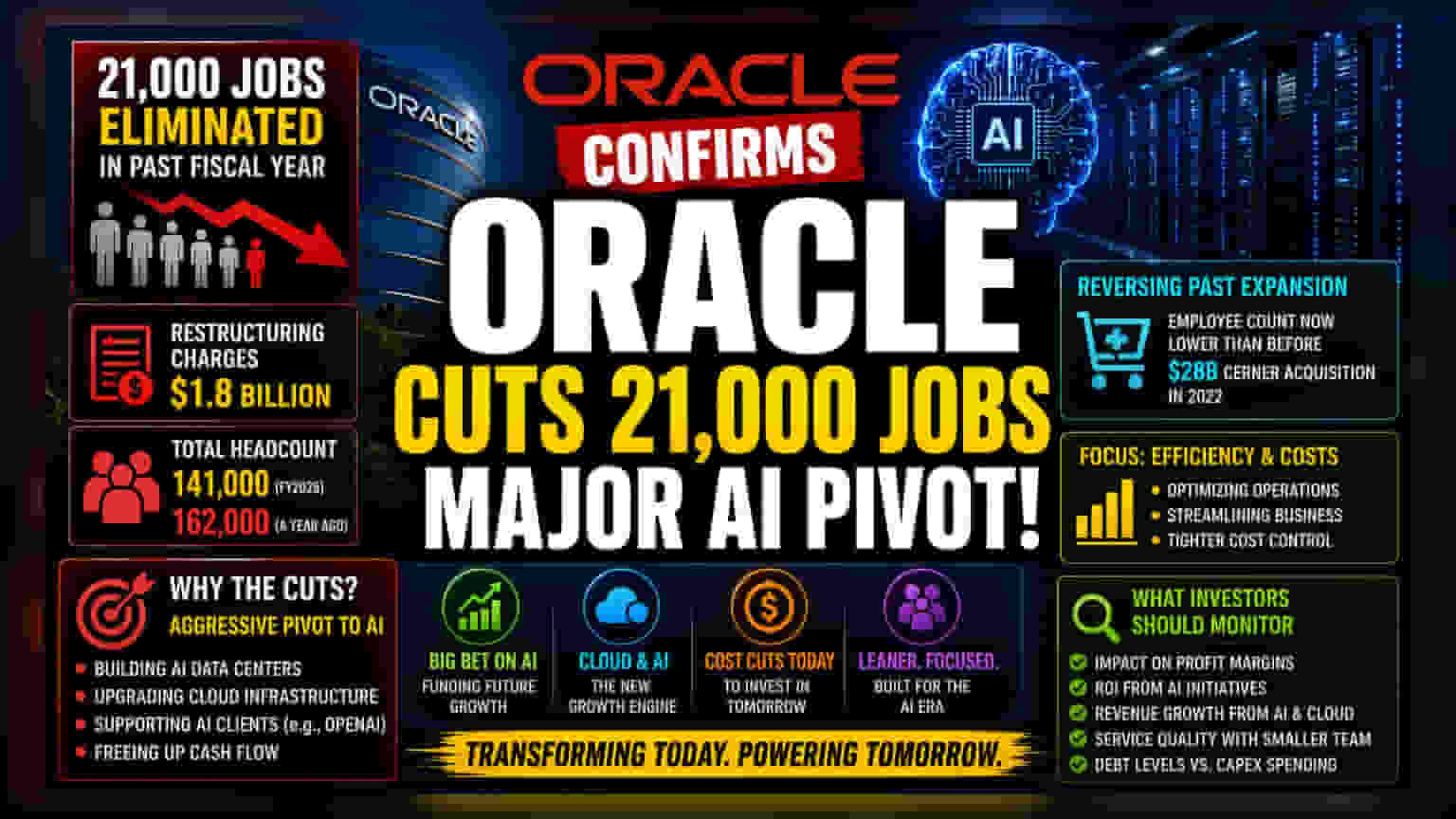
Oracle has reduced its global workforce by 21,000, bringing its total headcount to 141,000, as the company prioritizes heavy investment in AI infrastructure. The restructuring cost $1.8 billion for the fiscal year ended May 31. For investors, the move highlights the intense pressure on tech giants to balance operational efficiency with the high capital costs required to build data centers for AI.
What Happened
Oracle Corporation has confirmed a significant reduction in its global workforce, eliminating approximately 21,000 roles over the past fiscal year. According to the company's annual financial report for the period ending May 31, 2026, these layoffs resulted in restructuring charges totaling $1.8 billion. The company’s total headcount now stands at 141,000 employees, compared to 162,000 a year earlier. This move marks one of the most substantial workforce adjustments for the company in recent years as it realigns its resources.
The AI Pivot and Cost Strategy
The primary driver behind these cuts is the company's aggressive pivot toward artificial intelligence. Oracle is directing substantial capital toward building data centers and upgrading its cloud infrastructure to support AI development for high-profile clients, such as OpenAI. The company noted in its regulatory filings that the shift toward AI integration may continue to influence future hiring and operational costs. By trimming headcount, the company is attempting to free up cash flow to fund these high-cost AI infrastructure projects without overextending its balance sheet.
Past Expansions and Current Efficiency
To understand the scale of these cuts, it is useful to look at the company's recent history. The current employee count is now even lower than it was before Oracle’s $28 billion acquisition of Cerner in 2022. That deal was expected to grow the company's presence in the electronic health records market and brought thousands of new employees into the firm. The current reduction effectively reverses the staffing expansion from that era, indicating that management is focused on tightening operational efficiency and optimizing costs across its diverse business segments.
What Investors Should Monitor
The most important factor for shareholders to track is whether these cost-saving measures actually improve profit margins in the coming quarters. While cost-cutting is a standard method to protect the bottom line, the success of this strategy depends on whether the investments in AI data centers translate into measurable revenue growth. Investors will likely look for clarity in future earnings calls regarding the return on investment from these AI initiatives and whether the company can maintain service levels with a smaller workforce. Additionally, the ability of the company to manage debt levels while simultaneously funding large capital expenditures remains a key area of focus for the broader market.